“Do You Have a Minute?” The Conversation Most Managers Aren’t Ready For
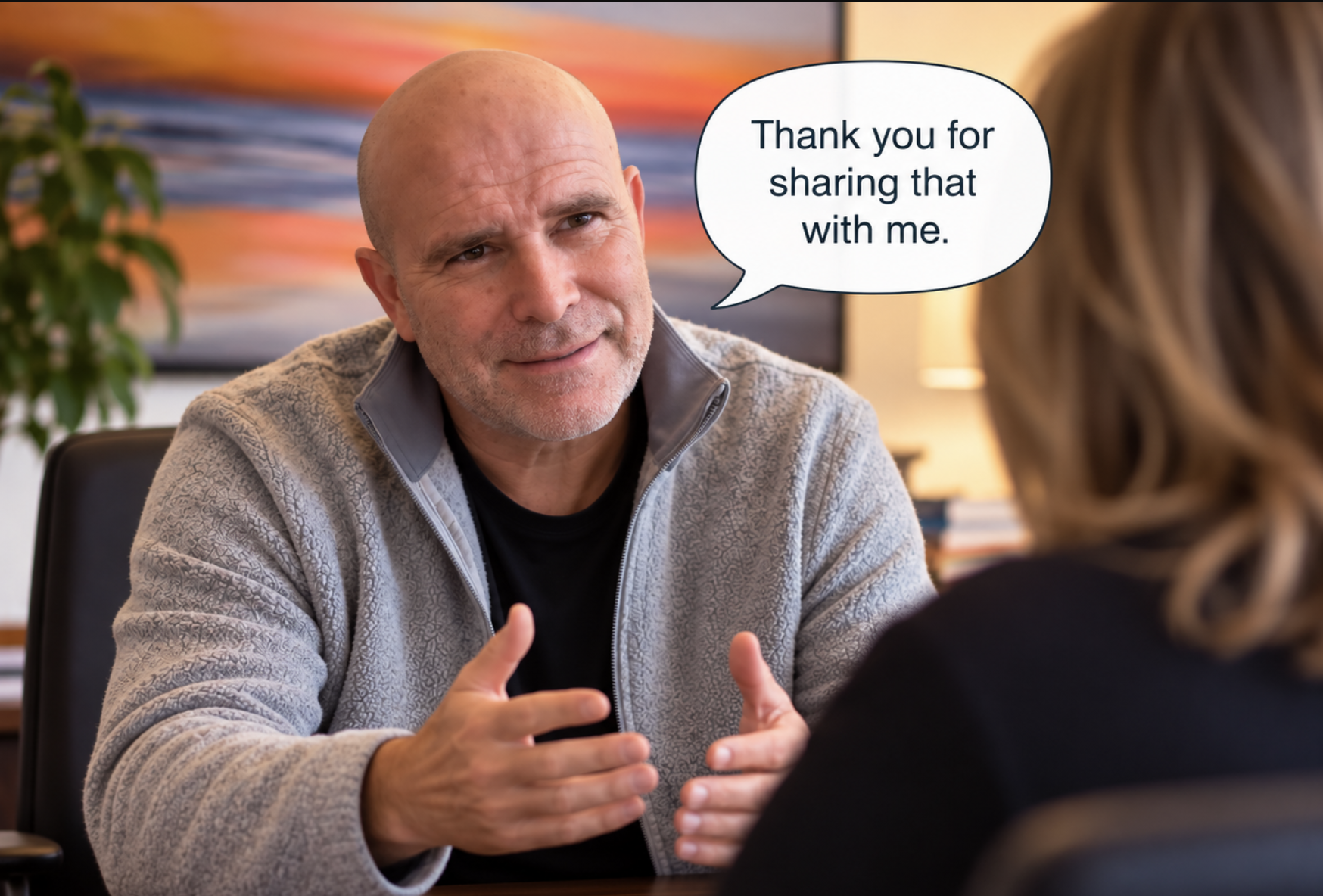
"Do you have a minute?"
It's Sara. One of your best reps. Clients rave about her. She's over quota every quarter.
You say sure. She comes in and closes the door behind her.
Before she sits, she looks back through the glass. Checking who's at their desk. Who might have seen her walk in.
She takes a breath and holds it.
She sits down across from you and lets it out slowly. Her eyes go to the ceiling, then the window, then her hands. Anywhere but you.
You slide the tissue box across the desk. She hasn't said a word yet.
"I'm sorry. I don't really know how to say this."
"Take your time."
A long pause.
"It's my son. He hasn't been to school in two weeks. He barely comes out of his room. I don't know what to do anymore."
Two weeks.
Come to think of it, she has seemed distracted lately. Quieter in the Monday meeting. Slower on a couple of client emails. You put it down to a busy month.
Her numbers never moved.
And now she's told you.
What do you say?
Most leaders freeze here. Or they start talking. Advice. A story about their own kid. "I'm sure it'll be fine." A quick walk through the benefits policy.
All of it comes from a good place. Most of it makes the person wish they'd said nothing.
Here's what to do.
1. Thank her.
"Thank you for telling me. That must have been hard to say out loud."
Then stop talking. What happens in the pause might matter more than anything you say after it.
2. Listen before you help.
You don't know what she needs yet. Give her room. Let the silence sit longer than feels comfortable.
3. Ask what she needs from you.
"What would help most from me right now?"
It might be flexibility. Time away. Someone at work who knows why she hasn't been herself lately.
It might be nothing yet. Let her tell you.
4. Leave the reassurance out.
"Teenagers go through this."
"Try not to worry."
You mean well. It still tells her the conversation is over.
You don't need the perfect answer.
You need to stay in the conversation.
Even though statistically, likely things will turn out ok. While a parent is going through this, the worst thoughts go through their heads.
5. Follow up.
A few days later: "How's your son doing?"
Put it in your calendar if you have to. Remembering tells her it was safe to say.
Swap the son for a divorce. A parent with dementia. A spouse's diagnosis. The door closes the same way, and the five steps stay the same.
When someone tells you what they're dealing with at home, they've usually been carrying it into work for a lot longer than you could see.
Consider yourself fortunate. Sara told you before she handed in a resignation letter.
Most people don't. They go quiet, then they go. You find out why in the exit interview, if you find out at all.
If Sara leaves, it will look sudden. She'll have been carrying it for months.
Replacing an employee costs between 50% and 200% of their annual salary, depending on the role, according to SHRM and Gallup. A top rep sits near the high end. And the clients who rave about her may follow her out the door.
For 18 years I ran a 70-person company. I wish I'd understood then what I understand now.
Managers get trained for performance reviews, budgets, deadlines and difficult employees. Almost none get trained for this conversation.
That's the conversation First Conversation Coaching is built for.
Frequently asked questions
What should I say when an employee shares a personal struggle?
Start with "Thank you for telling me." Then stop talking and let them lead. When there's a natural pause, ask what would help most from you right now. Your job in that first conversation is to make telling you feel safe.
Should I tell HR when an employee says their child is struggling?
Ask them first. Something like "Would it help if I looped in HR, or would you rather keep this between us for now?" If your company's policy or a safety concern means you have to share it, tell them what you'll share and why before you do.
How does parenting stress show up at work?
Usually in small ways before the numbers move. Quieter in meetings, slower replies, more short-notice time off. Strong performers often hold their output steady while they carry it, which is why it's easy to miss. Supporting working parents' mental health starts with noticing those small changes and asking about them.
Is it cheaper to support an employee than replace them?
In most cases, yes. Gallup puts the cost of replacing an employee at half to two times their annual salary, and calls that a conservative estimate. Flexibility for a few weeks, a standing check-in and a manager who remembers to ask usually cost a fraction of that.
What if an employee says their child might not be safe?
Take it seriously, and don't try to carry it alone. In Canada, 9-8-8 is available to call or text 24 hours a day. If someone is in immediate danger, call 911. Point your employee to your EAP and HR, then follow up with them within a day or two.
You may also like
What Happened Last Night Is Sitting in Your 9 A.M. Meeting Why your strongest employees are often the ones carrying the most from home, and why they rarely say so at work.
They Told a Stranger What They Haven't Told You Working parents with struggling kids often talk to someone outside the company before they talk to their manager. What that says about your workplace.
HR Can Build the Programme. HR Can't Make It Safe. Wellbeing programmes only get used when leaders make it safe to use them. Why psychological safety starts at the top.