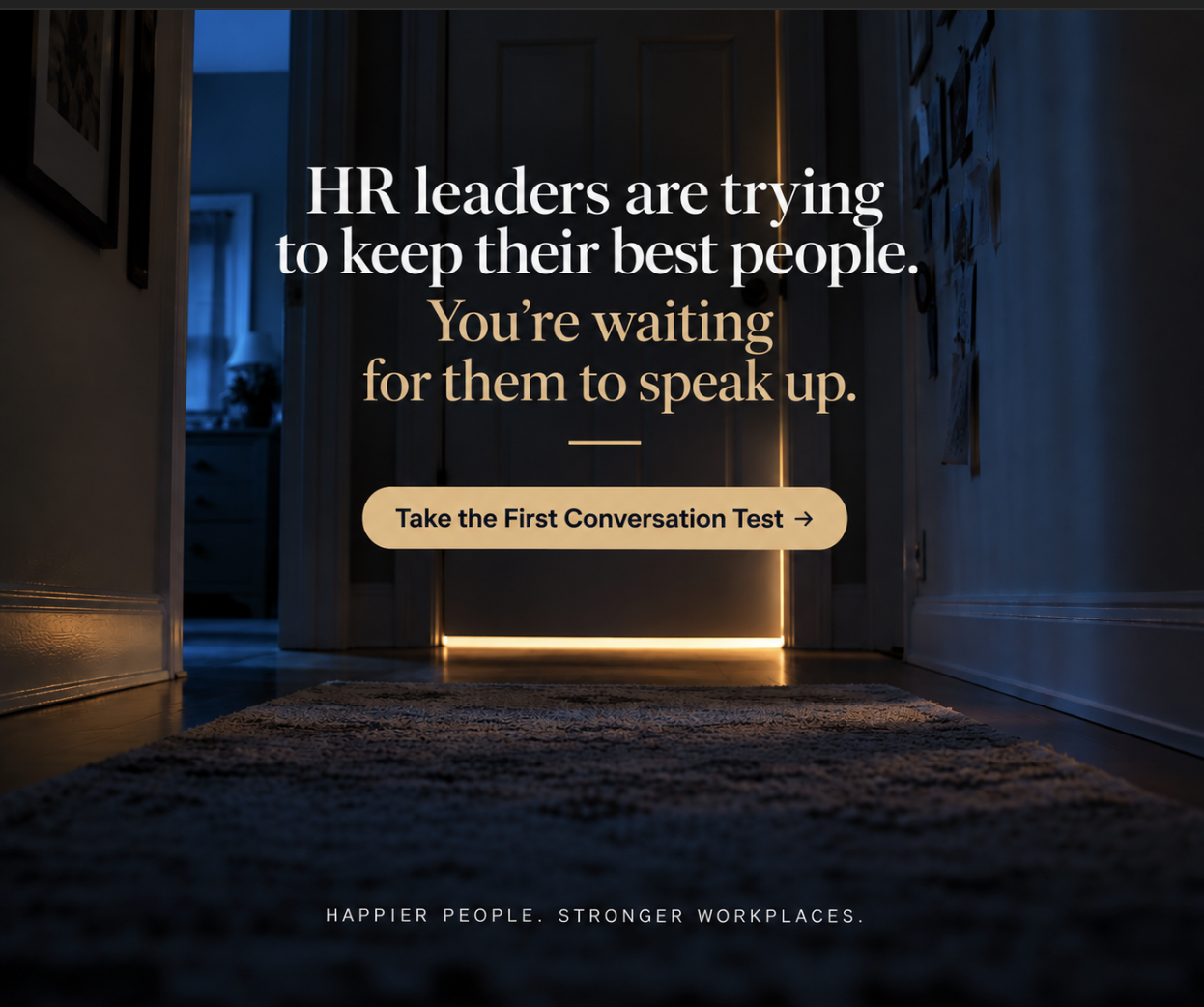
What Happened Last Night Is Sitting in Your 9 A.M. Meeting

Somebody on your team sat on the floor outside their kid's bedroom last night.
They sat. there for hours. They were scared to leave. They didn't know what else to do, and there was nobody to call at that hour.
If you’ve never been that parent, you have no idea the fear that runs through your body. The thoughts that run through your head.
But they were on your 9 a.m call.
You had no idea.
You probably think that's not your problem, and I understand the argument. What happens in someone's house is not the employer's business.
Fair enough. They're bringing it in anyway.
We spend a lot of time talking about mental health at work. We spend almost none on the thing that's actually running in the background. A kid who won't go to school. A marriage coming apart. A parent who needed care starting last month.
Then we expect them at 9 a.m., performing like none of it is happening.
Let me speak frankly, because I've been the person I'm describing.
Most of you know what our family went through with Maddie. That alone took me out for the better part of a decade.
It didn't arrive alone. A bad divorce. Then my mother died suddenly, and I became the person helping my father through his grief and everything else that came apart at the same time. A business I lost. Depression I didn't name for a long time. Money problems underneath all of it.
None of it waited its turn.
That's the part I'd want an employer to understand. It's rarely one thing. It's three or four at once, and the person carrying them still logs in at nine, and most of the time you can't tell from the outside.
A Gallup survey last year, said forty-nine percent said they were facing challenges in their lives. First time since they started measuring that more workers are struggling than thriving.**
Most companies will tell you it's safe to say "I'm not okay" here. I'm not sure most of their employees would agree.
Ask a high performer whether they'd tell you they're struggling, knowing the next round of promotions is being decided in six weeks.
You can run every programme on the market. If people don't believe it's safe to use them, you've bought a poster.
And the cost doesn't show up anywhere you're looking. Gallup has the other half of it. Employees who are thriving miss 53 percent fewer days of work for health reasons than employees who are struggling. They're also 32 percent less likely to be actively looking for another job.
Read that backwards and it gets uncomfortable. The absenteeism you're already tracking and the turnover you're already trying to explain have been telling you who's struggling for years. You have the numbers. You've filed them under the wrong problem.
Your best people don't complain. They don't go to HR. They start looking. Your best people don't complain. They don't go to HR. They start looking.
Nearly half of employees have left a job for reasons connected to their mental health. A significant number of those departures were voluntary.* Meaning they chose to go, and somebody sat across from them in an exit interview and wrote down a different reason.
You'll never hear the real one. They won't tell you, they'll just leave.
FAQ
How do I know if an employee is struggling when they haven't said anything? You usually don't know, and that's the honest answer. What you can notice is change: someone who's normally steady becoming quiet, reliability slipping in a way that isn't like them, energy dropping and staying down for weeks. None of it tells you what's happening. All of it tells you it's worth asking.
Is it appropriate for a manager to ask about an employee's personal life? Asking about someone's wellbeing isn't the same as asking about their private life. "You've seemed quieter the last few weeks, is everything alright" is an observation about how they're showing up at work, which is squarely a manager's business. Where it goes after that is the employee's choice.
Isn't this what our EAP is for? An EAP is a resource, not a relationship. Most sit at three to seven percent utilisation, and the barrier isn't the programme. It's that using one requires an employee to first decide that work is a safe place to admit their life is hard. Nothing about the EAP itself changes that decision. A manager can.
What do I say if an employee tells me something serious? Less than you think. You're not fixing it and you're not diagnosing it. Ask a second question instead of offering a solution, because solutions end conversations. Be honest about what you can and can't keep confidential. Then go back to them two weeks later, which is the part nearly everyone skips and the part people remember for years.
How much does it cost to replace an employee versus supporting one? Replacement is commonly estimated at 50 to 200 percent of annual salary once you count recruitment, lost productivity and ramp time. The comparison people miss is that the decision to leave is usually made months before the resignation lands, which means the window where support would have mattered has already closed by the time you find out.
You May Also Like
Every Company Value Has an "Unless" If the poster line landed, start here. This is the longer version of the same argument: what your employees have quietly worked out about where your support stops, and why nobody in the building believes the values board applies to a performance dip that lasts six months.
He Hadn't Spoken to His Son in 10 Years. He Couldn't Remember Why. This post asks whether you'd know if someone on your team was struggling. That one asks a harder question. There is probably a person you've stopped talking to properly, and you can't remember when it started, and they are never going to be the one to fix it.
I Wrote the Warning Signs for Parents. Then I Counted 11 in Myself. The employee on your 9 a.m. call looked fine. So did I, for years, while ticking eleven items on a list I wrote myself. If you want to understand how someone hides it in plain sight from people who are paying attention, this is that from the inside.
Sources:
*2021 Mental Health at Work Report, conducted by Mind Share Partners