The Dad Who is Barely Holding It Together
Father's Day has a way of making certain things louder.
Just the weight underneath it.
I know dads who will sit at a backyard barbecue this weekend, laugh at the right moments, open cards from their kids, and spend the entire day carrying something nobody at the table knows about. A teenager who has gone quiet in a way that feels different this time. A kid who used to talk and now doesn't. A house that feels like it's holding its breath.
These fathers are not in crisis. Nobody would look at them and know anything was wrong.
That’s exactly what worries me.
I lost my daughter Maddie on April 11, 2015. She was fourteen.
I am not going to use this post to tell that story in detail. I have told it elsewhere and I will keep telling it because it matters. What I will say is this.
The signs were there. They were quiet. They were easy to explain away. She was a teenager. Teenagers are moody. Teenagers pull back. Teenagers have hard weeks.
Except it was not a hard week. And by the time I understood that, I was out of time.
I don’t say this to frighten anyone. I say it because I know what it costs to wait for certainty before you act. And I know that most parents are waiting right now for something concrete enough to justify the conversation they already know they need to have.
Here’s what I have learned from working with hundreds of families since Maddie died.
The parents who end up in crisis did not miss something dramatic. They missed something quiet. A shift in energy that they chalked up to school stress. A withdrawal they assumed was a phase. A door that started closing a little earlier each night that they told themselves was normal teenage behaviour.
It might be. Most of the time it is.
But sometimes it isn't. And the difference between those two things isn’t always obvious until you are further down the road than you want to be.
The mistake isn’t that parents dismiss things. The mistake is that nobody ever taught them what to look for before things get serious. Nobody sat them down and said: here’s the difference between a hard week and a pattern. Here’s what withdrawal looks like when it’s developmental and what it looks like when something else is happening. Here’s how to start the conversation before your teenager stops believing you are safe to talk to.
That’s a knowledge gap. And it’s entirely fixable.
I think about the parents sitting in offices right now.
The dad who got up this morning and didn’t know what he was going to find when he came home. In the quiet, specific way that parents of struggling teenagers understand. The uncertainty that sits in your chest all day while you are supposed to be focused on a spreadsheet or a client call or a meeting that doesn’t matter anywhere near as much as the kid you left at home.
These parents aren’t distracted because they’re disengaged. They’re distracted because they are terrified and they have no roadmap and doing the only thing most parents know how to do when something feels off.
They’re waiting. And hoping. And telling themselves it will probably pass.
Sometimes it does.
The MentorWell exists for the times it doesn't. And for everything that happens in the space before you know which one it is.
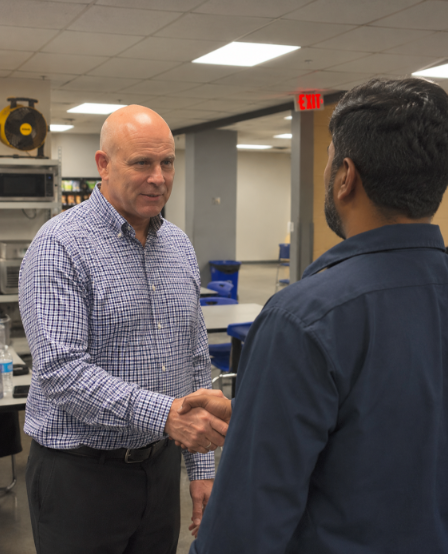
After a recent workshop, as the room was clearing out, a father approached me.
He hung back until most people had left. Quiet. Aware of his surroundings. Watching to see if anyone was looking before he took the few steps toward me.
English wasn’t his first language. But he had understood every word. Because he wasn’t learning about this in that room. He was living it every day at home.
He took my hand and shook it softly. Then he looked at me and said, "Thank you. I didn't think anyone understood my world."
I gave him my email address and told him to reach out anytime.
He walked out a little braver and confident than he walked in.
That’s why I do this work. For the quiet dad at the back who needed to know he wasn’t alone and didn’t know how to say it out loud until someone finally gave him permission.
There are more of him out there than anyone realizes. In every workplace. In every neighbourhood. Holding it together on the outside and carrying something heavy on the inside that nobody around them knows how to ask about.
The LifeLine Parent Workshops were built around one core belief. That education before crisis changes outcomes. That a parent who understands what early warning signs actually look like, who knows how to start a conversation without shutting their teenager down, who has a roadmap for where to go when they need more support, is a fundamentally different parent than one who is just hoping for the best.
It’s not about being a perfect parent. It’s about being an informed one.
Because the moment most parents wish they could go back to isn’t the crisis. It’s the quiet moment six months earlier when something felt off and they talked themselves out of paying attention to it.
You can’t go back to that moment. But you can be ready for the next one.
This Father's Day, if you are a dad who’s holding it together while carrying something heavy at home, I see you.
And if something feels off with your teenager right now, even something you cannot name yet, please don’t wait for it to become undeniable before you act.
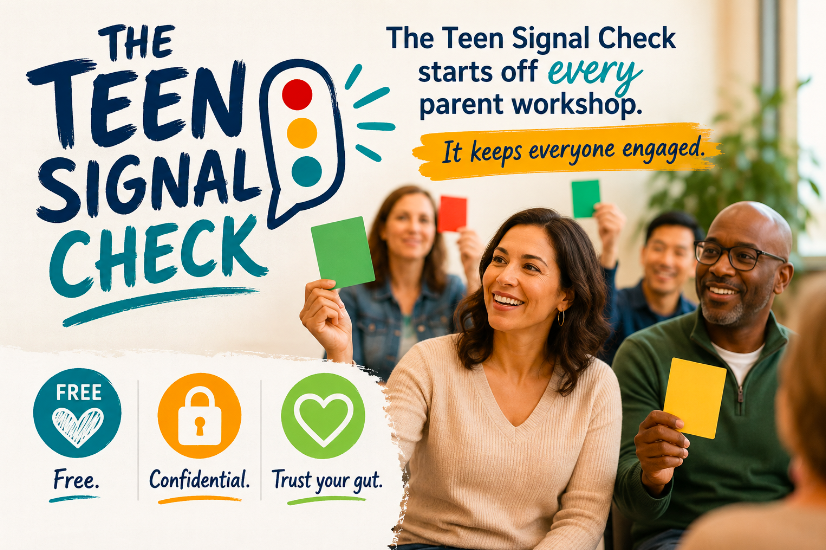
The Teen Signal Check is a free five-minute tool that helps you assess what you’re already noticing. It isn’t a diagnosis. It is a starting point.
The link is below.
You don’t have to figure this out alone. And you do not have to wait until things get worse to ask for help.