You Got Green on the Teen Signal Check. Keep Paying Attention
A social worker asked me a question last week.
“So if a parent takes your Signal Check, will they be assured of a good outcome if they score green?”
I didn’t answer right away. Partly because of the question. Mostly because of who was asking. This is someone whose whole job involves knowing nobody can promise that.
Later that day I realized I’d heard it before. Many times. From parents. They don’t use the word “assured.” They phrase it more politely. The Canadian ones apologize first.
“We got green. So we’re okay?”
“Green means I can stop worrying, right?”
I get it. When you love your kid and you’re scared of getting it wrong, you want someone to hand you a clean answer. Something you can file next to the dishwasher warranty and never look at again.
I can’t give you that. Nobody honest can.
Here’s what green actually means. On the day you answered those questions, the things you’d noticed about your teen didn’t raise a concern. That’s useful. It’s also one day, seen through your eyes. Eyes that were probably also on a group chat about who’s driving to practice.
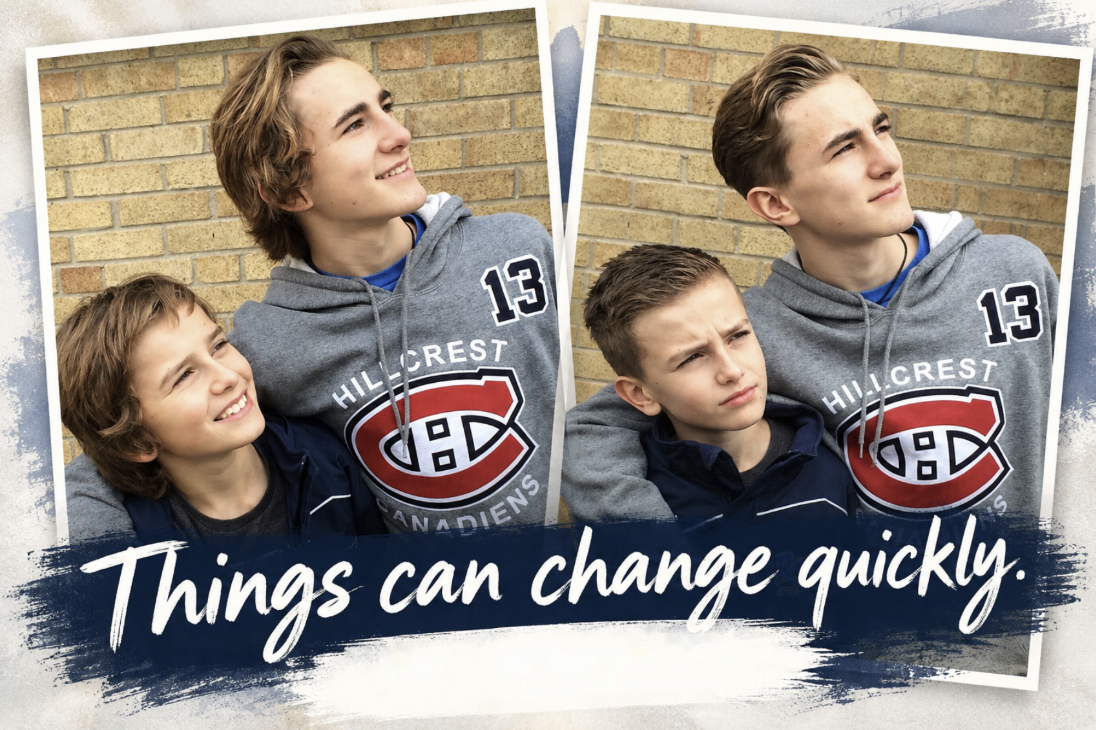
Kids move. A friend group shifts. A coach cuts them. Something happens at school that never comes up at dinner. The answers you’d give in October might look different by February.
So yes. A teen can score green and still be struggling. I’d rather tell you that now than have you believe a tool promised more than it ever could.
I know what it’s like to want that reassurance. I got plenty of it. Parents would tell me I was an awesome dad. Keep doing what you’re doing, things will work out. Many of them were parents of kids I coached in hockey. “Our kids love you,” they’d say.
Truth was, I barely told anyone what was going on at home. At least not the entire version. I was afraid they’d judge me as a divorced father.
They were answering based on what I let them see.
The numbers, since I’d want them if I were you. As of today, more than 13,000 parents have taken the Teen Signal Check. About half got green. Roughly 30% yellow, 20% red.
Green is good news for a lot of families. I’m glad for every one of them.
If you’re one of them, keep noticing. The bedroom door that closes a little earlier than it used to. The sport they loved that suddenly feels like a chore. “Fine” becoming the only word you get at the end of the day. On their own, these may mean very little. They’re still worth watching.
And if you picked “I don’t know” more than you expected, that’s information too. It tells you how much you can see right now. Plenty of us know the Wi-Fi password better than we know our kid’s week.
Mental health doesn’t move in a straight line. Good weeks and hard weeks sit side by side. True for teenagers. True for us.
The Teen Signal Check is an awareness tool. It helps you look more closely at what’s already in front of you. It can’t see the future. If I had a tool that could, I’d be retired and you’d never have heard of me.
Anyone who says their tool can predict your kid should make you nervous. That includes me, if I ever start talking that way.
This month we started working toward 100,000 families. We’re calling it Care Enough to Be Aware. I can’t tell you what each of those parents will find. I do know they’ll have stopped for a few minutes and looked a little closer at their kid. That’s where noticing starts.
It’s free. No email required. I tried requiring one for a while. Fewer parents finished it. A lot fewer. So it’s gone.
I’ve thought about that social worker’s question a lot since. It was a fair one to ask. The honest answer just isn’t the one most of us want to hear.
Take the green. Then keep paying attention.
FAQ
What does a green result on the Teen Signal Check mean?
It means that on the day you answered, the things you’d noticed about your teen didn’t raise a concern. The Teen Signal Check is an awareness tool for parents. It reflects what you can see, at one moment in time.
Can my teen still be struggling if I got green?
Yes. Teens don’t always show what they’re going through, and things change. If you’re asking yourself whether your teen’s behaviour is normal, that’s a good reason to keep watching and to talk with them.
How often should I take the Teen Signal Check?
Any time something changes, and every few months even when nothing seems to. Comparing your answers over time can show you shifts that are hard to notice day to day. [Chris: confirm this is the guidance you want to give.]
Does a green result mean I can skip professional help?
If you’re worried, trust that and talk to a doctor, school counsellor or mental health professional. A result never overrides what you’re seeing at home.
When should I take teen mood changes seriously?
When a change lasts for weeks, shows up in more than one part of their life (sleep, school, friends, activities they used to love), or your gut keeps telling you something’s off. If your teen talks about wanting to die, call or text 9-8-8 right away.
You May Also Like
Somebody Has to Notice First
The difference between spotting warning signs and making a diagnosis, and when it’s time to bring in a professional.
“Fine” Is the Answer We Taught Our Kids to Give Us
Why “How was your day?” so often ends the conversation, and two questions that get a real answer.
She Used to Tell Me the Number
Why hunting for a single cause of your teen’s low mood can backfire, and a better way to start talking.