They Call When They Need Money. You Just Want to Know They're Okay

When Your Kid Moves Away, Silence Is Missing Information
If you only hear from your kid when a bill is due, you don’t know enough to call them okay.
The phone rings. It’s your son, for the first time in three weeks.
His rent is short. Can you send something?
You send it. The call lasts two minutes. You hang up thinking, well, at least he’s okay.
Several parents have described that exact call to me lately. Another three this past weekend. Different families, different cities, almost the same story.
Their child has moved away to university, college, or a place of their own. Texts go unanswered. Calls aren’t returned. Weeks go by without a real conversation. Then a message shows up about groceries, or rent, or a bill.
For some of these parents, the relationship has started to feel transactional. They send the money, and they still have no idea how their kid is doing.
They can’t tell whether this is normal independence or a sign that something is wrong.
Independence or Disconnection
Kids pull away as they grow up. They want privacy and room to figure things out. That’s healthy. Nobody should expect the contact they had when their kid was 12.
What worries me is change. The kid who used to call every Sunday and then stopped. The talker who now sends one-word answers. Conversations that are short and one-sided. You ask, “Are you okay?” and you get “I’m fine,” or nothing.
So do you keep calling and risk pushing them away? Give them space and hope? Trust the feeling in your gut?
There’s no clean answer to that. I won’t pretend there is. I know the unease that accompanies those thoughts as a parent. And the guilt that can follow.
You Can’t See What You Can’t See
Think about the signs we look for when we’re worried about a young person.
Sleep changes. Eating changes. Pulling away from friends. Irritability. Losing motivation. Hygiene and routines slipping. Talk of feeling hopeless or overwhelmed.
When your kid lives at home, you catch some of this. You see them at breakfast. You notice when the bedroom door stays closed all weekend.
When they’re hundreds or thousands of kilometres away, you might have no idea.
They could be dealing with anxiety, loneliness, money stress, or a relationship falling apart. Or they could be doing well and enjoying their freedom.
You don’t know. I think we need to get more comfortable saying that out loud.
“I don’t know” and “everything is fine” are two different answers.
A Green Light Requires Information
More than 12,000 parents have taken our Teen Signal Check.
Teen Signal Check 2.0 taught us that boys and girls often show distress differently. A lot of boys get angry before they get sad. So we started weighting answers by gender.
Version 3.0 comes straight out of messages like the ones I’ve been getting.
The check asks about sleep, mood, friends, meals, the things your kid used to love. Most of those questions assume you can see your child’s day. When they live across the country, you usually can’t.
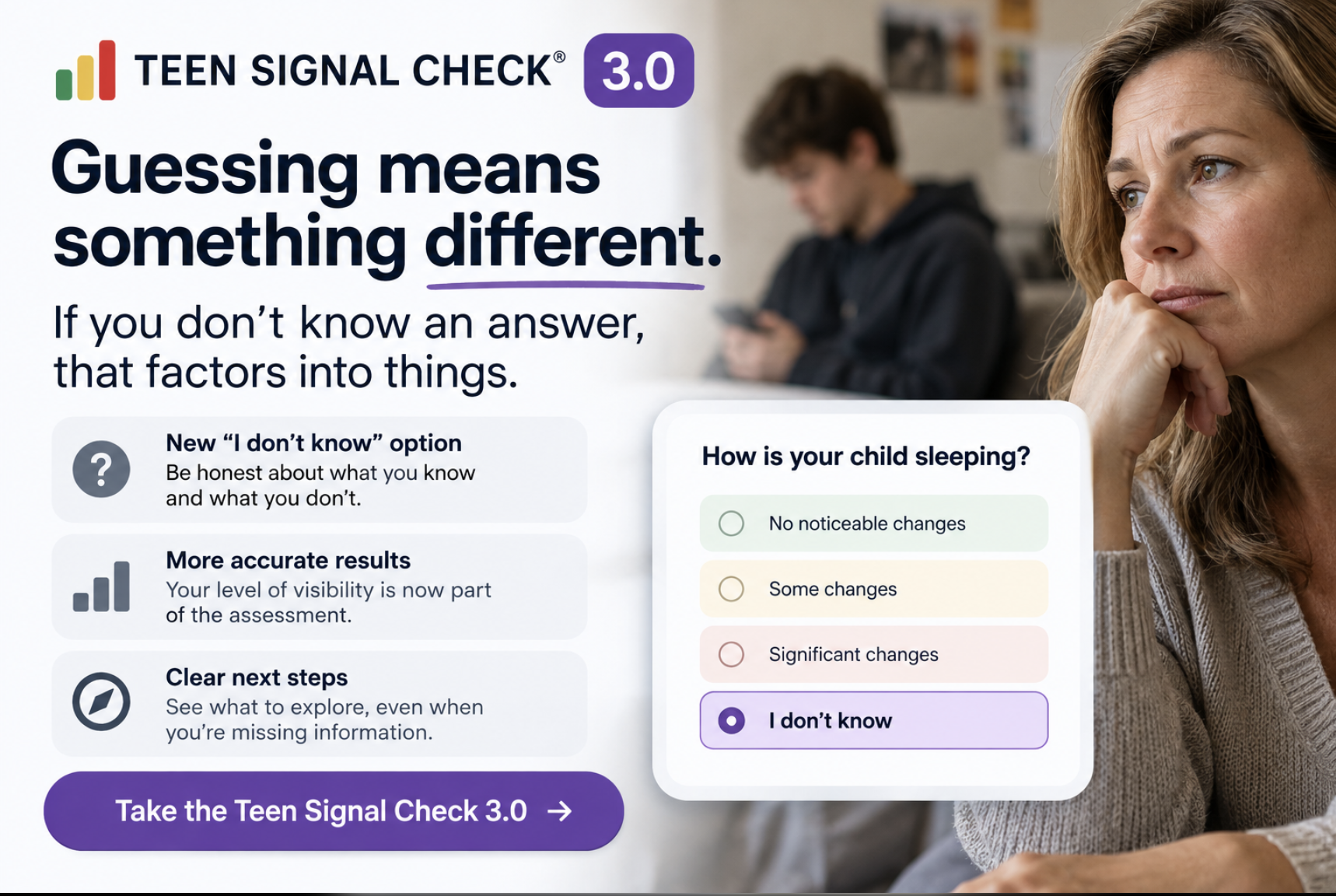
Until now, the check made you pick an answer anyway. So parents guessed. And when you love someone, you guess hopefully. That’s how a kid who had gone quiet could come out Green.
So we changed it. Every question now has an “I don’t know” option. You tell us up front whether your child lives with you. If you can’t answer most of the questions, you get White. That means you need to know more before any colour means something. If you can answer some of them, you’ll see your colour along with a list of exactly what you don’t know yet. That list might be the most useful part of the whole check.
A parent who talks with their kid every week and sees nothing worrying is in a different spot from a parent who hears from their kid when rent is due. The check should treat them differently. Now it does.
It was built for teens. If your child is 19 or 22, use it as a guide.
When They Only Call for Money
I understand why this hurts. You spent years raising them, and now you feel like a bank.
Be careful how you read it, though.
A young adult who only calls when they need something might be overwhelmed. They might be embarrassed about how things are going. They might be avoiding hard conversations because they don’t want to let you down. Or they might have no idea their silence is landing on you this way.
From far away, you can’t tell which one it is. That’s the whole problem. Before you decide they’re fine, or decide they’re in trouble, find a way to reconnect.
Sometimes They’re Protecting You
Young people tell me this a lot. Parents often aren’t the first people they open up to.
That’s hard to hear. We love them, and we’d do almost anything for them. So why wouldn’t they tell us?
Sometimes they’re afraid of disappointing us. Sometimes they don’t want a lecture or a list of fixes. And sometimes they honestly believe they’re protecting us by keeping it to themselves.
Your kid can know you love them and still find it hard to tell you they’re struggling.
That’s why I often suggest another trusted adult. An aunt or uncle. An old coach. A family friend. A mentor. Someone they already trust. A different relationship can start a conversation that isn’t happening at home. If that person helps your kid feel heard, your whole family is better off.
What You Can Do
1. Watch for change more than frequency.
Some kids have never been big communicators. But if yours used to call and now rarely answers, that shift tells you more than counting texts.
2. Stop making every call an interview.
Are you eating? How are classes? Are you sleeping? Who are you hanging out with? Are you okay?
Every one of those questions comes from love. Stacked together, they feel like an interrogation, and your kid will talk less. Sometimes “Thinking about you today. Love you.” is enough.
3. Be honest about your worry without handing it to them.
You could say: “I know you’re busy building your own life, and I respect that. I’ve noticed we haven’t been connecting much, and I miss hearing how you’re doing. I’m a little worried because I care about you. You don’t need to have everything figured out to talk to me.”
Then listen. Hold off on fixing anything.
4. Try a different door.
If calls aren’t working, send a short voice message. Share something funny. Ask about something they care about. Suggest time together with no agenda. And think about who else they might talk to.
5. Know when to go further.
If the silence is a real change, if they seem unusually withdrawn, or if you’re seeing other warning signs, act on it. Contact campus wellness services, a family doctor, or a mental health professional. You can get guidance for yourself even if your kid isn’t ready to talk to anyone.
If you believe your child is in immediate danger, call campus security or local police and ask for a wellness check. In Canada and the US, you can also call or text 9-8-8.
You can respect their independence and still act on a real concern.
Keep Reaching Out
Parenting gets complicated as they get older. We want to respect their independence. We don’t want to hover. We want them to make mistakes and learn from them.
And we want to know they’re okay.
Keep the door open. Tell them you love them without expecting anything back. Be curious about their lives. Listen when they talk. And when something feels different, take it seriously, even if they’re 20 and living across the country.
Silence is missing information.
Do you know how your kid is really doing, or have you just not heard otherwise?
FAQ
Is it normal for my university-age kid to stop calling?
Some drop-off is normal as they build their own lives. What matters is change. If a kid who used to call often has gone quiet, that shift is worth paying attention to.
How can I tell independence from a warning sign?
Independence usually comes with signs of a life: friends, plans, stories, even if they’re short. Disconnection looks like flat answers, avoiding you, and contact only when they need something. If you can’t tell which it is, that tells you something too.
What should I do if my child only contacts me for money?
Help with the bill. Then stay on a minute longer and ask about one small, specific thing. Be careful about reading it as selfishness. Some kids are overwhelmed or embarrassed and don’t know how to start the real conversation.
Can I use the Teen Signal Check for a child over 18?
It was built for teens, so for an older child, use it as a guide. Version 3.0 asks whether your child lives with you and lets you answer “I don’t know,” which makes it more honest for parents who are far away.
What if I’m worried about my child’s safety and they live far away?
If you believe they’re in immediate danger, call campus security or local police and ask for a wellness check. In Canada, you can call or text 9-8-8. Privacy rules usually limit what campus services can tell you, but you can still tell them what you’re worried about and get advice for yourself.
You May Also Like
I Pulled Over. My Son Finally Told Me
The drive where “I’m fine” finally gave way, and how to stay calm when your kid starts talking.
“Fine” Is the Answer We Taught Our Kids to Give Us
Why “How was your day?” gets a brush-off, and two questions that usually get a real answer.
Somebody Has to Notice First
How the Signal Checks help parents notice sooner, and when it’s time for professional help.