We Train for Jobs That Don't Matter. But Not for the One That Matters Most

Your highest performer missed three deadlines last month. You sent her to a productivity workshop.
Her son hasn’t left his room in six weeks. You didn’t know that part.
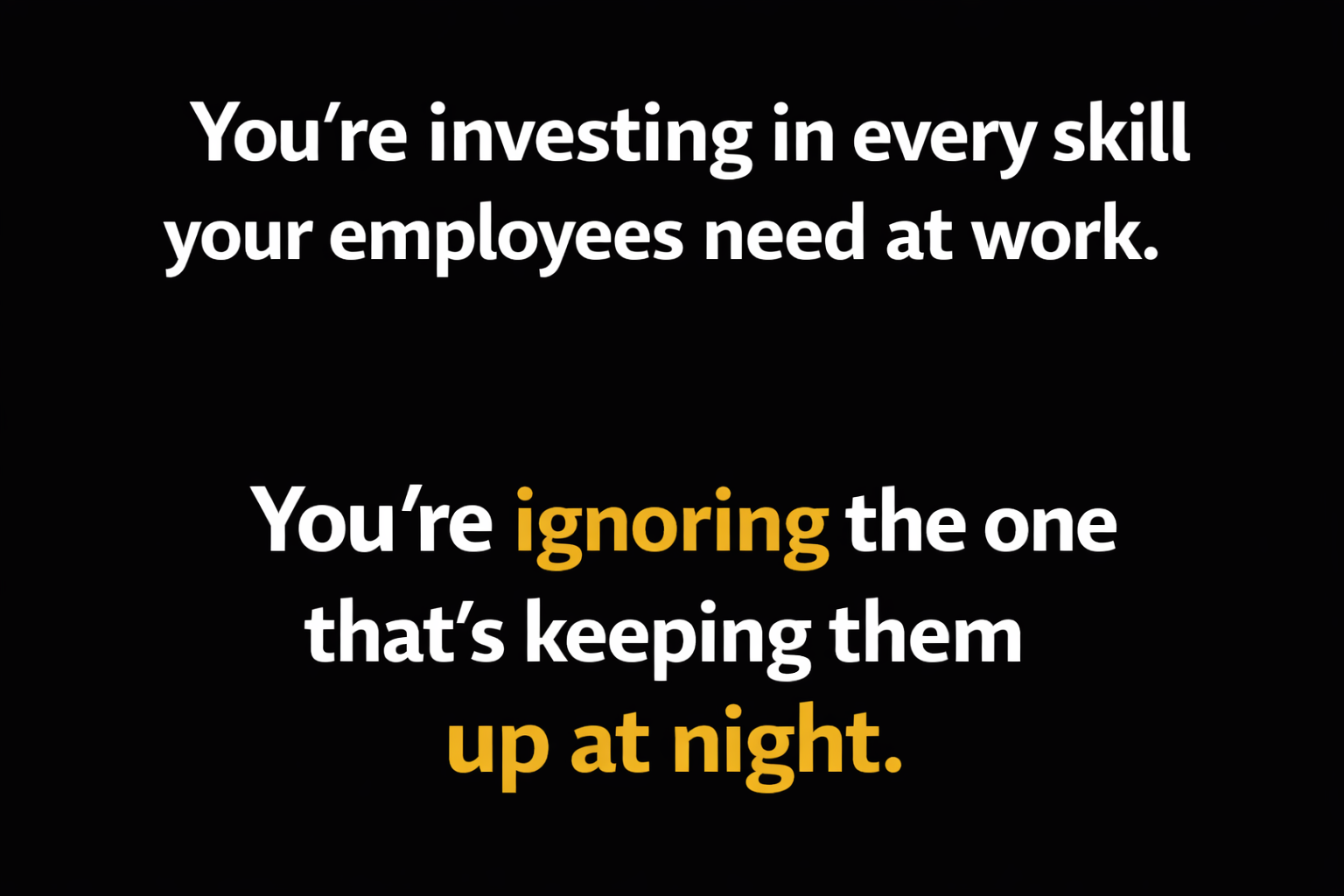
She’s taken training in the last 12 months. Leadership. Communication. Conflict resolution. Her company invested in every skill she needs at work.
How many hours of training has she had on parenting a teenager who is emotionally struggling?
Zero.
We professionalize everything except the thing that actually matters.
The Osmosis Myth
We act like parenting is supposed to happen through osmosis.
“I had parents, so I’ll know how to parent.”
Except your parents didn’t deal with social media destroying their teen’s self-esteem 24/7. They didn’t deal with fentanyl in high schools. They didn’t navigate a world where a bad moment can go viral and define your kid’s entire sophomore year.
And even if they did deal with hard things, did they do it well?
How many of us are actively trying NOT to parent the way we were parented?
So we’re supposed to learn through osmosis from a parenting model we’re actively rejecting?
That doesn’t make any sense.
The Skills Gap Nobody Talks About
Here’s what parenting a teenager who is emotionally struggling actually requires: the ability to recognize when “I’m fine” means “I’m falling apart.” The ability to have a hard conversation without your kid shutting down completely. The ability to manage your own emotional reactivity when they’re spiralling. The ability to tell the difference between normal teenage behaviour and something that needs attention.
Did anyone teach you any of this?
Or did you Google it at 2am when you were already panicking?
What Happened to Me
I’ve written about what happened to my daughter Maddie. I didn’t have these skills. Nobody trained me.
I saw the signs. I didn’t know what they meant. I had conversations. I didn’t know how to get past her defences. I waited. I didn’t know I was running out of time.
The cost was permanent.
I took courses for work. I got certified to advance my career. I attended workshops to manage teams better. But parenting a struggling teen? I was supposed to just know.
I didn’t know.
The Cost of Not Training Your People
When you don’t train parents, you don’t prevent problems. You wait for crisis.
Your employee doesn’t know what early warning signs look like, so she misses them. By the time it’s obvious, it’s already an emergency. She’s in your office asking for a leave of absence. Or she’s not in your office at all because she quietly resigned last week.
You lost a high performer. Not to a competitor. To a problem she didn’t have the skills to catch early.
And you never saw it coming because she was very, very good at looking fine.
The Number
According to the Deloitte Family Wellness Survey, 22% of parents report having a child who is emotionally struggling. Roughly 65% of your employees are parents.
That means 1 in 7 of your employees has a child who is emotionally struggling right now.
In a company of 200, that’s 29 people.
In a company of 300, that’s 43 people.
In a company of 500, that’s 72 people.
Most of them haven’t told anyone at work.
The Double Standard
At work: “I’m taking a leadership development course” means “I’m investing in my growth.” Nobody thinks you’re failing because you want to get better at your job.
But parenting? You’re supposed to be born knowing how.
That’s the double standard. And it’s costing you.
Your employee who is carrying this alone is sitting in your meetings right now. She’s present in body. That’s about all she can offer. And she’s costing you in presenteeism, in missed quality, in the slow disengagement that ends with a resignation you didn’t see coming.
It’s because she’s running two lives at once and nobody ever taught her how to manage what’s happening at home.
What This Has to Do With Your Company
When a parent on your team learns to recognize warning signs earlier, have harder conversations, and act before crisis, they don’t just become a better parent.
They become a more present, focused, and resilient employee. You didn’t fix their home life. You gave them the skills to stop carrying it alone. That’s a performance investment with a return you’ll see in retention, focus, and the kind of loyalty that doesn’t show up on a spreadsheet. At least not at first.
Replacing one employee costs 50 to 200 percent of their annual salary. Supporting them through a hard season costs a fraction of that.
What The MentorWell Actually Is
This is why I built The MentorWell. Professional development for the most important job your employees will ever have.
LifeLine Parent Workshops teach your employees how to recognize warning signs before they become crisis. What “withdrawal” and “mood changes” actually signal. The questions that get past “I’m fine.” When to trust their gut versus when to get professional help.
First Conversation Coaching trains your managers on how to respond when an employee raises something personal and hard. The difference between opening a door and accidentally closing one.
“When Something Feels Off” Parent Support Community connects your employees with other parents navigating the same uncertainty. No judgment. Just people who understand what they’re dealing with.
This isn’t an EAP, or a wellness app. This is skills training. The same way you train your people to be better leaders, we train them to be better parents.
The Question
You spent $1,200 per employee on professional development last year.
How much did you spend training the parents on your team for the job that keeps them up at night?
If the answer is zero, you’re not alone. But you don’t have to stay there.
The ROI calculator shows you what the gap is costing your company right now. 60 seconds. One field. No pitch.
Check out the Lifeline ROI Calculator
And if you’re ready to have a conversation about what closing that gap looks like for your organization, book a 30-minute call. No pitch deck. No pressure. Just a conversation about what your people actually need.