

What Happened Last Night Is Sitting in Your 9 A.M. Meeting
Somebody on your team sat outside their kid's bedroom last night and was on your 9 a.m. call anyway. Gallup now finds more US workers struggling in their lives than thriving. Most will never tell their manager, because they don't believe it's safe. They don't complain. They start looking. And the reason they give in the exit interview is never the real one.

Someone Just Broke Down in Your Office. You Have Four Seconds.
When an employee breaks down in your office, your instinct is to fix it, hand over a resource, or route them to HR. In the first moment, each one makes it worse. This is a manager's guide to what to actually say when someone shares a personal struggle at work: the first line that keeps them in the room, the small choices to offer, the follow-up three days later, and the two instincts to kill on the spot. No clinical skill required.
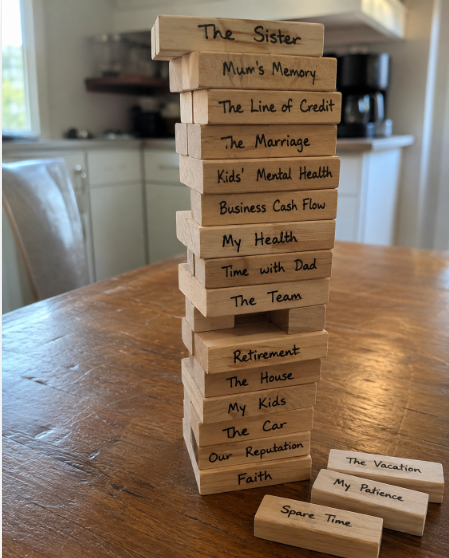
The Conversation Is Coming Either Way
There is no date anyone can point to. No incident. Just a sentence in a review about losing a step. Chris Coulter on what your employee is actually carrying, why the 2 a.m. loop determines your 10 a.m. meeting, and the choice every leader makes by default: have the real conversation now, or pay 50 to 200% of their salary to start over with a stranger in eighteen months.
Your Employee Said They're Fine. Are You Willing to Bet Their Job on It?
Most managers wait for an employee to say something is wrong. Most parents do too. The assumption — "if something were really wrong, they would tell me" — is the most expensive belief in both relationships. This post names the parallel, explains what quietly quitting actually looks like from the inside, and introduces the Manager Signal Check for leaders who want to act earlier.
The Blindspot Sitting in Your Home
The blindspot breaking your management relationships is the same one breaking your parenting. The employee performing fine. The teenager protecting you from worry. Both made the same calculation. Honesty costs too much. This post names the dynamic — and the skill that breaks it in both rooms.

You Are Already Learning the Most Important Leadership Skill. You Just Do Not Know It Yet.
The skill your organization is paying consultants to teach you — how to create psychological safety, notice what is not being said, respond without shutting someone down — is the exact skill your family is asking of you every day. A life preserver or an anchor. Your response decides which one you are.

7 Signs Your Employee Is Navigating Something They Don't Know How to Tell You
More than 40% of your employees are quietly managing something significant — divorce, aging parents, addiction, financial stress, a struggling child. Most have decided it's not safe to tell you. These 7 signs tell you what to look for before it becomes turnover you can't explain. Free Manager Signal Check included.

My Boss Said "Let Me Know If You Need Anything." I Never Brought It Up Again
A manager said the right words and got it completely wrong. Here's what actually happens when employees share something hard at work — and what managers need to say in the 30 seconds that follow. A story about silence, psychological safety, and the moment that changes everything.

We Train for Jobs That Don't Matter. But Not for the One That Matters Most
According to the Deloitte Family Wellness Survey, 22% of parents have a child who is emotionally struggling. In your company, that’s 1 in 7 employees. They’ve had leadership training, communication training, conflict resolution. Zero hours on parenting a struggling teen. This article makes the case for treating parenting as professional development and shows employers what the gap is costing them.