I Made My Divorce Harder on My Kids Than It Needed to Be. I Told Myself They Were Fine.
"If you're going through a divorce and telling yourself your kids are handling it, read this slowly."
I'm not proud of how I handled my divorce.
I want to say that plainly because I think it matters more than anything else I'm going to write here.
It got personal. It got emotional. It got ugly. And our kids were in the middle of it. That's what happens when two people who once loved each other start hurting each other instead. The kids don't watch from the sidelines. They absorb it. Every sharp word. Every slammed door. Every conversation that goes quiet the moment they walk into the room. They take all of it in and they carry it somewhere you can't see.
I told myself they were fine.
I needed to believe that. Because if they weren't fine, then I had to look at my part in it. And I wasn't ready to do that. Not while I was still in the middle of my own pain, my own anger, my own need to be right.
So I looked at my kids and I saw what I needed to see. They were going to school. They were showing up. They weren't falling apart in front of me. And I filed that under "handling it" and went back to my own war.
That was the lie I told myself to get through it. And it cost us.
Here's the thing about kids and divorce that nobody says out loud.
Your kids will protect you from their pain.
Because they love you. And because they can see that you're already drowning. They make a calculation, the same one every child of divorce makes, usually without knowing they're making it: mom and dad are barely holding it together. If I show them how much this is hurting me, it'll make it worse. So I won't.
That calculation looks like "I'm fine."
It looks like a kid who goes to their room and closes the door. A kid who throws themselves into sports or school or their phone. A kid who shrugs when you ask how they're doing. A kid who seems, from the outside, like they're handling it better than the adults are.
And you believe it. Because you need to.
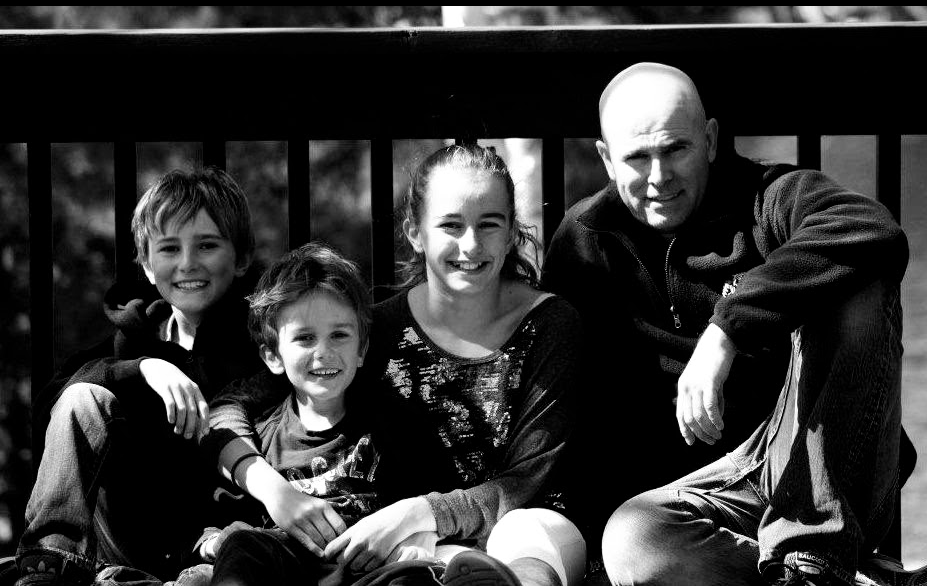
I believed it about all three of my kids. Maddie. My boys. Each of them carried the weight of our divorce differently. Maddie's pain eventually became visible in ways I couldn't ignore. But my boys? They were quieter about it. And quiet is the thing that fools you.
Quiet doesn't mean okay. Quiet usually means the feelings are too complicated to know where to start. Guilt. Resentment. Relief. Loyalty that feels like betrayal no matter which direction it points. Fear that if this relationship could break, maybe all relationships break. Maybe love isn't safe.
A teenager can't articulate most of that. They don't have the language for it yet. So they say nothing. And we take the nothing and call it fine.
I want to talk about what I did wrong, because I think someone reading this needs to hear it from a parent who's already on the other side.
I made my divorce about winning. Not consciously. I didn't wake up and think: I'm going to prioritize being right over my kids' wellbeing. But that's what I did. Every argument I escalated, every boundary I pushed, every time I let my anger at my ex override my awareness of what my children were absorbing. I was choosing the fight over them.
I didn't see it that way at the time. I saw it as standing up for myself. As protecting my interests. As not being walked over. And some of that may have been true. But the cost of it was paid by people who didn't have a vote in the matter.
As a consequence, a relationship I once valued no longer exists. And to think that didn't impact our children is something I can only describe now as wilful blindness.
I'm not telling you this so you'll feel sorry for me. I'm telling you this because if you're in the middle of a divorce right now, you're probably doing some version of what I did. And you're probably telling yourself the same things I told myself.
They're fine. They're handling it. Kids are resilient.
Maybe. But probably not in the way you think.
The moment I stopped believing the silence was when it was too late to undo what the silence had cost.
I can't go back and handle my divorce differently. I can't unsay the things that were said in front of my kids. I can't unfeel the anger that consumed me during those years or undo the ripple effects of letting that anger drive my decisions.
What I can do is tell you what I wish someone had told me.
Your kids are not fine just because they look fine. The absence of visible pain is not evidence of the absence of pain. It's evidence that your child has decided it's not safe to show you what they're feeling. And that decision, made quietly and without fanfare, is one of the most heartbreaking things a kid can do for a parent who's too consumed by their own battle to notice.
If your teen has gone quiet during or after your divorce, that quiet is not resilience. It's a question they're asking without words: is it safe to show you how much this hurts?
The answer to that question isn't something you say. It's something they observe. They're watching how you talk about their other parent. They're watching whether your face changes when they mention spending time at the other house. They're watching whether you ask about them or whether you ask about the situation. They know the difference.
And based on what they observe, they decide how much of their pain to let you see.
Most of them decide: not much.
I don't have a clean ending for this. I don't have five steps or a framework. I have regret and I have what I've learned from it.
What I've learned is this.
You cannot protect your children from the pain of divorce. It will reach them no matter how carefully you try to shield them. What you can control is whether you add to that pain or whether you absorb some of it.
Every time you escalate a conflict with your ex, your child pays for it. Every time you put them in the middle, even subtly, even with a look or a tone or a question that's really about the other parent and not about them, they pay for it. Every time you prioritize being right over being present, they pay for it.
And they won't tell you. Because they love you too much to add their pain to yours.
That's not resilience. That's a child protecting a parent who should be protecting them.
If you're reading this in the middle of a divorce, I'm not here to judge you. I did it worse than most. But I am here to ask you one question.
When your teen says "I'm fine," do you believe them because it's true? Or because you need it to be?
Sit with that one. It's the question I wish I'd asked myself ten years earlier.
If your teen has gone quiet and you're not sure what you're seeing: The Teen Signal Check helps you sort what you're observing into a clear zone with next steps. Free. Two minutes. No judgment.
If you want to talk to other parents navigating this:Join When Something Feels Off , a free, private parent community. You don't have to carry the guilt and the worry alone.
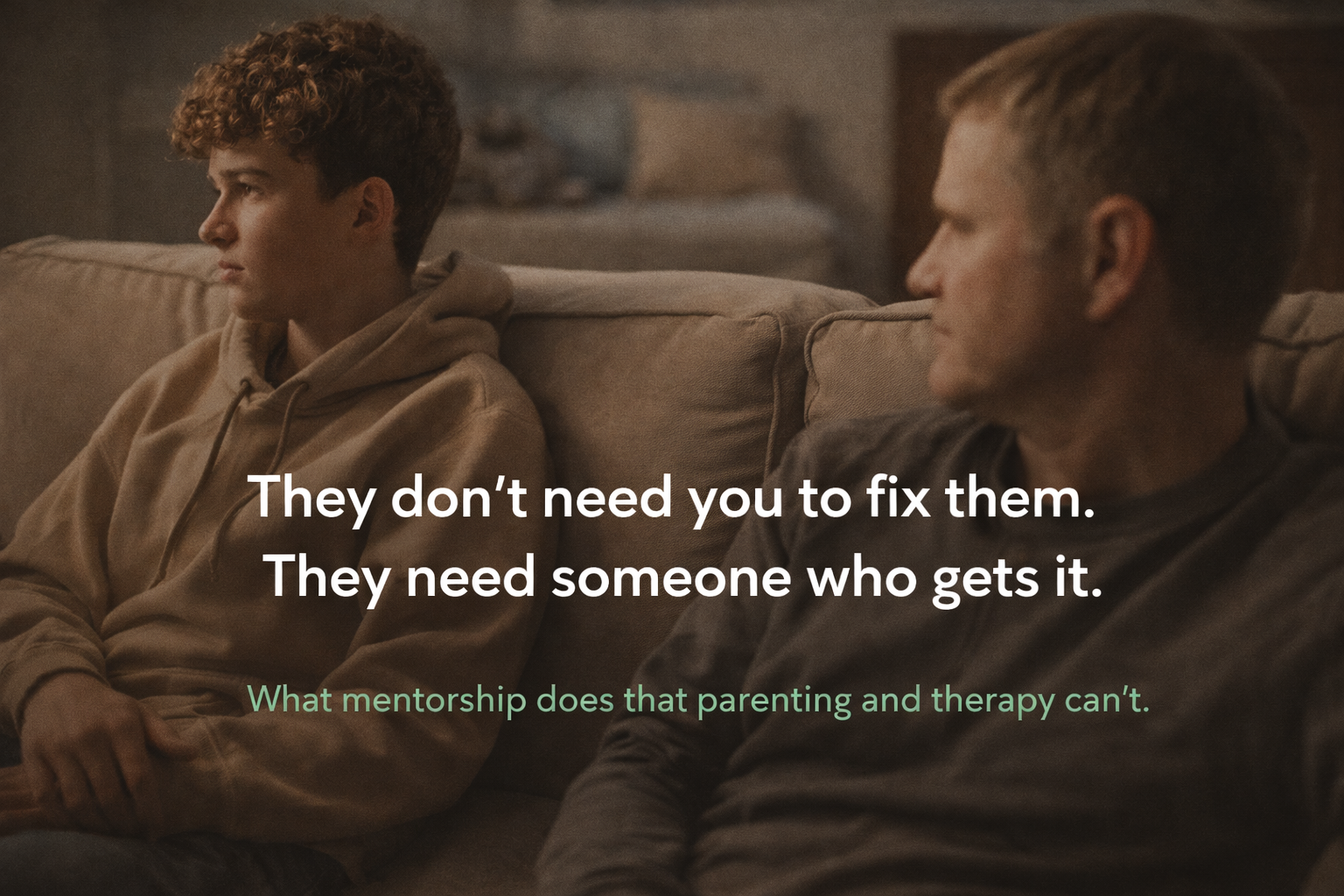
If you want your teen to have someone to talk to who isn't caught in the middle:Learn how mentorship works at The MentorWell, because sometimes the person your child needs most is someone who isn't you. That's not a failure. It's awareness.