The Second Question Changes Everything
"Are you okay?"
"Yeah, I'm fine."
Most conversations end right there.
A parent asks.
A manager checks in.
A friend reaches out.
The other person says they're fine, and everyone moves on.
The problem is that "I'm fine" has become one of the most automatic responses in our language.
We say it when we're tired.
We say it when we're overwhelmed.
We say it when we don't know how to explain what's going on.
We say it when we're not ready to talk.
And sometimes, we say it because we hope someone will notice that we're not.
The people who make the biggest difference in someone's life are often the people who ask the second question.
"You sure?"
"You seem a little off today."
"How are things really going?"
That's it.
Nothing complicated.
No psychology degree required.
No perfect script.
Just the willingness to stay in the conversation for one more moment.
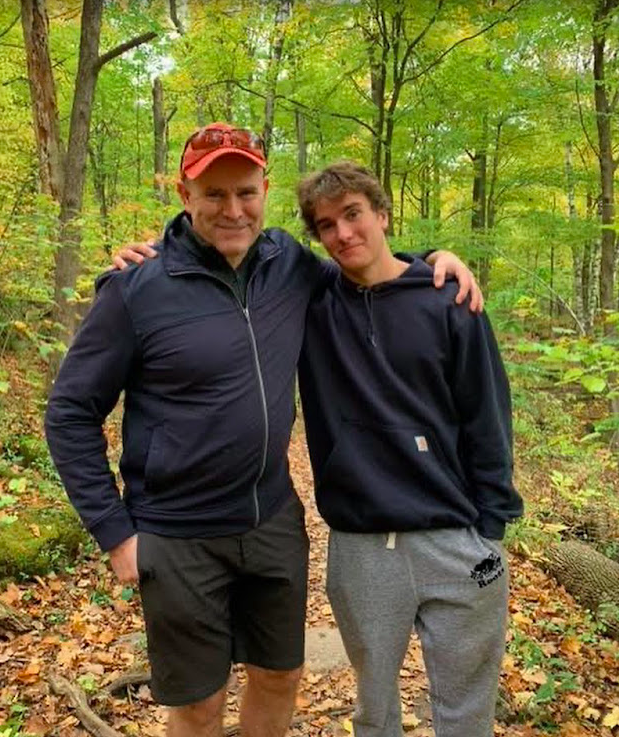
I've seen this play out countless times with parents and teenagers.
A parent notices something has changed.
Maybe their son has become quieter than usual.
Maybe their daughter is spending more time alone.
Maybe they're seeing mood changes, withdrawal, or a lack of interest in things that used to matter.
The parent asks:
"How was your day?"
"Fine."
And the conversation ends.
At least on the surface.
The challenge is that many parents don't know whether they're dealing with normal teenage behaviour or something more serious.
They wonder:
Is my teenager depressed or just moody?
Should I be worried?
Am I overreacting?
What if I push too hard?
So they back away.
What I've learned over the years is that meaningful conversations rarely happen because of one perfect question.
They happen because someone is willing to stay present long enough for the real answer to emerge.
The second question creates space.
Not pressure.
Space.
Space for a teenager to pause.
Space for them to reconsider their automatic response.
Space for them to decide that maybe they do want to share something after all.
Will it work every time?
Of course not.
Some teenagers will still shut the conversation down.
Some will say they're fine and genuinely mean it.
Some will need time before they're ready to talk.
But parents who consistently ask the second question tend to hear more.
It doesn’t work every time.
But more.
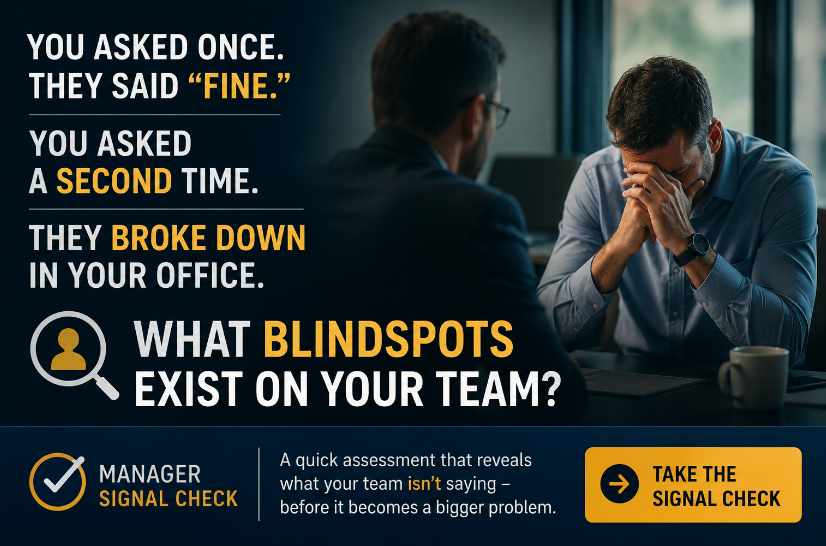
The same principle applies in the workplace.
Managers often tell me they were blindsided when an employee resigned.
They never saw it coming.
The employee seemed fine.
Their performance looked okay.
Nothing appeared wrong.
Then one day, the resignation letter arrives.
When we look back, there were often signs.
A shift in behaviour.
Less engagement.
More absences.
A change in energy.
The signs were there.
The conversation just never went beyond the first question.
Employee wellbeing has become one of the biggest challenges facing organizations today.
Many leaders genuinely care.
They want to support their people.
They simply don't know what to say.
They're afraid of saying the wrong thing.
They're afraid of crossing a line.
They're afraid of opening a conversation they don't know how to handle.
So they ask:
"Everything okay?"
The employee says:
"Yep."
And everyone moves on.
The opportunity disappears.
The reality is that most people don't need you to solve their problems.
They need to know that someone noticed.
Someone cared enough to ask again.
Someone was willing to stay in the conversation.
That's why the second question matters.
It communicates something deeper.
I see you.
I noticed.
I care enough to ask again.
Whether you're raising a teenager or leading a team, that message matters.
The second question won't solve every problem.
It won't prevent every crisis.
It won't create instant trust.
What it often does is creates an opening.
And openings matter.
A teenager shares something they've been carrying alone.
An employee admits they're struggling.
A conversation begins that might never have happened otherwise.
Most people ask the first question.
The people who change outcomes ask the second one.
And sometimes that single extra question becomes the moment everything starts to move in a better direction.