Your Teen Isn’t Refusing Therapy. They’re Refusing What Saying Yes Would Mean
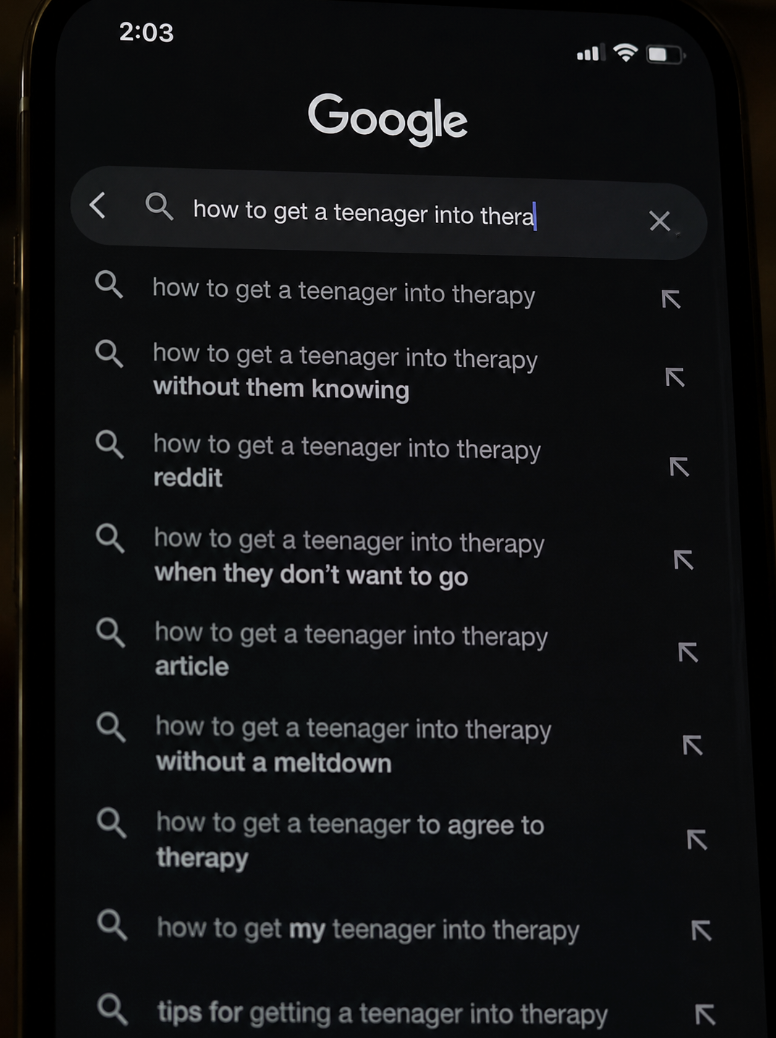
The refusal usually arrives as one word.
You've found someone. You've checked the waitlist, sorted the coverage, maybe rehearsed how you'd bring it up. And you get: no.
No reason attached. They don't want to talk about it.
Most parents I speak with have had some version of that conversation, and most of them read it as stubbornness. I did too, in a different context, a long time ago. What I've come to think is that the no is rarely about therapy. It's about what agreeing to therapy would require them to admit.
What they're protecting
That nothing is wrong. The moment a teenager says yes, they've conceded something is broken. Some would rather carry it than accept that label, particularly kids who've built an identity around being the capable one. Saying yes ends a story they've been telling themselves and everyone around them.
Control over who knows. They're working out who'd find out. Whether you'd tell their other parent, their grandmother, the school. Whether it follows them somewhere later. Teenagers have a sharper sense of how information travels than adults credit them with, because their whole social world runs on it.
You. A lot of refusals are aimed at protecting you. They've watched you worry. They've seen what it does at the dinner table. Saying yes confirms the worry was justified, and some kids will carry a great deal rather than do that to a parent they can already see is stretched.
Being handed to a stranger. You're asking them to say the hardest things they've got to someone they've never met, in an unfamiliar room, on a schedule. Adults find that hard. We've just had more practice pretending we don't.
Being fixed. They've decided the point of therapy is to make them different. If what they're feeling seems reasonable to them, and it often is, the offer sounds like correction rather than help.
A previous experience. A bad first therapist is common, and it does lasting damage to the whole idea. If they've been before and it didn't work, that tells you about the person they saw. They may not know the difference yet.
What tends to help
Ask which one it is. Not whether they'll go. What the objection actually is. "What's the part you don't want?" gets a real answer far more often than "why won't you try it?"
Take the permanence out of it. One session, nothing committed. Two names to choose between instead of one you've already picked. Small things, but they hand back some control, and control is most of what the refusal is defending.
Be specific about who knows. Say it plainly and before they ask. If you can't promise complete confidentiality, and depending on their age you sometimes can't, say that as well. A vague reassurance they don't believe does more damage than a limited one they do.
Stop selling. Every additional argument reads as pressure, and pressure entrenches. Say your piece once, tell them the door stays open, and mean it. Most parents can't manage that part. I couldn't.
When they still say no
Sometimes they hold. And you're left carrying a worry with nowhere to put it.
Two things worth knowing.
You can get support even if they won't. Parents can be seen on their own, usually much faster than teens, and a good clinician will help you work out what you're looking at and how to approach the conversation. That's a legitimate route in its own right.
And a therapist isn't the only adult who reaches a teenager. Some kids who won't go near a clinical setting will talk to a coach, an aunt, a mentor, someone with no authority over them and no stake in the outcome.
I want to be careful with that second one, because I got it wrong myself.
When we started The MentorWell, mentorship was the whole model. Adults with lived experience, matched with young people who needed someone to talk to. What happened was that parents whose teen had refused therapy came to us instead, and a number of those kids were already in crisis by the time they arrived. Mentors aren't clinicians. They aren't trained for that, and it isn't fair to anyone involved to pretend otherwise.
That's why we built the parent workshops. The gap wasn't in what teenagers needed. It was in what parents knew about how to get it for them.
So mentorship is real and it helps, and it's the wrong tool for a kid in crisis. If that's where you are, the answer is clinical, and the work is getting them there.
If they're in immediate danger, none of this applies and you don't wait for their agreement. Call 9-8-8, or go to emergency.
One more thing
The refusal isn't the end of the conversation. It's information about what they're afraid of.
Most parents hear no and start working out how to get to yes. The more useful move is figuring out which of the six you're dealing with, because the answer changes what you do next.
If you or your teen needs support right now, the 9-8-8 Suicide Crisis Helpline is available across Canada, 24 hours a day. Call or text 988.
You May Also Like
The Scariest Words a Parent Can Hear Are "I'm Fine"
Why teenagers use fine as protection, why parents accept it, and what one extra question can do.
Why Teenagers Stop Talking to Their Parents
The small moments that close the door long before a parent notices it's closed.
Your Teenager Doesn't Need a Crisis to Need Support
How mentoring differs from therapy, and why the space before a crisis is where most of the good gets done.
FAQ
How do I get my teenager into therapy when they refuse?
Start by finding out which part they're refusing. Most no's are about a specific fear rather than therapy as a whole, and the fear is usually fixable. Offer one session rather than a course, two names rather than one, and be precise about who would know. Arguing the case a second time tends to entrench the position rather than move it.
Can I put my teenager in therapy without their consent?
Depending on their age and province you may be able to, and it rarely works. Therapy needs some participation, and a teenager who's been compelled will usually give the minimum. The exception is immediate risk, where you act first and sort the rest out afterwards.
The waitlist is months long. What do I do in the meantime?
Waitlists in Canada regularly run six months or more, and the wait itself is a real problem. Get yourself support in the interim, since parents can be seen far faster than teens. Look at whether another trusted adult can be more present. And take the time to work out what you're actually seeing, so that when the appointment comes you have something specific to describe.
What if they say no and I'm genuinely worried?
Then you keep the door open and get support for yourself in the meantime, since you're the one carrying it. If you're worried about immediate safety, that changes things and you act without waiting for their agreement. The 9-8-8 Suicide Crisis Helpline is available across Canada, 24 hours a day.
Is mentorship a substitute for therapy?
No, and I learned that the hard way. When The MentorWell started, mentorship was the whole model, and parents whose teen had refused therapy sent them to us instead. Too many of those kids were already in crisis, and mentors aren't clinicians. Mentorship helps teens who won't engage clinically at all, because it asks less of them and involves no diagnosis. It's the wrong tool for a teen in crisis. Many families end up using both, in that order.