The Decision Was About the Business. It Ended Up Being About the Gummies.
I Thought the Gummies Were Helping Me Write. Then I Looked at What Else They Were Doing.
There was a stretch where I walked into dispensaries the way you'd walk into a pharmacy.
I'd ask what they had for energy. For focus. Something to help me write. And there was always someone behind the counter with an answer, because that's the job, and because I was asking a reasonable question in a reasonable voice.
I'd written some things while high that did well. A couple went further than anything I'd written sober. So I'd started treating it as a tool. I didn't say that out loud to anyone, including myself.
How it got there
Maddie died in April 2015. I went at the alcohol hard for a few months.
Then I worked out it wasn't helping. Two drinks could put me somewhere dark for days. It's a depressant and I was already depressed, so it was doing the opposite of what I wanted from it. I quit for stretches, went back, quit again. In August 2023 I stopped completely. Three years now, and it was easier than people expect. Once I understood what it was actually doing there wasn't much left to argue with.
But when you're carrying something, your brain stays on the lookout. It wants a break, even a short one. It isn't fussy about where the break comes from.
The gummies were for sleep. I made them myself. And they worked, which is the part nobody warns you about. I slept through the night for the first time in years.
Then socially. Then to relax in the evening. Then the dispensaries.
What I noticed, eventually
Memory went first. Then I was flat. Not sad exactly, muted. I cancelled things I'd said yes to. Then it started doing what the alcohol had done, dropping me into the same holes a day or two later.
I want to be careful here. I never had a problem, with either one. My parents might tell you something different about my last two years of high school, but that was rugby and beer and everyone I knew was doing it.
What I had was a pull. And the pull was heading somewhere I didn't want to go.
Last August
I had to make a decision about The MentorWell.
I wasn't making money. I'd been at it a while. The options were to keep going or shelve it and [the other road], and I sat with that longer than I've told anyone.
What kept coming back was the messages. Parents writing to me who were where I'd been ten years earlier, saying the same things I'd said to myself. Dozens of them. I understood exactly what they were describing, and there wasn't anyone else in their inbox who did.
Not to be melodramatic, but the consequences of misinformation in this space are life and death. That's the part that makes it hard to walk away from.
And there was the other thing. Working on it every day is how I get to work alongside her.
So I couldn't shelve it. But if I was going forward, I needed a clear head and the energy to do it properly, and I wasn't getting either. I'd convinced myself the cannabis was helping with both. It hadn't been for a long time. I'd just built a decent story around why it was.
I wasn't being the person she made me want to be.
So it went. A year ago this month.
Both of them in August, two years apart. I've never worked out whether that means anything.
You don't wake up one morning and make that call. It sat there for months while I found reasons not to look at it. What moved it in the end was that it stopped being a question about the cannabis. It became a question about whether I was going to do this properly or not.
What bothers me now
I know a handful of people who've made a similar call in the last year. Quit, or cut back hard, deliberately.
And for every one of them there's someone going the other way. Slowly. Reasonably. The way I did.
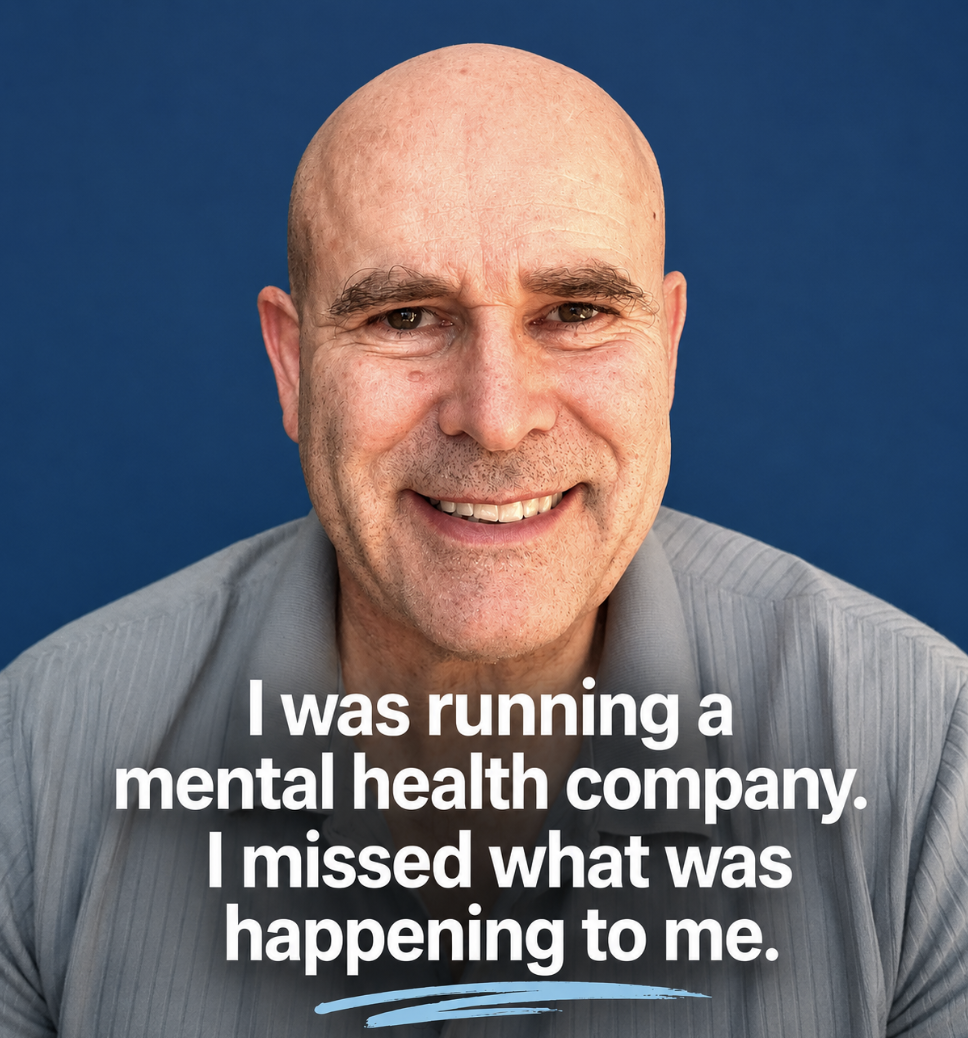
That's the part I keep coming back to. Not because everyone using is in trouble. Most aren't. It's that I could have carried on for years without much effort and nobody would have said a word. I was running a company about noticing when people are struggling, and I looked completely fine.
Legalization did something we haven't accounted for. It didn't just make it available. It made it unremarkable. There's nothing to ask about, so nobody asks.
The bit I actually worry about
I was about to turn sixty. I'd been in therapy. I'd read everything there is to read about grief. I run an organization built on the idea that people miss what's in front of them.
And I missed it in myself for two years.
So when I think about a fifteen-year-old who's lonely, or anxious, or grieving something nobody in his house knows about, and who's been told in a hundred small ways that this is what taking care of yourself looks like, I don't have much confidence he'll catch it either. He's got fewer years, less language, and a brain that isn't finished.
I'm not going to tell him he's wrong. I'd rather tell him what happened to me and let him work out whether any of it sounds familiar.
If you're struggling with substance use or your mental health, help is available. In Canada, the 9-8-8 Suicide Crisis Helpline is available 24 hours a day by call or text. For substance use support, the Canada-wide help line is 1-800-668-6868.
You May Also Like
I Thought I Had ADHD. It Was Grief.
I blamed my medication, early dementia, and mould in my coffee before a doctor named what was actually happening.
The Parent No One Sees Barely Holding It Together
There's a parent in your office who was out at 3am looking for their kid. She smiles at the elevator and hits her targets.
When the Casseroles Stop
The support arrives fast and leaves on a schedule nobody set. What happens to bereaved parents after everyone goes home.
FAQ
Is cannabis use a warning sign in teenagers, or is it normal?
Both, often at once. Occasional use is common and most teens who try it don't develop a problem. What's worth attention is what the use is doing. Using to sleep, to stop thinking about something, or to get through a specific part of the day is different from using at a party, and the second one is easier to spot than the first.
How do I tell the difference between coping and self-medicating?
The useful question is what it replaced. Coping mechanisms that arrive to fill a gap left by something else tend to grow, because the gap is still there. If something showed up around the same time as a loss, a breakup, or a change at school, that timing matters more than the frequency.
My teen vapes. Should I be worried about their mental health?
Not automatically, and the connection runs both ways. Nicotine and THC can worsen anxiety, and anxious teens are more likely to use. The more informative question is when it started and what else changed then. Vaping that begins alongside withdrawal, sleep changes, or dropping an activity is telling you something the vaping alone isn't.
How do I raise it without them shutting down?
Ask about the thing, not the habit. When did you start, what does it do for you, what's it like the next day. A question you actually want the answer to gets further than a question that's a verdict wearing a question mark. Expect the first conversation to go badly and plan to have a second one.
Does legal mean safe?
Legal means regulated and taxed. It says nothing about whether it's a good idea for a developing brain, and cannabis potency is substantially higher than it was a generation ago. The bigger effect of legalization is social. It became unremarkable, so nobody asks, which is a problem for adults and a larger one for teenagers.