The Blindspot Sitting in Your Home
The Silence They Mistook for Trust
I was on a podcast recently, being asked about two of the services I offer.
One is for managers. One is for parents.
Somewhere in the middle of answering I stopped. I realized I was describing the same conversation. The same dynamic. The same blindspot. Just wearing different clothes.
Here is what I have come to understand.
The relationship between a manager and their team member is more closely related to the relationship between a parent and their teenager than most people are comfortable admitting.
And the thing that breaks both relationships is identical.
The assumption that the other person would tell you if something was really wrong.
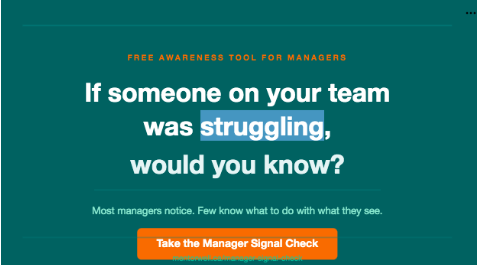
Managers tell themselves this all the time. If someone on my team was struggling they would come to me. I have an open door. I have built enough trust that they would say something.
They believe this genuinely. Most of them are good managers who care about their people.
And they are wrong.
The employees who are quietly disengaging are silent because the professional cost of being honest about struggle feels too high. They have watched what happens when people raise their hand. They have seen the subtle shift in how someone gets perceived after they admit they are not okay. They have calculated the risk and decided that performing fine is safer than telling the truth.
So they perform fine. They hit their numbers. They show up to the one on ones and say what needs to be said. And they disengage quietly, incrementally, in ways that do not show up in the data until it is much later than it needed to be.
The manager is waiting to be told. They are never going to be told.
Now here is the mirror.
Parents do the same thing.
I built The MentorWell after losing my daughter Maddie in 2015. She was fourteen. She was carrying something she never showed me. She did not want to worry me.
I have spoken with more than two thousand parents since then. And the pattern is consistent.
Parents see something. A shift in mood. A hobby quietly abandoned. A withdrawal from the things that used to matter. And they talk themselves out of it. They tell themselves it is just a phase. Just being a teenager. That if something was really wrong their kid would tell them.
The parent's blindspot and the manager's blindspot look different from the outside.
One is ignorance. The manager is not looking so they do not see. The employee has learned that being honest about struggle carries professional risk. So they perform fine and quietly disengage.
The other is fear and hope. The parent is seeing something but rationalising it away because they are terrified of what it might mean and desperately hoping they are wrong. The teenager has learned that their pain becomes the parent's worry. So they protect the parent from it and quietly withdraw.
Different origins. Same result. The signal goes unread. The moment to act passes.
Here is the part that should stop you.
The closer the relationship the more likely the silence.
Maddie did not tell me because I mattered to her. She was protecting me. The highest performing employee does not tell their manager because they have the most to lose. The signal hides behind the relationship. Not despite it.
Both the teenager and the employee have made a calculation. Honesty carries a cost they are not willing to pay. So they manage how they are seen. They give you just enough to keep the hard questions at bay. And they wait to see if you are going to look closer or look away.
Most managers look away. Not because they do not care. Because the work is getting done and the conversation feels risky and they tell themselves that if something was really wrong they would know.
Most parents look away too. Not because they do not love their kid. Because the alternative — that something is genuinely wrong — is almost too much to sit with.
The outcomes are different. Kids do not quit their parents. They shut down and isolate. Employees do not quit their kids. They quietly quit their jobs. Same silence. Different consequences.
Remote and hybrid work has made this worse on the management side.
The signals that used to be visible in an office — the energy that changed, the lunch that was eaten alone, the small interactions that told you something without anyone saying a word — those signals have to travel further now. And managers who were already taking the course of least resistance have even more cover to do so. As long as the work is getting done, it is easy to tell yourself everything is fine.
But there is something else happening too.
Managers are not just missing signals in their teams. They are carrying their own. The manager whose teenager has not spoken to them in three days. The manager whose parent just died. The one navigating a divorce, a health scare, a financial situation they have told nobody about. Running Monday morning standups like everything is fine.
The same silence they are missing in their team is the silence they are performing themselves.
Gallup's 2026 State of the Global Workplace report confirms what many organisations are already feeling. Manager engagement has dropped from 31% to 22% in four years. Nine points. Managers were once the most engaged group in any organisation. That pattern has now inverted. And most organisations are treating this as a re-engagement problem.
It is not. It is the same assumption playing out at scale. Managers performing fine. Nobody looking closer. The signal going unread until it shows up in the data.
The skill that breaks this pattern is the same in both relationships.
It is not a management technique. It is not a parenting strategy. It is the ability to resist the urge to fix, advise, or solve. To listen without an agenda. To ask questions that do not have one word answers. To stay in the discomfort of not knowing long enough for the other person to find their way to the truth.
On a scale of one to ten, how are you doing right now? And what would make it an eight or nine?
That question works in a kitchen. It works in a one on one. It works anywhere two people are in a relationship where one of them has been waiting for permission to say something real.
The LifeLine Parent Workshops and First Conversation Coaching for managers were built separately. But the conversations that happen in both rooms are remarkably similar. The questions managers ask about their team members are the same questions parents ask about their teenagers.
How do I know if something is actually wrong or if I am overreacting?
How do I start the conversation without making it worse?
What do I do if they shut down?
Where do I go for support when I am not okay either?
The Teen Signal Check and the Manager Signal Check are built almost identically. Same structure. Same zones. Same logic. One difference. The Manager Signal Check has a White Zone. I do not know.
Parents do not need a White Zone. They live with their teenagers. They see them at breakfast. They notice the untouched food, the closed door, the short answers. The signal is close and frequent even when it is being hidden.
Managers see their people for a fraction of the day. The signal has to travel further to reach them. Remote and hybrid work has made that distance greater. And the White Zone is not just I do not know what my employee is experiencing. Sometimes it is I do not have the bandwidth to find out because I am barely holding my own together.
I noticed the parallel on that podcast when I found myself answering a question about one service with language from the other.
I stopped mid-sentence.
You can become a better manager and a better parent by developing the same skills. The careful listening. The resistance to fixing. The willingness to sit in uncertainty long enough for the other person to find their way to the truth.
And in doing both you become a better human being.
But here is what happens when it goes beyond the individual.
When this approach is adopted consistently across an organisation — not as a training programme that gets forgotten in a quarter, but as a genuine shift in how managers show up — something larger starts to move.
The culture starts to inch toward trust and transparency. Not overnight. Not from a single workshop or a single conversation. But incrementally, in the same way disengagement built up quietly, awareness and safety can build quietly too.
People start to say things earlier. Managers start to hear things they were never hearing before. The signal that used to travel in silence starts finding its way into the open.
That shift does not stay inside the organisation. It shows up in how people talk about working there. In who applies and who stays. In whether your best people feel seen enough to remain or invisible enough to leave.
Trust and psychological safety are not soft outcomes. They are competitive advantages. Organisations that build them attract people who want to do meaningful work. Organisations that do not keep losing them to ones that do.
The question is not whether this matters.
The question is whether you are willing to start the conversation before the silence becomes something harder to come back from.