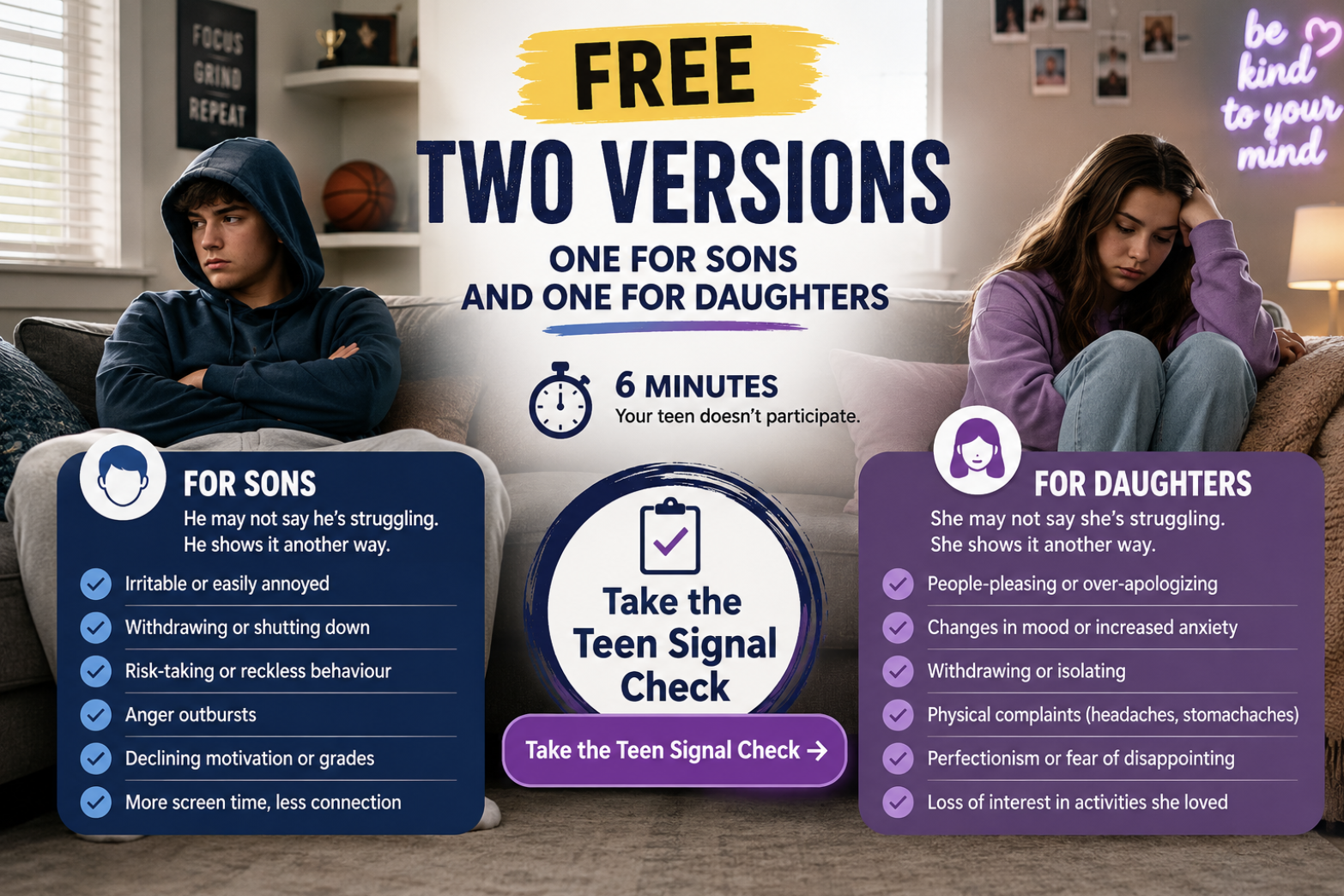
Boys Send the Signal as Attitude
I still get messages telling me to stay strong. Ninety percent come from men.
They mean well. Every one of those is a guy reaching toward me the only way he was taught to.
Read it again though. Stay strong. That's an instruction.
I got that instruction as a grown man, in writing, from men my own age, years after the worst thing had already happened. Boys get the same instruction at nine. On a field. In a hallway. From a coach, a teacher, an uncle, me.
We don't give boys many ways to be sad. We give them one. Don't be.
So they aren't. At least not out loud.
Here's where parents get caught, and I'm including myself.
You're watching for sadness. What shows up is something else.
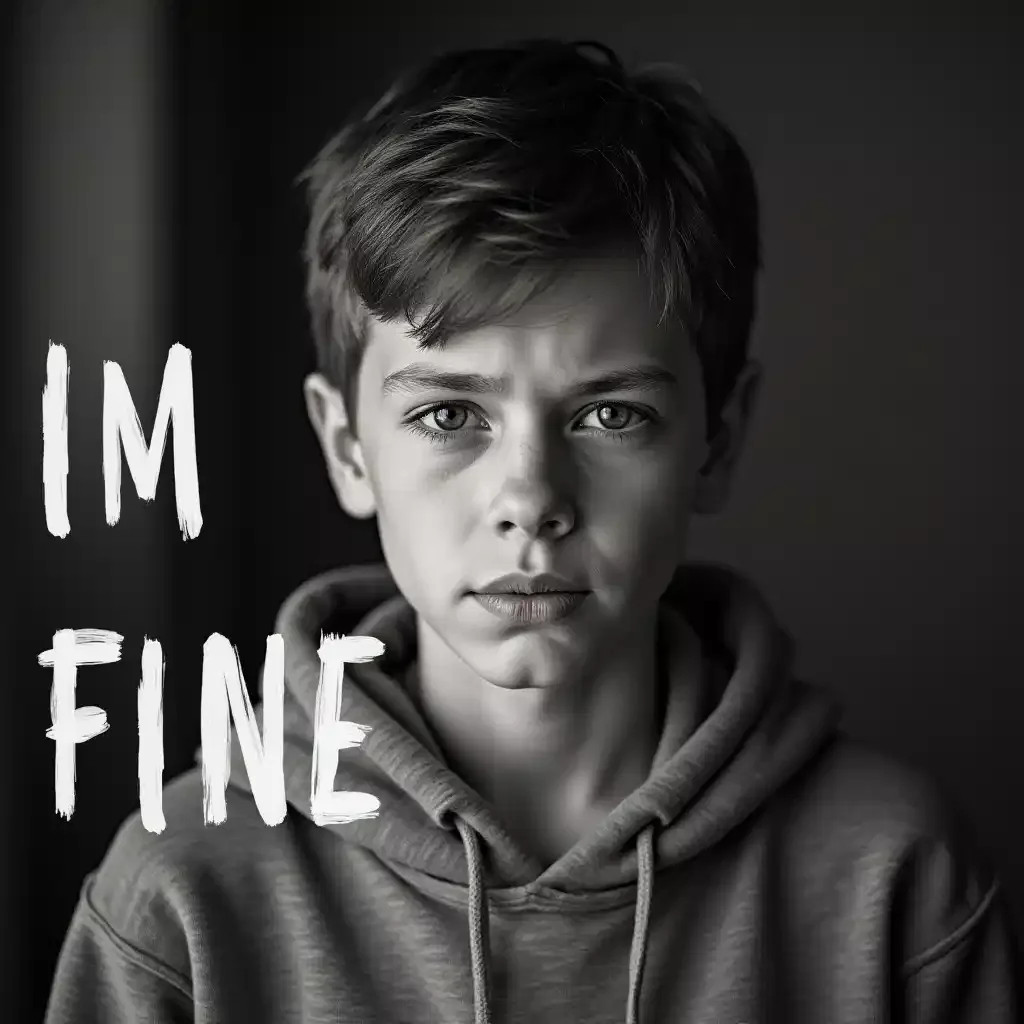
He's short with you. He's in his room. He's on the game until two. He shrugs at questions he used to answer. He says he's fine in a tone that dares you to ask again.
You read that as fifteen. A lot of the time, it is fifteen.
Sometimes he's carrying something and this is the only shape it can take.
That distance between what you're seeing and what he's actually holding is where kids get lost. This isn’t about you being careless. You're reading the signal he gave you. He gave you attitude because attitude was the only thing he had that didn't require words.
The losses are usually smaller than we expect, and they matter more than we think. A friendship that ended without explanation. Getting cut. A group chat he's quietly no longer in. A breakup nobody in the house knew about. The loss of a grandparent. A move. Something he can't articulate at all, which is most of them.
He doesn't have language for any of it. He has irritability, distance, and volume.
In Canada, roughly three out of four suicide deaths are male. That number sits underneath everything I just described.
So what do you do with it.
Stop asking him to name the feeling. He can't. Ask about the thing instead. What happened with Jordan? How's the team? You've been up late.
Sit beside him rather than across from him. Drive somewhere. Boys talk more in a car than they ever will at a kitchen table, and I've never fully understood why. Although, that reality applied to me as well.
And accept that some of them won't open up to you at all. That's not a verdict on your parenting. It's the age. It's why another adult in his life matters. A coach, a mentor, someone who isn't responsible for his curfew. Boys will tell a near-stranger things they'd never say to the person who raised them, and the goal is that he tells someone.
You're not looking for a crisis. You're looking for change. Something that used to be there and isn't. That's the thing worth paying attention to.
If you're already noticing something and you've been talking yourself out of it, that's the part I'd sit with.
You May Also Like
Why Parents Hide Worry About Teen Mental Health
Parents rarely invent concern from nothing. What they do is talk themselves out of something they already noticed. On what it actually costs a parent to admit they're worried out loud.
What I Would Do Differently as a Parent
Seven things I'd change about how I raised a teenager, written from the other side of loss. Fixing is faster than listening, and lonelier for the person on the other side of it.
Don't Tell Them the Odds: Parents in a Teen Crisis
The statistics say most teens will be fine. At 2am outside a closed bedroom door, that helps nobody. What parents actually carry while the odds are on their side.
FAQ
My teenager is angry all the time. Is that normal?
Frequently, yes. Irritability is one of the ordinary features of adolescence and it usually isn't a sign of anything more. What's worth attention is change. If the anger showed up where it wasn't before, if it's held for several weeks, and if it's appearing in more than one part of his life, that's the point to look closer.
How do I tell the difference between teenage moodiness and depression?
Not with certainty, and not from the outside. Nobody can. What you can do is track duration and spread. Moodiness moves. It lifts for a good day, a good game, a good weekend. A pattern that holds across weeks and shows up at school, at home, and with friends is a different kind of information.
Why won't my son talk to me?
Often because he doesn't have the words, not because he's withholding them. Boys are taught early that naming a feeling is a risk. When you ask him to name it, you're asking for something he may not have. Ask about the event instead of the emotion. What happened with Jordan is an easier question than how are you feeling.
What are the warning signs of teen depression in boys specifically?
They frequently look like behaviour rather than mood. Withdrawal from people he used to seek out, loss of interest in things he used to care about, irritability and short temper, sleep that shifts hard in either direction, and numbing through screens or substances. Sadness is often the last thing to show up, if it shows up at all.
Should my son see a therapist or a mentor?
Different tools. Therapy treats. Mentorship connects. If he's in distress, start with clinical support. If he's closed off, disconnected, or refusing to talk to anyone in the family, a mentor is frequently the door that opens first, because boys will say things to an adult who has no authority over them that they'd never say at home. Many families use both.