Late Night Social Media Use and Teen Mental Health: Why Timing Matters More Than Screen Time
I used to think I knew what to watch for. I was wrong.
I counted minutes. I tried to guess what my kids were looking at. I focused on how much time they spent on social media instead of when they were online.
Then I realized, the question was about timing.
I learned this the hard way.
Why Parents Focus on the Wrong Thing
Most parents worry about social media and teen mental health the same way I did. We track total hours. We set screen time limits. We argue about how much is too much.
But teen social media use at night is a different problem entirely.
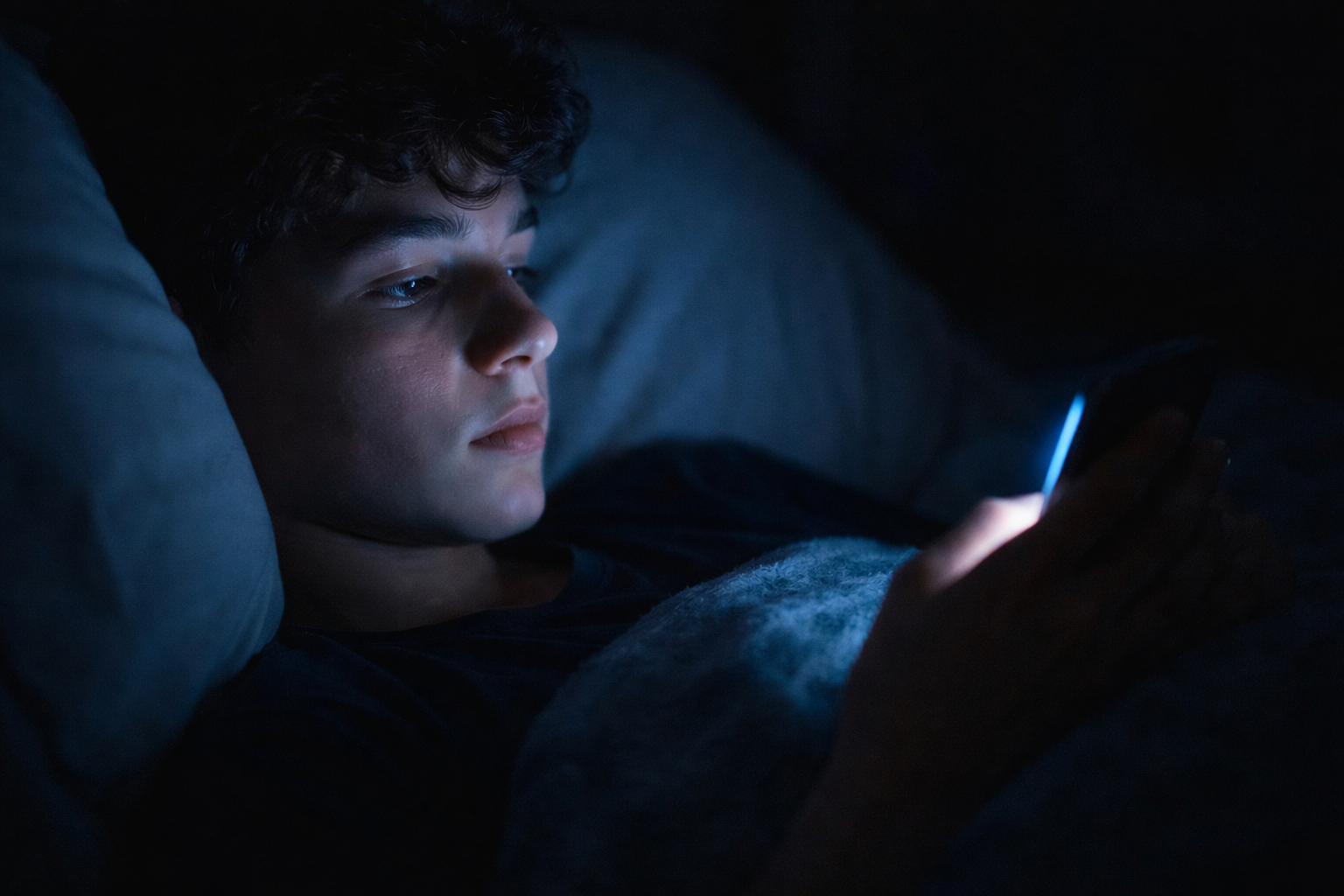
I remember walking past Maddie's room late one night. Everyone was supposed to be asleep. I saw the small glow under her door. I paused. I thought she was doing what every teen does. A little scrolling before sleep.
I walked past her door and kept walking. I thought I was giving her space. I didn't know I was giving her isolation.
She was comparing herself to every girl she followed. She was seeing parties she was not invited to. She was reading subtle comments that cut deeper at midnight than they would have in the afternoon.
I did not know then what I understand now.
What Late Night Social Media Does to Teens
After ten at night, everything hits harder.
Research on teen anxiety and social media shows that late night phone use affects teens differently than daytime scrolling. Their guard is down. Their brain is tired. Their thinking is less steady. They absorb everything as if it means something about them.
Here's what changes when teens use social media late at night:
Sleep quality drops significantly
Anxiety and depression symptoms increase
Social comparison intensifies
Emotional regulation weakens
Negative thoughts spiral faster
Self-esteem takes bigger hits
Teens feel this more intensely than adults. And they often hide it because they assume it is normal.
I wish I had known that earlier.
The Warning Signs You Might Be Missing
You can catch harmful patterns early if you know what to look for.
Common signs of problematic late night social media use:
Your teen stays online later and later
Sleep gets lighter or more disrupted
Mornings get harder
Mood swings increase
Confidence shifts for no obvious reason
They're more withdrawn or irritable
School performance starts to slip
These are early warning signs. And they matter.
How to Reduce Teen Screen Time at Night Without Starting a War
I wish I'd had a framework for this. Something that didn't make me feel like a surveillance parent. That's what The MentorWell gives families now, clarity on what to watch for and how to talk about it.
We help parents understand the connection between teen sleep and screen time. The science matters. The behaviour matters. We teach families how to address social media effects on teens without shame.
What works:
Focus on when they're online, not how much
Talk about protecting sleep, not limiting freedom
Help them recognize when comparison is creeping in
Build routines that protect their evenings without feeling controlled
Create phone-free wind-down time together
I often tell parents about the difference I saw once I started focusing on timing. Unfortunately, I didn’t realize it with Maddie, but It made a difference with my boys. My boys were more rested. Their moods were more stable. Conversations felt easier. The tension dropped. Nothing dramatic changed. Only the late night window changed.
Why Timing Matters More Than Total Screen Time
When teens shift their social media use to earlier hours, you see improvements quickly.
Sleep improves. Mood steadies. Stress decreases. School performance rises because the brain gets real rest. Your home feels calmer.
You do not need to monitor every minute. You only need to understand when your teen is most emotionally vulnerable.
Late at night.
That is the window where social media harms teen mental health the most. That is the window where small adjustments create real change. That is the window when your presence matters the most.
What You Can Do Right Now
Think about your own home for a moment.
When does your teen scroll the most? When do you notice the biggest mood shift? When do they seem most sensitive or withdrawn? When do arguments have shorter fuses?
For many families struggling with teen anxiety and social media, the answer sits in the late night hours.
That is where comparison grows. That is where confidence shrinks. That is where worry builds.
You can change this. It starts with paying attention to timing.
When was the last time you checked in after ten?