We Ask “How Are You?” a Dozen Times a Day. Almost Nobody Waits for the Answer.
If someone runs a shopping cart into your ankle in a Canadian grocery store, there’s a good chance you’ll be the one who apologizes.
We’re very good at politeness.
We’re less good at the second question.
“How are you?”
“Good, you?”
“Good.”
Done in about four seconds. Everyone’s pleasant. Nobody learned a thing.
Think about the hockey mom who used to bring extra Timbits to 6 a.m. practice and now waits in her car with the engine running until the buzzer goes.
The coworker whose camera has been off for three weeks of meetings.
The neighbour who used to stop and complain about the snow with you, and now gives you a quick wave from the driveway and heads inside.
Your teenager, whose bedroom door has developed strong opinions about staying closed.
Maybe it’s nothing. Most of the time, it is. People get tired. People get busy. Teenagers get moody, which is more or less their job description.
But sometimes the change is the only clue you’ll get.
I’ll be honest about what usually stops me from asking. I worry I’ll be intruding. I worry they’ll tell me something I have no idea how to handle. And, if I’m being really honest, I worry it’ll make me late for whatever’s next on my calendar.
None of those worries are crazy. Most of us were raised to mind our own business, and a lot of the time that’s good manners. Noticing someone is a different thing from prying, though. One is about satisfying your curiosity. The other is about making sure they know the door’s open.
I’m not a therapist. I don’t play one on LinkedIn either.
Although, judging by some of the messages in my inbox, a few people may have their doubts.
Between 2013 and 2015, when everything was falling apart, people would ask how I was doing. I’d politely say, “Good,” knowing full well I wasn’t.
If someone had asked how I was really doing, I’m not sure I would have said more.
But the follow-up question never came. So I kept it all to myself.
You don’t need training to ask the second question. You need about fifteen seconds of courage and a decent cup of coffee.
Something like:
“You haven’t seemed yourself lately. No pressure at all, but if you ever want to grab a coffee, I’m buying. I’m terrible at small talk. Pretty good listener, though.”
Then leave it with them. No follow-up email. No PowerPoint.
If they say “I’m fine, thanks,” believe them for now. You’ve still done something useful. They know someone noticed. In my experience, people remember that, and sometimes they take you up on the coffee weeks later.
If they do say yes, your job is mostly to listen. You’ll feel a strong urge to fix things. Sit on your hands. Ask what’s been going on. Ask what’s been the hardest part. If something they say worries you, you can tell them that, and help them find someone trained for this. That counts as caring too.
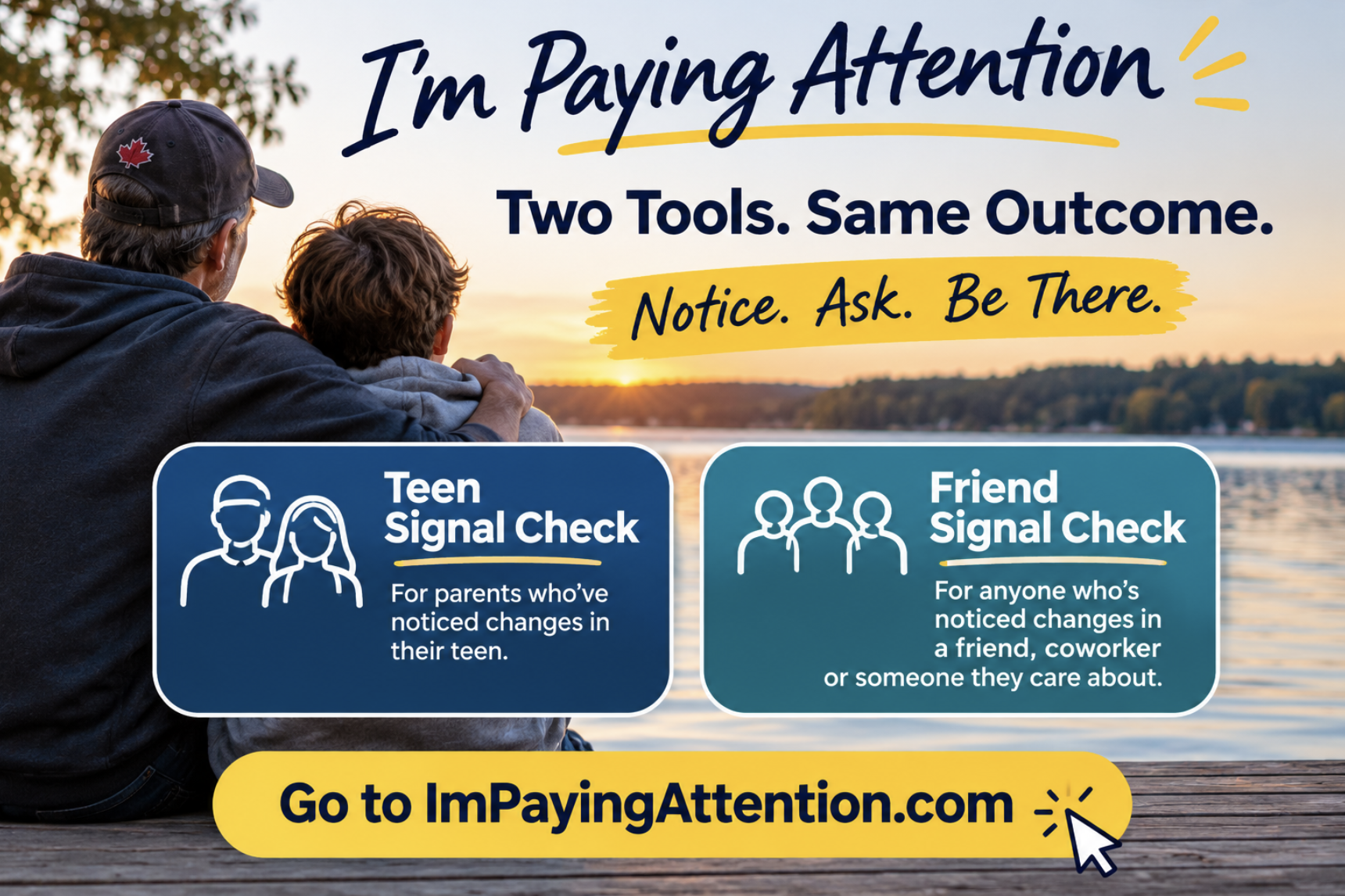
That’s the idea behind our I’m Paying Attention campaign. We built two free, private tools.
The Teen Signal Check is for parents, and any adult with a teenager in their life, who’ve noticed changes and can’t tell if they’re overthinking it.
The Friend Signal Check is for anyone worried about a friend. The coworker. The neighbour. The hockey mom in the idling car. My sons helped me build it with young people in mind, because kids usually tell their friends long before they tell us. So use it yourself, and if you’ve got a teenager, send it to them too.
Our goal is 100,000 completed Signal Checks. We’re asking employers to share them with their people. The cost to a company is one internal email. I’ve priced it out. Emails are still free.
The person who needs that second question might be sitting two desks over.
Or across the dinner table tonight, saying “fine.”
For Maddie. ❤️
FAQ
How do I ask someone if they’re okay without being intrusive?
Keep it short, private and easy to decline. Say what you’ve noticed, offer something specific like a coffee or a walk, then leave it with them. There’s very little pressure when they don’t have to answer on the spot.
What if they say “I’m fine”?
Believe them for now. You’ve still told them someone noticed, and many people come back to that offer later. You don’t need to push or ask again the same day.
What should I do if what they tell me worries me?
Tell them you’re worried, and help them reach someone trained to help, like a doctor, a counsellor or a crisis line. In Canada, call or text 9-8-8. In the US, call or text 988. You don’t have to handle it alone.
How do I talk to an employee about personal struggles?
Same approach, said privately, with no agenda or performance conversation attached. Mention what you’ve noticed, make it clear the door’s open, and point them to what’s available, including your EAP. Keep what they tell you confidential.
What’s the difference between the Teen Signal Check and the Friend Signal Check?
The Teen Signal Check is for parents and other adults who’ve noticed changes in a teenager, such as pulling away, mood shifts or withdrawal, and want help deciding whether those changes deserve a closer look. The Friend Signal Check is for anyone worried about a friend, at any age. It was built with teens and young adults in mind. Both are free, take a few minutes and need no email. Neither one is a diagnosis.
You May Also Like
“Fine” Is the Answer We Taught Our Kids to Give Us
Why “How was your day?” gets “fine” every time, and two questions that tend to get a real answer from your teenager.
My Sons Asked Me a Question I Couldn’t Ignore
How Zac and Sawyer pushed me to build a tool for friends looking out for friends, and what happened when I took it myself.
“Do You Have a Minute?” The Conversation Most Managers Aren’t Ready For
Five steps for managers when an employee says their kid is struggling, and why that conversation affects whether they stay.