Maddie Didn't Leave a Hole. She Left a Blueprint

I Wrote About Turning Grief Into Purpose Five Years Ago. Here's What It Actually Built.
Five years ago I wrote a post about turning grief into purpose.
It got more responses than anything I'd written up to that point. Parents who had lost children. Spouses who had lost partners. People carrying losses I'll never fully understand, who found something in those words that helped them take the next step.
I wasn't expecting that. I was still figuring out how to take the next step myself.
I want to tell you what happened after that post. Grief has a way of showing you things over time that it can't show you in the middle of it. And I'm far enough out now to see what the pain was actually pointing toward.
What I didn't know when I wrote it
When I wrote that piece, I was still trying to get back to the person I was before I lost Maddie.
That was the project for almost a decade. Return to normal. Recover the person. Find the version of Chris Coulter that existed before April 11, 2015 and resume from there.
Last year, I finally understood that was never going to happen. I was never meant to go back.
The person I was before Maddie died didn't know what I know now. Didn't have what I have now. Couldn't have built what exists now.
Grief didn't take something from me and leave a hole. It restructured me. And what came out of that restructuring, slowly, imperfectly, over ten years is The MentorWell.
What purpose actually looks like when it arrives
In the original post I wrote about turning pain into purpose as though purpose were a destination. Something you arrive at after enough grief work, enough healing or enough time.
That's not quite right.
Purpose doesn't arrive. It accumulates. It shows up quietly in the things you keep returning to. It’s the conversations you keep having, the questions you keep being asked, the moments where someone says "I thought I was the only one" and you realize you've heard that sentence five hundred times and it still lands the same way every time.
For me it accumulated into this:
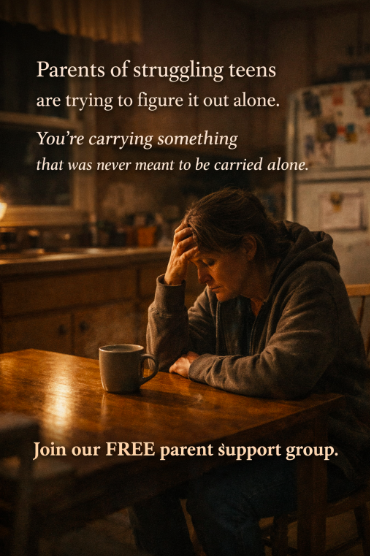
A parent support community called When Something Feels Off, 135+ families from around the world who gather because they sense something is changing with their child and don't know what to do with that feeling yet. Parents who show up not because things have fallen apart but because they don't want them to. That community exists because of Maddie. It runs because of the parents inside it who keep showing up for each other.
A workshop program called LifeLine, built for working parents who are navigating a child's mental health challenge silently, between meetings, at their desk, at 3am. Parents who have been keeping two stories straight, the one at work and the real one, because the workplace never felt like a place where the truth could be told. LifeLine Parent Workshops gives them the language, the tools, and a path forward before the crisis arrives.
The First Conversation coaching program for managers who freeze in the moment an employee discloses something they weren't expecting, because how that conversation goes determines whether a struggling person feels safe enough to stay, or decides the lie is safer.
And Teen Signal Check, a free five-minute awareness tool for the parent who senses something is off but can't name it yet. Thirteen questions. A green, yellow, or red result. A clear next step. Built because I know what it costs to not know what you're looking at.
None of this existed when I wrote that first post. All of it exists because Maddie didn't.
The thing grief taught me that purpose didn't
There's a moment that happens in grief, I've seen it in hundreds of parents now, where the loss stops being something that happened to you and starts being something that lives inside you. Where the person you lost stops being an absence and starts being a presence.
That shift doesn't happen on a schedule. You can't force it or earn it. But when it comes, it changes everything.
Maddie doesn't feel like a wound anymore. She feels like a co-pilot.
When I'm building something new, a workshop, a piece of content, a conversation with a parent at 11pm who found the community and finally felt seen, I feel her in it, as a collaborator. As the reason the work has weight.
I didn't know that was possible when I wrote the original post. I was still in the part of grief where her memory mostly brought sadness. Now it brings clarity. It brings direction. It brings the specific kind of courage that only comes from having already survived the worst thing.
That's what I'd add to the seven ways. An eighth way that isn't really a way at all. It’s more of a permission.
You don't have to rush the shift. You don't have to perform purpose before you're ready. Grief takes as long as it takes, and some days it takes longer than others. That's just the truth of it.
But when the pain starts pointing forward, and it will. Follow it. What's on the other side of that pointing is something you couldn't have built any other way.
What I know now that I didn't know then
I know that awareness without action doesn't save anyone. I missed Maddie's signs because I didn't know what I was looking at. The culture around her had taught her that some things are too dangerous to name. Both of those things are changeable. That's the whole project.
I know that parents who sense something is wrong almost always sense it before they can name it. The instinct arrives before the language does. And in the gap between the instinct and the language, most parents wait. They hope it's nothing, afraid of overreacting, unsure what they'd even say. That gap is where The MentorWell lives.
I know that workplaces are full of parents who are managing family mental health crises that nobody at work knows about. Who are showing up and doing their jobs and keeping two stories straight and exhausted in a way that doesn't show up in any metric. And I know that a single conversation, the right conversation, at the right moment, can change what happens next.
And I know that Maddie would have been proud of this. Because it does what she would have done. It shows up for people, without judgment, and asks what they actually need.
If you haven't read the original post, the seven ways are still true. You can find it here:
If you're a parent who senses something is off with your child and doesn't know what to do with that feeling, When Something Feels Off is free (if you join by May 1st), private, and full of parents who understand exactly where you are.
If you're ready for a clearer framework, LifeLine Home is three sessions, one hour each, $99 USD per family.
And if you're carrying a loss that hasn't found its direction yet. Give it time. The pain knows where it's going. You just have to keep moving long enough to find out.
💜
Chris Coulter is the founder of The MentorWell, a parent support and youth mentorship ecosystem built in memory of his daughter Maddie Coulter, June 28, 2000 — April 11, 2015.