Your Culture Is What Happens When Someone Tests Your Values
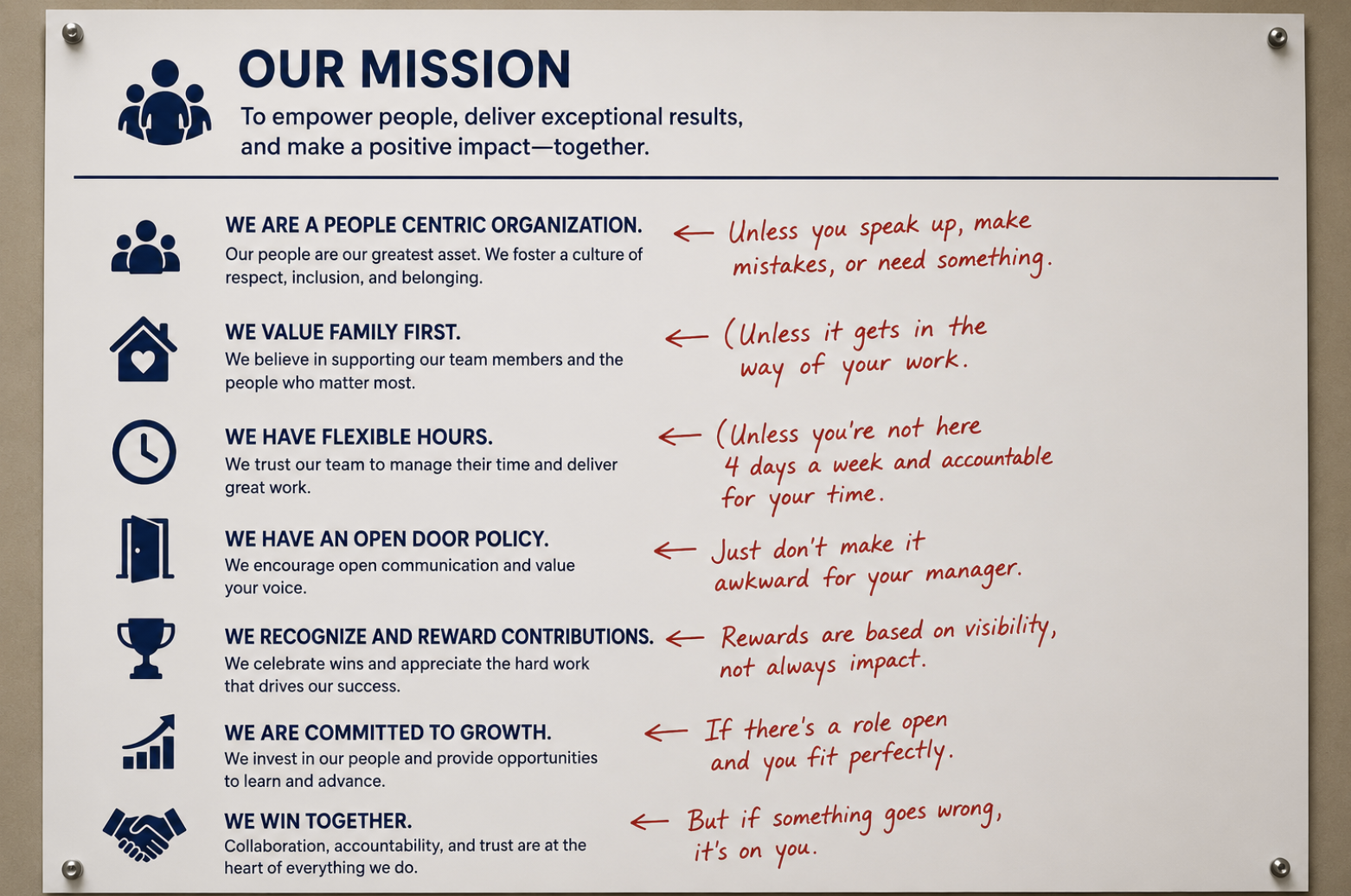
Somebody paid a designer for the board on the wall.
Nobody paid anybody for the second column. Your employees wrote that one themselves, and they did it for free, and most of them did it in the first six weeks.
We are a people centric organization. Unless you speak up, make mistakes, or need something.
We value family first. Unless it gets in the way of your work.
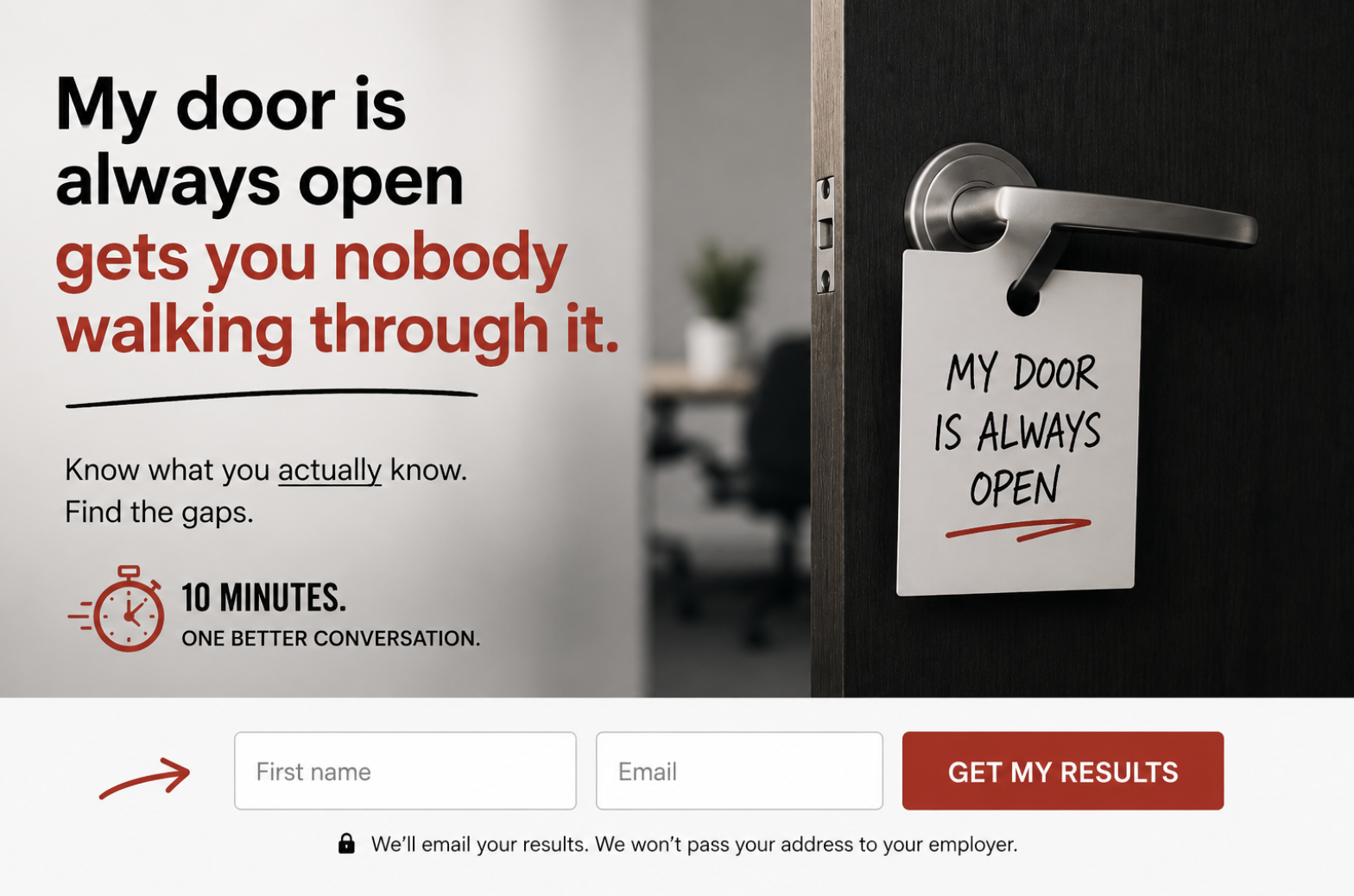
We have an open door policy. Just don't make it awkward for your manager.
None of that is cynicism. It's accuracy. Every one of those annotations is a description of what happened to somebody who tested the value and found the edge of it.
The only test that matters
Forget the board. Values statements are easy and they're written by people who meant it.
Think about the last time someone on your team had their performance drop for six months because of something happening at home.
Was the role still there at the end of it.
Did it come up in the review.
Did anyone use the word capacity in a meeting that person wasn't in.
Most organizations have never asked those questions in that order. They've asked whether the benefits package is competitive, which is a different question with a comfortable answer.
Some employers are genuinely good at this
I want to be fair, because blanket accusations are lazy and they make the people doing this well stop reading.
Some organizations absorb the drop. They hold the role. They don't make anyone explain twice, and they don't make a person prove the difficulty was serious enough to qualify. I've sat with the leaders who run those places. They aren't doing it for the careers page, and most would be uncomfortable being praised for it.
That’s not most employers.
Most have a board on the wall that says the right thing and a culture that quietly contradicts it.
People judge
They'll tell you they don't.
Ask anyone who told the wrong person at work.
Leaving early once a week for a parent with dementia gets noticed. Nobody says anything to your face. It goes somewhere. It surfaces eighteen months later as a comment about reliability, or as the reason a name comes off a shortlist, and the person it happened to will never be told that's what it was.
I'm not describing villains. I'm describing a promotion decision made by four tired people in a room, weighing capacity against capability, who genuinely believe they're being objective.
I’ve heard employees refer to their company’s culture as a joke.
Off the record, I’ve had a manager say to me, ‘employees don’t trust the company they work for.’ That manager left 3 months later.
What that does to disclosure
So the man whose father has dementia says nothing.
The woman whose fifteen-year-old has been cutting classes every day. She found out from another parent, not from her daughter, and there's nobody at work she'd tell that to.
Both are still hitting their numbers, for now. That's most of what they have left.
Then the organization looks at its assistance programme, sees low single-digit utilization, and calls it an awareness problem. Better posters. Another all-staff email. A wellness week.
It was never an awareness problem. Almost everybody knows the programme exists.
Your people did the arithmetic on what disclosure costs, and decided it wasn't worth it.
The uncomfortable part
They might be right.
That's the sentence I'd want a leadership team to sit with, because it's the one that changes what you do next.
If disclosure genuinely carries a cost here, then every campaign encouraging people to speak up is asking them to act against their own interests. They won't. They'll nod in the town hall and tell you nothing.
The question isn't whether your people believe the board.
It's whether they'd be wrong not to.
What to do about it
None of this requires a new programme.
Find out what actually happened to the last three people whose output dropped for personal reasons. Where are they now?
Ask your managers what they'd do, specifically, if someone told them something serious about home tomorrow morning. Most can't answer. That's a training gap, not a character flaw, and it's fixable.
Then look at the distance between what your executive team believes about speaking up here and what your employees say about it. That number is usually the finding.
Nobody needs a better board. The words on yours are probably fine.
Somebody just needs to go and find out what's written next to them.