We Gave 500 Parents Free Help. Fewer Than 5% Opened It.
Why Nobody Calls the Number
Almost every company I walk into has an EAP.
It's on the intranet. It went out in an email at some point. There's a phone number, a website, and usually a set number of covered sessions a year. It's a real benefit and it costs real money.
Utilization is almost always low. The low number gets read as low need, and the conversation moves on.
I want to argue that it's measuring something else entirely.
What the number actually is
Published figures put typical EAP utilization somewhere between three and eight per cent, with most estimates clustering around five.
Read those figures carefully before you use them in a meeting. Nearly every organization publishing a low number sells an alternative EAP, which means the number arrives attached to a pitch. The honest version is that the range is wide, it varies by industry and how the programme is delivered, and your own number is the only one that matters.
So pull it. Most HR leaders can get it in an afternoon. Then hold it next to the question this piece is actually about.
How many of your people are carrying something significant right now?
Not a guess from a survey. Count the ones you personally know about. A divorce. A parent in long-term care. A kid who isn't okay. A diagnosis somebody mentioned once and never again.
Now double it, because you only know about the ones who told you.
Whatever number you land on, it isn't five per cent.
The room where I stopped believing the communication argument
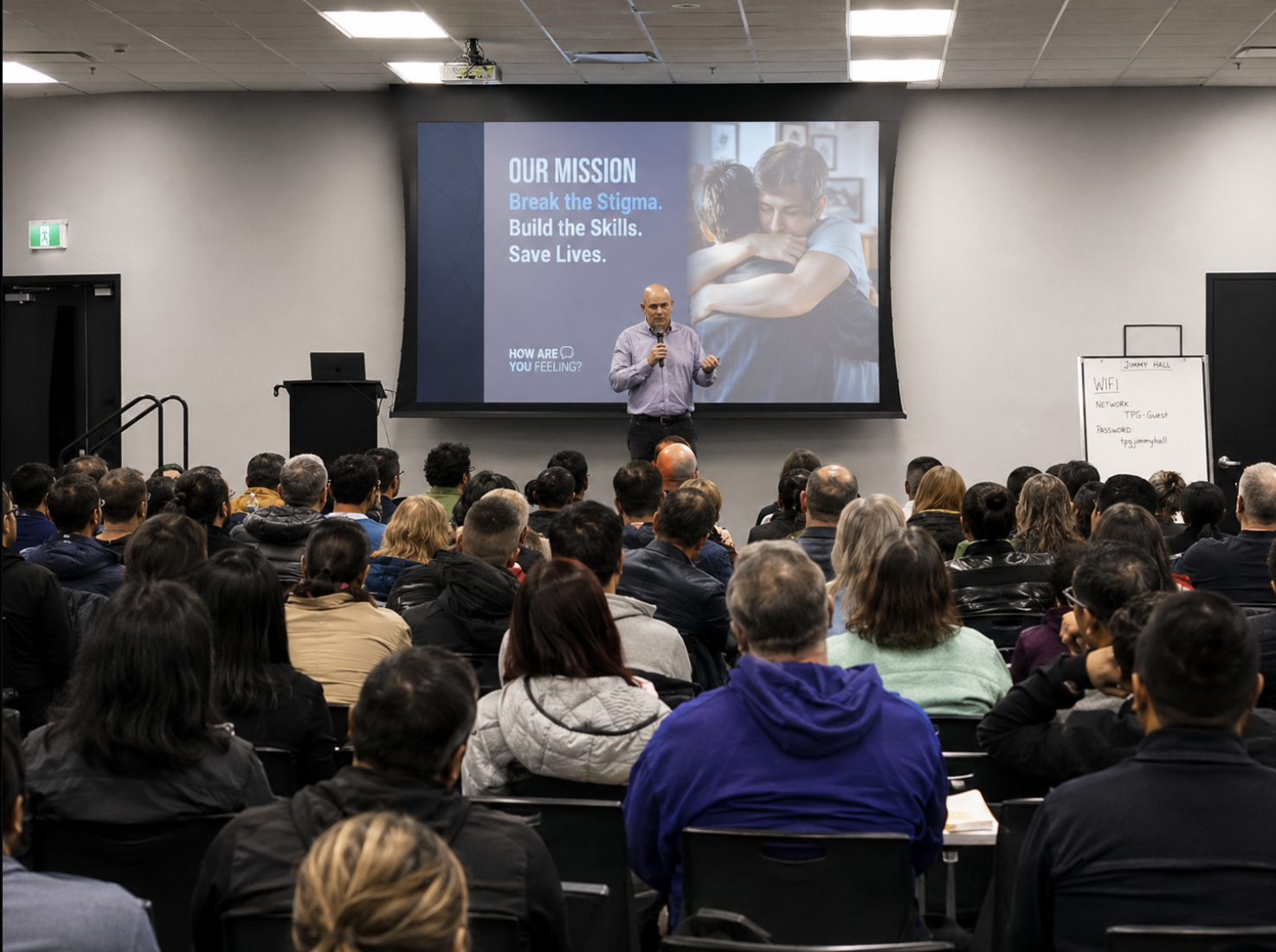
I presented last year to two groups, more than two hundred employees across two sessions. They'd been told there was a meeting, without much more context than that.
Early on I could see some of them wondering what parenting had to do with them. A few were checking their phones. Some had the look of people pulled away from something they'd rather be doing.
Then I put up the slide.
More than forty per cent of the people in this room are carrying something significant right now. A struggling child. A divorce. Financial pressure. Grief. An elderly parent. Physical or mental health, handled privately. Frequently more than one at the same time.
The room went quiet inside ten seconds.
I want to be careful about what that number is and isn't. It's what I've observed in rooms rather than something I've measured, and I'd rather say that plainly than dress it up as research. What I can tell you is that in the sessions where I've said it, nobody has ever pushed back. What happens instead is that everyone stops moving, because they're doing their own arithmetic at the same moment.
Some of them cried during that session. The kind of crying people do when they're working hard not to.
Afterward, the HR manager told me she'd known some of her people were struggling. She'd known for a while. What she didn't know was how to address it. And neither, she said, did her managers.
Every person in that room already had the EAP number.
The experiment that answers the obvious objection
The standard response to low utilization is a communication problem. People don't know it exists. Push it harder in onboarding, put it in the newsletter, get a manager to mention it in a team meeting.
I used to think that too. Then I ran the experiment without meaning to.
Before The MentorWell, I ran a teen mental health programme called HowAreYouFeeling.org. We gave 500 parents free access to the same suicide prevention material their own kids were already watching.
No cost. No sign-up sheet. No employer attached to it. Nothing that identified anyone to anybody, and nobody watching them do it.
Fewer than five per cent opened it.
That's the same number as EAP utilization, in a setting with none of the barriers people usually blame for EAP utilization.
So the communication argument doesn't hold. You can remove the cost, remove the employer, remove any possibility of being seen, and the number stays roughly where it was.
The barrier was never access.
What it's actually measuring
Utilization measures how many people were willing to identify themselves as having a problem, to an unfamiliar service, in order to get help.
Most people won't do that until they're already in trouble. Which means an EAP tends to catch people late, and to catch mostly the ones who would have found help another way.
There's a version of this I've watched at close range for years. Teenagers hide most from the parents they're closest to, because a kid who loves you and knows you worry will manage what you see. Employees do a version of the same thing. People protect their output before they protect anything else, and asking for help is the admission that the output is costing them something.
I've learned to give out my personal email at these sessions. Not because it scales, and not because it's a good system. Because it means nobody has to be seen.
More than one person has used it. An employee standing near a door at the end of a session, waiting to find out whether it's safe to say something, is the most accurate picture of workplace mental health I know.
What reaches the other ninety-five per cent
The difference isn't a better vendor or a bigger internal comms push. It's the direction.
An EAP waits for a hand to go up. Everything about it, correctly and by design, is confidential, individual, and initiated by the person who needs it. That design is the right one for what it does. It's also the reason it only ever reaches people who have already decided.
A workshop doesn't wait. It goes to the whole room at once, which means nobody in that room has identified themselves as anything. They came to a session. They sat with two hundred colleagues. And somewhere in the middle of it, more than one of them worked out that what they're carrying is more common than they'd assumed, and that there's a route to help that doesn't begin with a confession.
The second difference is who it's aimed at.
Almost every workplace mental health benefit points at the employee. A significant share of what employees are carrying is about their kids, and a benefit that supports the parent reaches the whole household rather than one person in it. The parent is the one who's present every evening. That's where the influence actually sits.
That's the entire design of LifeLine. It goes to the room. It's about the thing people are carrying home. And it doesn't require anyone to raise a hand first.
Keep the EAP
I'm not arguing against it. An EAP does something specific and it does it well, and for the person in acute need who is ready to call, it's the right resource.
Just stop reading its utilization rate as a measure of how your people are doing.
Pull your number this week. Then walk your floor and count the people you know are dealing with something.
The distance between those two figures is the actual problem, and it's the one nobody has a line item for.
[LifeLine Parent Workshops] · [Manager Signal Check]
I'm Chris Coulter. I built The MentorWell after losing my daughter, and the pattern I missed at home turned out to be the same one I'd been missing at work for twenty years.
FAQ
What is a normal EAP utilization rate?
Published figures generally land between three and eight per cent, with most estimates near five. Read them carefully, because nearly every organization publishing a low number sells an alternative EAP. The range is wide, it varies by industry and delivery model, and your own number is the only one worth planning around.
Why don't employees use the EAP?
Rarely because they don't know it exists. Using it means identifying yourself as someone with a problem, to an unfamiliar service, connected to your employer. Most people won't do that until they're already in trouble, which means an EAP reaches people late and reaches mostly the ones who'd have found help another way.
Would better communication fix low utilization?
It helps at the margins and it doesn't solve the problem. We tested a version of this by giving 500 parents free, private access with no employer attached and no way for anyone to be seen. Fewer than five per cent opened it. Removing every barrier didn't move the number.
Should we replace our EAP?
Probably not. An EAP does something specific and does it well for someone ready to call. The better question is what sits alongside it for the people who will never make that call, and whether any of it reaches what employees are carrying at home rather than at work. By incorporating LifeLine Parent Workshops, you’ll likely get better utilization of your EAP as a consequence.
How is a workshop different from an EAP?
Direction. An EAP waits for a hand to go up and is confidential, individual and self-initiated by design. A workshop goes to the whole room, so nobody in it has identified themselves as anything. They came to a session. That difference is the entire reason uptake looks different.
You May Also Like
The Slide That Made 200 Employees Go Silent
What happened in a corporate room when I named how many people were carrying something, and what the HR manager told me afterward.
Your Best Employee Is Quietly Struggling
She was five minutes late and I made a mental note of it. Why performance is the last thing to go rather than the first.
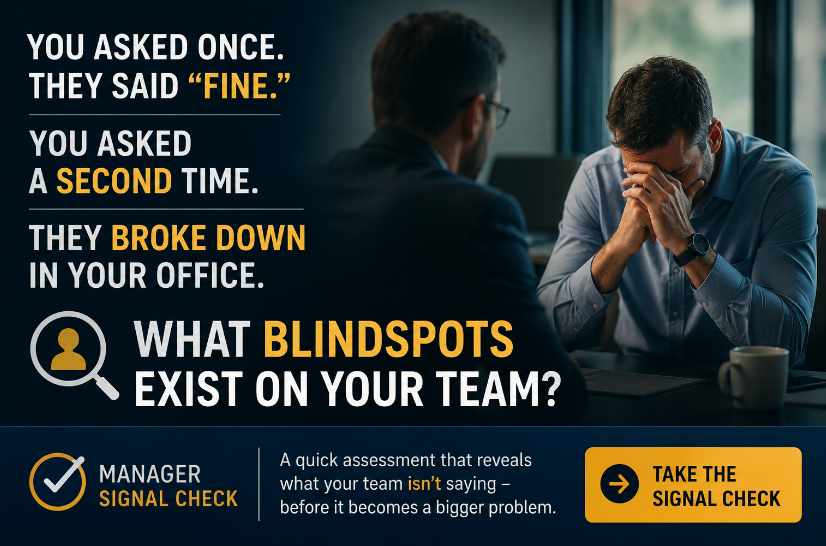
Someone Just Broke Down in Your Office. You Have Four Seconds.
What managers actually need in the moment somebody finally says the real thing, and why the fear is usually aimed at the wrong risk.