What We Keep When They’re Gone
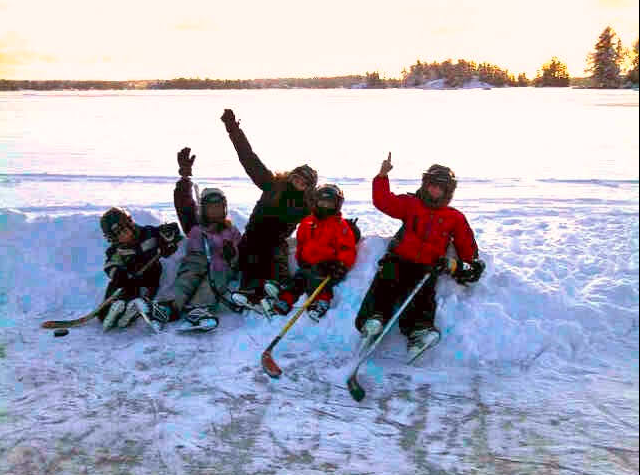
I found Maddie's skates last week.
They were in storage, tucked behind a box I hadn't opened in more than 10 years. The moment I saw them, time collapsed.
Maddie was a swimmer. That was her world. The pool. The early mornings. The discipline. The grace of someone who knew exactly who she was in the water. But her brothers played hockey. And she wanted to be part of their world too.
So we skated together. On frozen lakes. Usually at her grandparents' cottages. It's less about the sport and more about the feeling of moving together as a family.
Her skates weren't central to her identity. But they represent something that was: time we spent together. All of us. An activity that let her belong to her brothers' world while still being completely herself.
I didn't keep everything. Some things went to friends and family. Some things were donated. But these skates, they stayed. Ten years in a box. I forgot they were there. But when I found them, I knew why they stayed. They represented what we did together as a family. A life shared. Happier times.
It led me to ask a question I didn't originally expect to ask publicly. I asked my readers: What did you keep? What did you let go when someone you love leaves this world?
I wasn't prepared for what came back.
The Ones Who Wear Them
A woman wore her sister's sweatshirts for years. They were comforting in a way she couldn't fully explain. Now, 23 years later, she wears her earrings instead.
A mother wore her son's shirts until they were nearly threadbare. Then she hand-washed them carefully and put them away. He's been gone 12 years.
Another woman kept her mother's soft sweaters, the ones that feel like her arms. Jackets she wears to work because her mother was always dressed to the nines. An Auburn sweatshirt she pulls out on specific days when having her mother around her shoulders matters most. Sometimes, she said, she just needs to feel her mother still with her in spirit.
A daughter took home the blanket her mother kept on her bed during her final days. When she returned from caring for her, she walked into her house and went back to the car for her luggage. When she came in, her own daughter was holding the blanket. Smelling it. She knew it was her grandmother's and just wanted to be close to her one last time. Two years later, that girl still says things smell like her grandmother's house. Then she smiles.
Wearing isn't memory. It's contact. It's being wrapped in them when you need it most.
The Ones Who Waited
A mother kept her daughter's belongings in a storage unit for 23 years. She hasn't opened it since her son and husband packed everything up.
Another mother kept everything in boxes for three years. She was frightened to open them. When she finally did, so many memories returned. So many little messages her daughter had written. She keeps it all now. Her daughter's ex-partner won't let her see her grandson. She's keeping everything safe for when he grows up. Who knows what items might trigger precious memories for him.
A woman drove her father's truck a thousand miles after he died. It was a 1983 Nissan he'd driven for 30 years. The seat was torn. The speedometer was dead. Every time she started it, it let out an ear-splitting screech. But he'd called it The Mighty Truck, and to him, it absolutely was. She talked to him the entire drive. Cried over those miles. Handing the keys to her daughter when she arrived was like saying goodbye to him all over again.
A woman's mother still has her brother's suitcase. He died 46 years ago in France. He was 23. It was an unexplained death. The suitcase is all she has left of his belongings. The items inside were washed and carefully repacked at the time. The suitcase has never been opened since. The grief in that family, the woman said, has been ever-present her whole life.
Time doesn't work the same for everyone.
One mother gave her daughter's things to friends easily at first, as if she'd just moved to another location for a while. She even started wearing some of her clothes. One year later, everything changed. Touching anything became impossible. Painful. She realized what the words "never again" and "nowhere" actually meant.
Some people need decades. Some people need a year to realize they'll never be ready. There's no timeline. Grief decides, not the calendar.
The Ones Who Made Something New
A mother made a quilt from her son's favourite clothes. Fashion was important to him, so letting go of his wardrobe didn't feel possible. During the first year, she gathered many of the pieces and traveled across the country to her mother's house. She spent a week with her mother's sewing machine, cutting, sewing, crying. The quilt is far from perfect, she said. Not conventional. She puzzled together different-sized pieces and used the legs from his jeans to make a border. The back is a tapestry that hung in his apartment. When she finished, she took all the scrap materials and burned them in a large bonfire in the backyard. Now she curls under that blanket when she misses him most.
Another family waited 30 years to get their brother's leather letterman jacket back from the police. They had this image of what it looked like. When the police pulled it out of the cardboard box they'd shoved it in three decades earlier, it looked nothing like they remembered. All of his belongings had been stuffed into a trash bag. On the four-hour drive home, their father decided they should bury that trash bag and plant a tree on top of it. That May, the two older brothers flew out. That's exactly what they did. One of them sees that tree every day now.
Creating something new from what's left isn't about preserving. It's processing. It's giving grief somewhere to go.
The Ones Who Gave It to the Right Person
A father loved trains. He kept timetables, books, magazines, videos. After he died, his daughter struggled with what to do with it all. He didn't want to donate everything to a thrift store, she feared it might just get thrown away. A colleague mentioned that a coworker's adult son, who is on the autism spectrum, loved everything about trains. The young man was thrilled with the timetables and books. His mother wrapped up the DVDs and told the son it was her boy's favorite Christmas gift. It warms her heart, she said, knowing his father would have loved to talk trains with him.
A widow lost his wife to cancer. She kept two material things: her wife's pearls from her mother and a mink coat, also from his mother. That Christmas, he gave the pearls to his oldest son's wife and the mink coat to her youngest son's wife. Both cried. He then invited his wife's college roommates, best friends, and sister to the house. She told them: take what you want. The rest she gave to the Hospice House to sell.
Another widow couldn't let go of anything for the first 18 months after her husband died. Her home became a disaster zone. Then, slowly, with the help of a professional organizer, she addressed one box, one pile, one cupboard at a time. She had patchwork blankets made for her sons from his T-shirts. She gave his clothes to a young man who'd lost both parents and been raised by his older sister. She gave his toolboxes to his brothers. Almost eight years later, most of his belongings have been reduced to two cupboard doors in their four-door wardrobe. Her guiding thought through all of it: she wanted his things to go to someone in need or someone who would value them just as much — or even more — as they were his.
The wrong person feels like violation. The right person feels like continuation.
The Ones Who Kept the Words
A woman keeps her father's letters from when he was deployed to Korea. Postcards from various training locations. She was 14 when he died, almost 40 years ago. If there's ever a fire, she said, the first thing she'd grab after her kids and pets were safe would be those letters. "He wrote them. His handwriting. I can't explain it."
Another woman wrote letters to her grandfather in college despite talking to him three times a day. She kept all of his letters in a dingy shoe box — the same box that held the first pair of softball cleats he bought her because her father couldn't at the last minute. She also has "open this when" letters he left behind when he passed. She hasn't been to his grave since they buried him in 2021, but she plans to visit this summer to thank him for showing her, by action, what consistency and kindness look like.
A man kept his father's bank card. It had his signature on it. It was small enough to keep with his jewelry.
Handwriting is proof they existed in a way nothing else is.
The Ones Who Couldn't Keep Anything
A man lost his brother in a house fire. There wasn't anything to sift through. His brother was a roofer. To this day, if he sees a carpenter pencil, it will throw him for a loop. He used to try to fight it. Now he welcomes the landslide.
When there's nothing physical left, the triggers are everywhere. And sometimes that's the only way they come back.
The Ones Keeping It for Someone Else
A mother kept her daughter's belongings for 14 years. She's just now passing off the last of it, giving things to friends who adopted girls or had daughters of their own. She knew they would treasure it. Versus a thrift store, she said, that feels more empty.
Sometimes you're not keeping it for you. You're the guardian until the right person is ready.
A Different Grief
A mother hasn't seen her daughter in nine years. Her daughter struggled with mental health. She kept all the childhood things. Teddies. Everything from when her daughter was young. Eventually, everything else went. It was so hard, she said. She knows it's a different kind of grief.
Mourning someone living is mourning who they were, not who they are. That deserves space too.
What We're Actually Protecting
These objects don't bring them back. Everyone knows that.
But some things stay alive longer than others. Scent. Handwriting. Things they touched repeatedly. Things that required their specific effort. A truck driven for 30 years. A quilt made from favourite clothes. Letters written by hand. Blankets that still smell like them.
We're not protecting the person. We're protecting proof.
Proof they existed.
Proof they were loved.
Proof of shared time.
The future that should have been.
Our own identity as still connected to them.
The option to decide later.
I still don't know what I'll do with Maddie's skates. Maybe I'll never know. Maybe that's okay.
Holding on isn't denial. Letting go isn't betrayal. Both can be acts of love.
Thank you to everyone who shared. Your stories matter. The people you loved matter. And there is no right way to carry them forward.