Inbox Diaries: Episode 5 "I Called Every Number They Gave Me. Nobody Called Back."
"If you've ever been told 'the next available appointment is in four months,' read this slowly."
Every week, strangers send me things they haven't told anyone else. This is what they're saying.
A mother wrote to me last month.
Her daughter had been referred to a psychiatrist by the family doctor. The referral was accepted. She was told to expect a call to book an appointment.
She waited three weeks. No call.
She phoned the clinic. Was told her daughter was on the list. Was told the current wait was two and a half to three months. Was told there was nothing to do but wait.
Her daughter had told her she didn't want to be alive six days earlier.
Three months.
She called another clinic. Six-month wait. She called a third. Not accepting new patients. She called a crisis line and was told her daughter didn't meet the threshold for emergency intervention because she wasn't in immediate danger at that exact moment.
She messaged me and said: "I did everything they told me to do. I went to the doctor. I got the referral. I called every number they gave me. And nobody called back."
She wasn't asking me to fix it. She was telling me what it felt like to follow the rules and discover there's nothing on the other side.
I know that feeling.
When Maddie was struggling, I believed in the system. I believed that if you did the right things in the right order, talked to the doctor, got the referral, showed up to the appointments, the system would catch you.
It doesn't.
The mental health practitioners are overworked, under-resourced, and trying to do meaningful clinical work inside structures that don't give them enough time, enough funding, or enough capacity to meet the demand.
The system is broken because the math doesn't work. There are more kids in crisis than there are professionals available to help them. And the gap between a parent's urgency and the system's capacity is where families get lost.
That gap is where we lost Maddie. Not in the gap between good intention and bad outcome. In the gap between asking for help and help actually arriving.
Here's what happens in that gap.
The parent does everything right. They notice the signs. They have the conversation. They take their child to the doctor. They get the referral. They feel, for a moment, like they're making progress.
And then they hit the wait.
The wait is devastating. Because the wait isn't neutral. Your child doesn't freeze in place while the system catches up. The depression doesn't pause. The suicidal ideation doesn't take a number and sit in the lobby.
Your child keeps moving. Usually in the wrong direction. And you're standing there holding a referral number and a phone that nobody answers, watching it happen in real time with no ability to intervene.
That helplessness is the thing that no one prepares you for. You've been told that getting help is the hardest step. That asking is the bravest thing you can do. That if you just reach out, the support will be there.
And then you reach out. And it isn't there. And you realize that the hardest part wasn't asking for help. It was discovering that the help doesn't exist yet.
I get messages about this every week.
Parents who followed every instruction. Who did the responsible thing. Who put their trust in a system that couldn't meet them where they needed to be met. We’re not talking only in Canada. It’s universal.
They're not angry at individual doctors or therapists. They're angry at the arithmetic. At the waitlists. At the reality that their child's crisis is urgent but the system's response is scheduled for some time in the spring.
And they're angry at themselves for believing it would be different.
That's the part that stays with me. The self-blame. Parents who followed the path and ended up in the same place they started, except now they feel stupid for having trusted the process.
You're not stupid. The process failed you. There's a difference.
I'm not going to pretend I have a fix for the system. I don't. The capacity problem is real and it requires political will, funding, and structural change that no single organization can deliver.
But I also know that waiting is not a strategy. And the gap between referral and appointment is the most dangerous stretch of road a family can be on.
That's why we built the Expedited Clinical Referral Network. It’s not a replacement for the public system. It’s a bridge for the families who can't afford to wait in it.
It connects parents with clinicians faster. Not through a shortcut. Through a network of professionals who have capacity now, who understand the urgency, and who can begin working with your child while the public system catches up.
It's not free. I wish it were. But for the parents who are sitting in that gap right now, holding a referral number and watching their child slip, the cost of waiting is higher than the cost of not waiting.
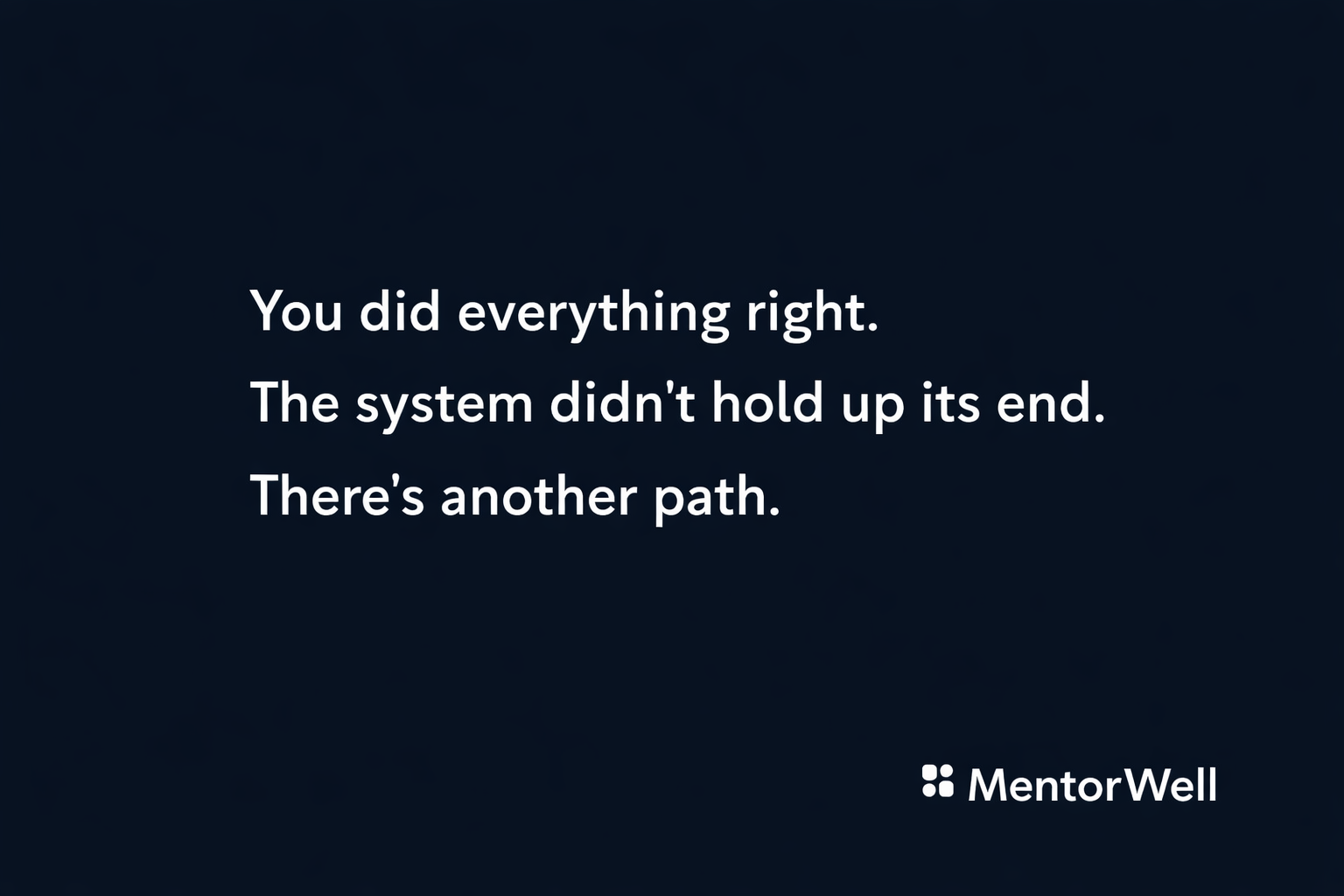
To the mother who wrote to me: you did everything right. The system didn't hold up its end. That's not your failure. It's ours.
And to every parent sitting in that gap right now: you don't have to wait in silence. There are other paths. You just haven't been told about them yet.
If you're waiting for help that hasn't arrived: The Expedited Clinical Referral Network connects families with clinicians who have capacity now. It's not a replacement for the public system. It's a bridge.
If you need to talk to other parents who understand the wait:Join When Something Feels Off, a free, private parent community for exactly where you are.
If you want to get a clearer picture of what you're seeing in your teen: The Teen Signal Check is free, takes two minutes, and gives you a clear zone with next steps.
The Inbox Diaries publishes every Friday. If someone in your network is stuck in the gap between asking for help and help arriving, share this.