You Say You're Employee-Centric, But 14% of Your Workforce Is Hiding Something From You Right Now

You think you know your people. You probably do. Their work habits, their strengths, what motivates them.
But there's something 14% of them aren't telling you.
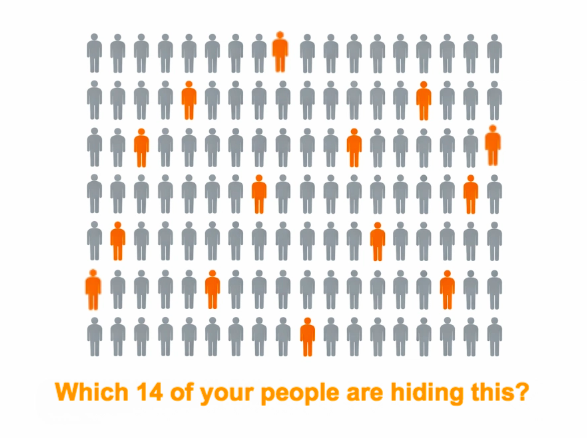
You employ 100 people.
Roughly 65 are parents.
22% of those parents have a child experiencing mental health challenges.
That's 14 employees dealing with struggling teens right now.
How many have told you about it?
If the answer is "zero" or "one or two," they're not hiding because they don't need help.
They're hiding because they don't trust what happens when they ask for it.
This isn't a problem you're preparing for
This is a problem that's already sitting in your company. In your meetings. On your teams.
Right now, while you're reading this:
Your top salesperson is texting her daughter's therapist between client calls.
Your HR leader is Googling "teen won't get out of bed" during lunch.
Your C-suite exec just lied about why he needs to leave early. Therapy appointment for his son.
They're not going to tell you in the interview process.
Some don't even know they're facing it yet.
But they're facing it now. And they're dealing with it alone.
How do I know?
Because I lived it.
I watched my productivity plummet while my daughter Maddie suffered in a psych ward at 14. I watched my world crumble around me. And then I lost her to depression.
I know what it's like to sit in a meeting and realize you haven't heard a single word because your brain is replaying the conversation you had with a doctor that morning.
I know what it's like to fake focus while your phone sits face down on the table and every vibration feels like a threat.
I know what it feels like when someone asks "how are you" and you have to decide in half a second whether to lie or lose your composure.
It was my company. It should've bankrupted me.
I was the only one going through this because I owned the place and couldn't hide it anymore.
Your people are hiding it better.
And I know I'm not the only one.
If some of your employees are going through this right now, and I guarantee some of them are, what kind of employer are you going to be?
The cost of hiding
When employees hide struggles, they're spending energy on:
Managing the secret.
Performing wellness they don't feel.
Monitoring their phone during meetings.
Planning around appointments they can't mention.
Carrying the stress of "what if they find out."
That energy doesn't come back to work.
You're not getting their best. You're getting their "hiding a crisis while trying to seem fine" work.
And you have no idea because your best performers are really good at hiding.
Transparency works faster
Hiding = Energy spent on concealment + Stress of discovery + Isolation + Delayed intervention.
Transparency = Energy available for actual solutions + Support reduces stress + Connection replaces isolation + Earlier intervention works better.
When employees can be honest about what they're dealing with:
They ask for help sooner. Before it becomes a crisis.
Interventions are smaller. Early stage is easier.
Recovery is faster. They're not managing alone.
Return to normal happens sooner. Less time suffering in silence.
Transparency doesn't just feel better. It works faster.
Employee-centric vs. saying you're employee-centric
Here's the difference:
Saying you're employee-centric means it's in your mission statement. On your website. In your recruitment deck. It sounds good. It costs nothing.
Being employee-centric means your people can tell you their kid is in crisis without wondering if it will show up in their performance review.
It means "family first" isn't just a slogan. It's what happens when someone needs to leave at 2 p.m. for the third time this week.
It means your leadership doesn't just tolerate struggle. They make space for it.
Most companies say they support families.
Very few companies actually do when the struggle gets messy.
When therapy appointments pile up. When a kid can't go to school. When a parent is barely holding it together and work becomes the place they have to pretend hardest.
That's when you find out if your culture is real or if it's just branding.
A lot of employers talk a big game. But actions speak louder than words.
If you're not that employer, no problem. Just don't call yourself employee-centric. Don't say you support families first.
Be honest about what you are. Employees will respect clarity more than empty promises.
This isn't for every company
Some companies want employees to keep personal life separate.
Some companies draw the line at "adults only" support.
Some companies believe struggles should be handled privately.
That's fine. Be clear about it.
But know what you're choosing:
You're choosing employees who hide. Who burn out quietly. Who leave without telling you why.
The companies that choose differently create cultures where "my kid is struggling" doesn't end careers. Where transparency is safer than hiding. Where employees get relief at the time they need it most.
Those companies will have a competitive advantage in talent.
Not with everyone. With the people who value being able to be human at work.
The strategic question
If your mission statement says you value your people, this is where you prove it.
Not when it's convenient. Not when it's just benefits administration.
When your employees are carrying something heavy and wondering if it's safe to set it down at work.
Your employees are already dealing with this. The only question is whether they're dealing with it alone.
If you're the employee-centric employer who not only ticks the boxes but backs it up too, this is your next play.
Our LifeLine Parent Workshops are the first line of defense—but also the first line of support. They give your employees the tools and community they need when their kids are struggling, before it becomes crisis.
And there are clear, actionable steps we can help you build into your culture that will become a strategic advantage.
Let's set up a call to address this problem directly.
[Schedule a 30-minute LifeLine Workshop Consultation]
This isn't about adding a benefit.
It's about becoming the kind of company where 14% of your workforce doesn't have to pretend everything's fine when it's not.
If this doesn't matter to you, that's a choice too. Just be honest about it.
But if you're going to say you care about your people, then care about them when it's hard. Not just when it's easy.