My Kid Would Tell Me. Are You Willing to Bet Their Life on It?
The Assumption
"My kid would tell me if something was really wrong."
That is the sentence I have heard hundreds of times, and almost more than any other in ten years of this work.
I said it too.
It’s naive. And it’s dangerous.
As parents, we tell ourselves this to give us a false sense of security.
The Most Dangerous Thing a Parent Believes
It is not said out of carelessness. It is said out of love. Parents who say it are paying attention. They have built a relationship they trust. They know their kid.
That is exactly what makes the assumption so dangerous.
Because it sounds like confidence when it’s actually a blind spot. And blind spots do not disappear just because we cannot see them.
The parent who says "my kid would tell me" is usually right about most things. Their teenager does come to them with school stress, friend drama, the ordinary texture of being fourteen. The relationship is real. The communication is real. The reality is different.
But there is a category of pain that teenagers almost never bring home. And it’s not because the relationship is broken. Because it’s not.
What It Actually Costs
Here is what the assumption costs you.
It costs you the window between early and late. That is the only window that matters.
Most of the parents I have worked with who wish they had known sooner were not negligent. They were present, loving, and paying attention. They just had one belief, my kid would tell me, and that quietly excused them from looking harder.
The assumption is comfortable. That’s its function. It gives you permission to interpret silence as fine. To see a closed door and call it normal. To notice something small and decide it is probably nothing.
And most of the time, it is nothing. Teenagers are moody and private and complicated. Most closed doors are just closed doors.
But some of them are not. And the assumption makes it harder to know the difference.
Why They Don't Tell You
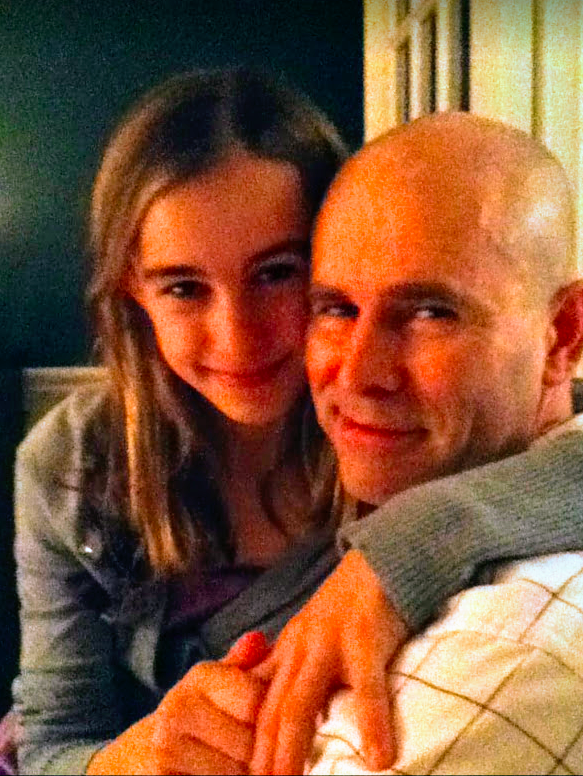
Maddie was fourteen. She was funny and sharp and full of life. She also carried something she never showed me. And she truly loved me.
That took me a long time to understand.
Kids don’t hide their pain from the parents they distrust. They hide it from the parents they want to protect.
Read that again.
Is your teenager is the kind of person who manages how they are seen? Do they hold things in, who takes care of everyone else first, who doesn’t want to be a burden. They are also the kind of person who may not tell you when something is seriously wrong.
Mostly because you matter to them.
The very qualities that make your teenager thoughtful and emotionally aware are the same qualities that can make them invisible when they are struggling. They have learned, often from watching you, how to appear fine. They have learned that the people they love have enough to carry. They do not want to add to it.
So they manage it alone.
And you, watching a kid who seems basically okay, believe what you see. Because the assumption is still there.
What Awareness Actually Looks Like.
This is about learning to read what is already in front of you.
Sleep changes. Appetite changes. A quiet that feels different from their usual quiet. A humour that has gone slightly flat. Less of what used to light them up. More time in their room. Less time with the people they used to want around.
These signals are only useful if you know how to read them.
Most parents who miss them are not inattentive. They are busy, stressed, carrying their own weight, and operating on an assumption that lets them interpret ambiguous information as fine.
Changing that assumption doesn’t require you to become a different parent. It requires you to do one thing: stop letting "my kid would tell me" be the last word on what you let yourself notice.
The Signal Was Always There
I look back now and I can see things I could not see then. Small things. Things that, on their own, meant nothing. Things that, together, meant everything.
I did not know how to read them. I did not know what I was looking at.
I know now.
And I built something so other parents can know too, before they are in a position like mine, looking back instead of ahead.
The Teen Signal Check is a five-minute awareness tool. It doesn’t diagnose anything. But it helps you see what is already in front of you, and gives you a language for what you are noticing.
If you have been carrying that quiet feeling that something is a little off. Please trust it.
It might be nothing.
But nothing is worth more than five minutes to find out.
Take the Teen Signal Check. Trust what your gut is already telling you.
Chris Coulter is the founder of The MentorWell, a youth mentorship and parent support platform built from personal experience.