Nobody Taught You What to Say. Say Something Anyway.
Someone said it to me on a Zoom call last year. Committed suicide.
I corrected them. They pushed back. They told me they could use whatever words they wanted.
I ended the call.
I thought about that call recently. I'll come back to it.
What the word claims
Most people think this is about being polite. Be careful around the sad dad. Don't upset him.
That's not it.
Committed is a word we use for choices. You commit a crime. You commit fraud. You commit to a mortgage. It means somebody looked at their options and picked one.
That's a claim about what happened. And it's wrong.
When you only feel like you have one option, that isn't a choice. That's a conclusion.
Anyone who has sat with someone in that state knows this. So does anyone who has been that person.
What to say instead
Died by suicide. That's the whole thing.
People hear it as a euphemism the first few times. It isn't. It's a sentence about something that happened to a person, in the same shape as died of cancer.
Some bereaved parents say killed herself and mean it. I don't correct them. It's their kid and their sentence.
If you're worried about getting it wrong, use the name and the verb. Maddie died. Most of the time that's all anybody needs from you.
Maddie, on a day pass
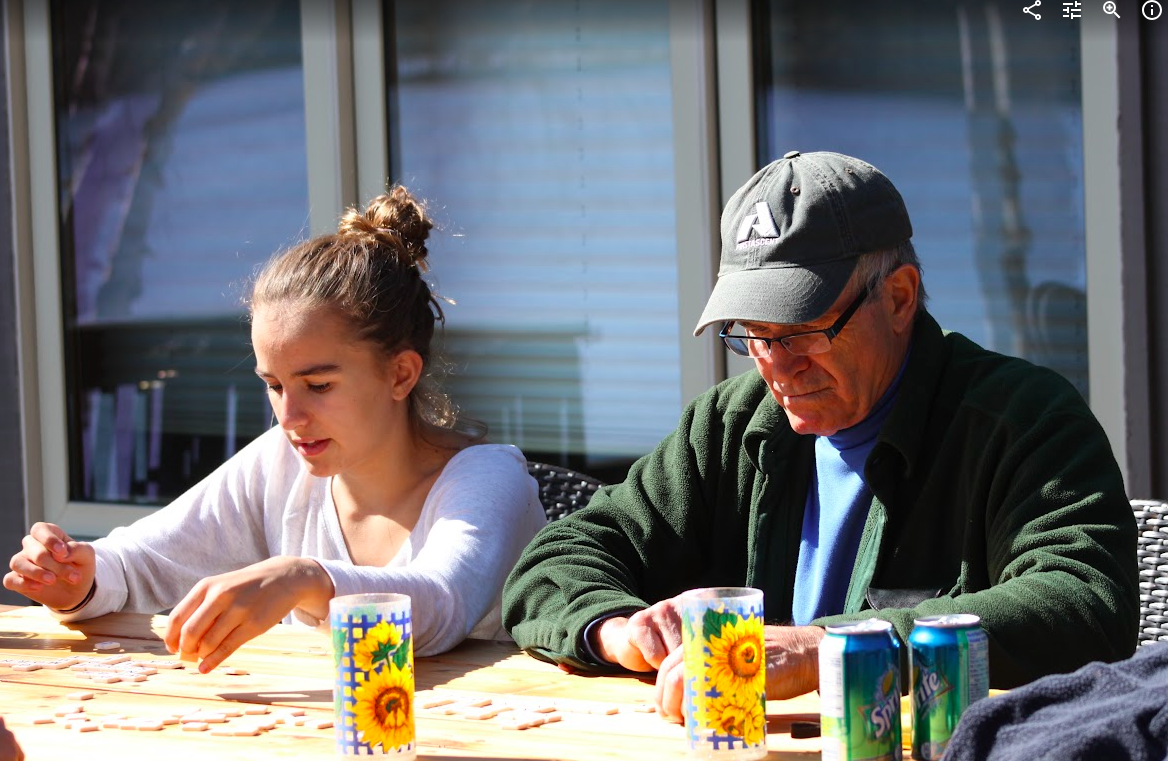
She had a pass from the hospital one afternoon. We came back to my place, had lunch, played a game. She beat me badly and enjoyed every second of it.
Then something changed.
I watched it arrive. It came into her eyes while she was sitting across from me, and her whole face went with it.
She looked at me and said, "Daddy, you need to take me back to the hospital."
She wasn't safe with her own thoughts anymore. She knew it before I did, and she said so.
I still see it. That memory hasn't faded a day since.
Nothing was chosen in that room. It was weather coming in, and she could feel the pressure drop.
Why they ask you to make it to morning
Call a crisis line and they'll ask if you're safe right now. Then they'll ask you to hold on until morning.
There's a reason for that.
Sometimes sleep gives you options back. Sometimes it's just daylight through a window.
Were the options there the night before? Every one of them. But when you're that far down, the obvious stops being obvious. Things that would be easy any other time of the day, are invisible at two in the morning.
The world didn't change overnight. What changed is that you could see it again.
That gap, between what's actually available and what a person can see, is where all of this lives. Committed pretends the gap isn't there.
The other thing people say
Here's a second phrase, and it took me a while to work out that it's the same problem.
People tell me that losing a child is the worst thing a person can go through.
They mean it kindly. Every time.
But it's a ranking. It's someone measuring a thing they've never been near, and I'm the one being measured. And there's nowhere for me to go with it. Do I agree? Do I thank them?
I've asked people where that comes from. Did you read it somewhere. Did it happen to someone close to you. I've asked it with an edge on it more than once.
Initially, someone making that claim would piss me off. I’ve softened a little bit since then.
I've stopped reacting like that. I'll explain why later.
Because "I can't imagine" is better. It's honest. It's the person admitting where their knowledge stops instead of talking past it. "I don't know what to say" is better too, and most people don't believe me when I tell them that.
What both phrases have in common
Neither one is aimed at the person listening.
Committed suicide puts the thing at a safe distance. It sorts it into a category of people who did something, so it doesn't have to be a category of people who got sick.
Worst thing imaginable puts it on a scale so it can be filed away. Awful, ranked, handled, moving on.
Both are the sound of somebody managing their own discomfort out loud.
I don't say that as an accusation. It's just what happens when a person is scared and has to say something anyway. I did it for years before any of this was mine.
Nobody chose this word either
Here's the thing I want to be clear about, because I've been unfair about it in the past.
Almost nobody who says committed suicide is making a point. They're using the word they were handed. It's what the news said. It's what their mother said. It's what got said at the funeral of the man down the street in 1994, and nobody has revisited it since.
They don't know what the word carries. Why would they? You only learn what it carries by being close to it, and most people have been lucky.
That's just not knowing.
Most people, when you tell them, apologize on the spot. They didn't know, they say. Sorry if I offended you.
They mean it. And that's the part worth looking at.
An apology like that treats it as a matter of manners. Wrong fork, wrong word, sorry about that. The person leaves the conversation being more careful around me and believing exactly what they believed when they walked in.
Nothing moved. It just got quieter.
Which is why I've stopped saying "we don't use that word anymore" and started saying what the word actually claims. Manners get an apology. Information gets a pause.
What the fence is for
If it was a choice, it belongs to a certain kind of person. Someone who gave up. A family that missed something obvious.
Their kid isn't that. Their family isn't that.
The word is a fence. It keeps the whole thing on the other side of the yard.
Take the word away and the fence comes down, and what comes across is the thought nobody wants. This could arrive at my house, on any given afternoon, right after lunch, and nobody would have chosen anything.
That isn't stubbornness. It's fear, and it usually shows up dressed as good manners rather than as an argument.
I understand it. I had that fence too. I had it right up until I didn't.
What the fence costs
A parent who thinks it's a choice waits for a reason. Something to argue with. Something they can talk their kid out of.
A boss who thinks it's a choice waits for someone to announce a plan.
Both are watching for the wrong thing. Meanwhile the real signals go by. The kid who stopped mentioning her best friend. The guy on your team who used to push back in meetings and now agrees with everything.
I'm not asking anyone to be nicer. I'm telling them their model is broken.
The kid at the table is listening
Picture a fifteen-year-old at dinner. She's been struggling for months. Nobody knows.
An adult says somebody committed suicide.
She's not thinking about grammar. She's running a calculation, and she runs it constantly.
She's working out what these people would say about her. Whether she'd be someone who got sick, or someone who did something wrong.
Kids test the water before they say anything. They listen to how we talk about other people's pain, and they decide from that whether ours is safe to bring anything to.
That has nothing to do with my feelings.
So what do you actually say
People ask me this more than anything else. Here's what I've got.
Say her name. Maddie. Out loud, in a normal voice. The thing bereaved parents fear most is that their kid becomes a subject nobody raises. You will not remind me. I never stopped thinking about her.
"I can't imagine" is fine. Better than fine. It's true, and it's you staying on your own side of the line.
"I don't know what to say" is also fine. More honest than most of what gets said instead.
Ask something specific. What was she like. What did she love. What's the hardest part right now. Specific questions are easier to answer than "how are you doing," which has no floor and no ceiling.
Skip the comparison. Yours to your neighbour's, mine to anyone's. There's no scoreboard and nobody wants to be on it.
And say something. This is the one that matters. The clumsy sentence is survivable. What isn't survivable is the friend who crosses the street because they couldn't find the right words. Silence is louder than any mistake you're worried about making.
My dad at a barbecue
My mom died in February. My dad has spent every day since finding ways to honour her.
He was at his condo complex barbecue this week. Mom sat on the board there for years, and one of the men at the barbecue served alongside her for eight of them. They were close.
Dad walked over and said, "Did you know Carol passed?"
He knew the answer. Everybody in that building knew. What he was really saying was that almost six months had gone by and this man, who worked beside his wife for eight years, had never once said her name to him.
The man was mortified. Then he said this.
"I'm really sorry for your loss of Carol. I got to see the best of Carol for the eight years we worked together on the board."
Read that again. It's a good sentence. Specific, warm, and it handed my father eight years of her he wasn't in the room for.
That sentence was available for six months. It only came out because an 84-year-old man made himself uncomfortable at a barbecue to go get it.
Dad told me about it after. I told him what I've told him a few times since February. People are clumsy and frightened around grief. And it’s never because they don't care. Because nobody ever taught them how, and they're terrified of making it worse.
Then I told him the harder part. You have to forgive them, or you'll end up carrying a quiet contempt for a lot of decent people who simply didn't know what to do.
That man thought about my mother plenty. He probably drafted something in his head a dozen times and decided each time that too long had passed, which made the next week harder, which is how six months goes by.
It's never too late. Six months, two years, ten. "I still think about Carol" would have been enough.
Back to that call
I gave my father that advice several times since February. I hadn't taken it myself.
One man last year did the opposite of apologizing. He told me he could use whatever words he wanted.
I ended the call.
I still think I was allowed to. He'd been told, and he dug in.
But I've been honest with myself about what I was holding. I was talking to someone who believes suicide is a decision people make. Which means his kid would hide it from him. His employee already was. On that call he was the most important person in the room, and I hung up on him.
Here's what I've learned since.
The correction works when it hands somebody information. It stops working the second it becomes a test they can fail. Once it's a test, everyone watching learns that Chris is a person you have to be careful around.
Careful is the last thing I want from a room full of parents.
That's also why I stopped asking people where they got the worst-thing-imaginable line. Fair question, lands like a trap. There's one answer available and it's the wrong one. Then they go quiet, and quiet is what I was trying to prevent in the first place.
So I ask myself something now, before I open my mouth. Am I teaching them, or am I defending her?
Those feel identical from the inside. They land completely differently on the other end.
One of them opens a door. The other one ends a call.
One time to say nothing
Never correct a newly bereaved parent.
Three weeks in, when someone says my son committed suicide, that's the only sentence they've got. It's the one everybody handed them.
They'll find the other words. Every one of us did. Give them a year.
Why any of this matters
There are people who have been at this far longer than me. Leslie Weirich. AnneMoss Rogers. They've said it thousands of times, in rooms where people rolled their eyes.
Language shifts because thousands of people corrected it over years, and most of them never got to see the day it landed.
But here's why I keep going, and it isn't really about vocabulary.
The instinct that makes someone say the wrong thing to a grieving parent is the same instinct that makes them miss a struggling kid. Both times, they're turning slightly away from something uncomfortable. And it happens out of not knowing what to do with it.
We miss things because we look away for a second. Getting the words right is practice for not looking away.
If you can sit with a parent and say her name without flinching, you can sit with your own kid when they say something that scares you. It's the same muscle.
My father, at 84
He was gutted when Maddie died. When my mother died he lost his best friend of sixty years, and for a while he didn't know what he was for.
He came to me with questions after that. What does grief do? How long does this part last? Is this normal? He'd watched me carry it for years and he still had to learn it from the inside, the way everybody does.
Then he walked up to a man at a barbecue and made him say her name.
He has no training. Nobody handed him a script. He just decided that being uncomfortable for thirty seconds was worth less than his wife's name going unsaid for another six months.
That's the whole thing. That's all any of this is.
Say the name. Ask the question. Sit through the awkward part.
Most people never get taught how to do this, so they wait for someone to go first.
Go first.
FAQ Section
Why is "committed suicide" considered the wrong phrase?
Committed is a word for choices. You commit a crime, you commit fraud, you commit to a mortgage. Every use of it assumes somebody looked at their options and picked one. That's a claim about what happened, and it's wrong. When a person can only see one option, that isn't a choice. It's a conclusion.
What should I say instead of committed suicide?
Died by suicide. It sounds like a euphemism the first few times you use it and it isn't. It's a sentence about something that happened to a person, in the same shape as died of cancer. Some bereaved parents say killed herself and mean it. That's their sentence to use.
What do you say to a parent who has lost a child?
Say the child's name in a normal voice. Ask something specific: what was she like, what did she love, what's the hardest part right now. "I can't imagine" is fine and true. "I don't know what to say" is fine too. The thing that isn't survivable is the friend who crosses the street because they couldn't find the right words.
Is it too late to say something if months have gone by?
No. Six months, two years, ten. "I still think about her" is enough. Most people go quiet because they decided too much time had passed, which makes next week harder, which is how six months goes by.
Should I correct someone who uses the wrong word?
Sometimes. It works when you hand them information about what the word claims. It stops working the moment it becomes a test they can fail, because then everyone in the room learns you're a person they have to be careful around. Never correct a newly bereaved parent. Three weeks in, that's the only sentence they've been given.
You May Also Like
I Don't Fear Talking About Maddie. I Fear Forgetting. The practical version of what this post argues. What to say to a bereaved parent, why silence hurts more than a clumsy sentence, and why mentioning her name is a gift rather than a wound.
Grief Does Not Follow a Schedule Aisle seven, a brand of cereal, and two minutes standing still in a grocery store. On grieving more than one person at a time, and why the ambush doesn't mean you're handling it badly.
The Scariest Words a Parent Can Hear Are "I'm Fine" Why teenagers use fine as protection, why parents accept it, and what one extra question can do when you stay in the conversation past comfortable.