If It Had Been Cancer, There Would Have Been a GoFundMe

The Benefits Package Said We Were Covered. We Weren't.
The Inbox Diaries — Episode 7
These are The Inbox Diaries. The stories people share with me that they can't tell anyone else.
She works for a large organization with a robust mental health program.
So they think.
That's the part that matters. The three words that follow it. Because what came next was a failure of awareness, the specific, costly kind that happens when the people designing the benefits package have never had to use it for something it wasn't actually built to cover.
When her teenager needed treatment, she opened the benefits guide and started looking for what she'd been paying into for years.
She found nothing she could use.
The benefit existed. It was right there in the document, clearly listed, carefully worded. Mental health coverage. Annual maximum. Eligible providers.
The treatment needed was in another province.
The providers were counsellors.
Her province, and her organization only recognized psychologists.
One word. The difference between a family that gets help and a family that doesn't. Between a benefit that functions and a checkbox that was never designed to be redeemed under real conditions.
She couldn't use a single dollar from her benefit plan.
She didn't go quiet. That's the part I want you to hear.
She made it her cause. She went back to the table, year after year, with the data and the case and the ask. She found leaders along the way who told her to keep going. She kept going.
Nothing changed.
The organization was comfortable. Because the program looked robust from the inside of the boardroom, and the people who knew it wasn't were too ashamed to say so out loud. Because stigma doesn't just isolate families, it protects institutions from ever having to confront what their policies actually do to the people living inside them.
She sat in meetings for years thinking the same thing.
Not one person here gets it.
Here is the sentence she wrote to me that I haven't been able to stop thinking about.
"If my child had a cancer diagnosis, GoFundMe could have been used to support this and the community would have rallied."
Read that again.
A child with cancer gets a fundraiser. A community that shows up. Meals on the doorstep. Colleagues who ask how the family is doing. An organization that bends its policies because nobody wants to be the institution that failed a child with cancer.
A child with addiction gets a verdict.
“Stigma doesn't just isolate families, it protects institutions from ever having to confront
what their policies actually do to the people living inside them.”
It’s not spoken out loud or written down. But present in every room, every conversation, every moment a parent considers saying the real thing out loud and decides against it.
You did something wrong. You're a bad parent. Your kid has behaviour issues.
That verdict, unspoken, unwritten, universally understood is why families navigating addiction disappear into silence in a way that families navigating cancer almost never do.
Two working parents. Retirement savings or the mortgage? A child who needs treatment that exists three provinces away because there is nothing at home. That is the same devastation, wearing different clothes, in a room where nobody is allowed to say what it actually is.
The stigma doesn't just hurt. It removes the social permission to ask for help that every other crisis automatically receives.
And organizations, well-intentioned, gala-attending, Bell Let's Talk-posting organizations, have spent years building mental health programs that work beautifully for the crises their employees are allowed to name. And almost not at all for the ones they can't.
There is one detail I haven't mentioned yet.
The organization she fought for years to change is a social services company.
Its entire purpose is to help people who have nowhere else to turn.
She sat in meetings, at a company built around the belief that everyone deserves support, thinking: not one person here gets it.
I'll leave that there.
This is the part I want to say carefully. Because it matters how it's said.
The organizations I'm describing are not villains.
Most of them genuinely believe they've done something meaningful. They increased the annual mental health maximum. They added an EAP. They put the ribbon on the website in May and the graphic on LinkedIn in January. They sent the memo about psychological safety and meant every word of it.
They just never asked what happened when an employee tried to actually use the benefit in a real crisis. Never followed the claim through the system to see where it broke down. Never sat with the family on the other side of the policy to understand what "eligible provider" looks like when your child needs treatment three provinces away and there is nothing at home.
They built a program for the crisis their employees are comfortable reporting. And then they were never told when it failed the ones who needed it most.
Because the people who needed it most were too ashamed to say so.
Because they'd watched what happened when other people said too much.
Because the parenting verdict was always right there, waiting. And silence felt safer than the alternative.
So they sat in the meetings. They listened to the wellness webinars. They watched the Bell Let's Talk posts go up and thought about the dollar they couldn't spend and said nothing.
And the organization kept believing it was doing enough.
Here is what doing enough actually looks like.
It looks like a benefits package that covers treatment, not just in your province, not just with a psychologist, not just within the parameters that were easiest to define when the policy was written. Treatment. Wherever a family has to go to access it.
It looks like a workplace culture where an employee can say my child is in treatment for addiction with the same confidence that another employee says my child has cancer, and receive the same response. Support.
It looks like a program that reaches the parent employee before crisis. It’s when they first sense something is wrong, when they're Googling at midnight, when they're trying to decide whether to say something to their manager or keep the two stories straight for another month.
That last one is what LifeLine Parent Workshops were built for.
It’s designed to fill the gap between what most organizations believe they're offering and what their employees are actually navigating alone.
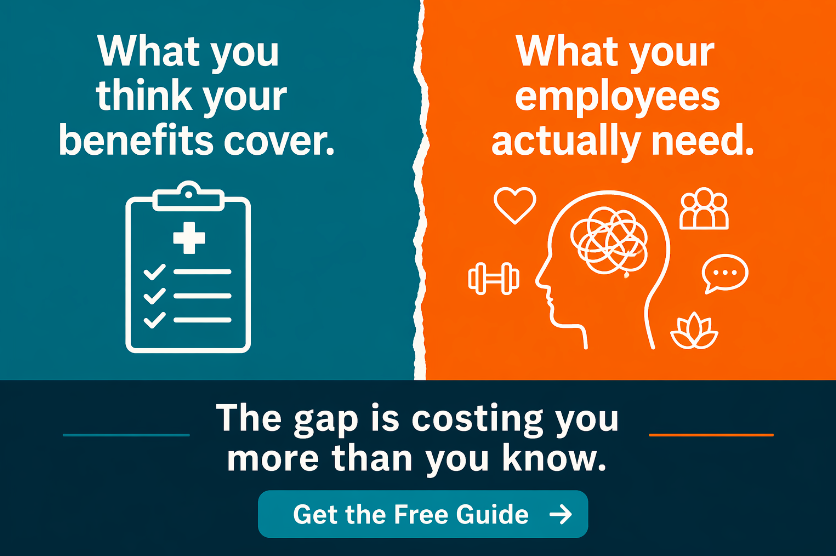
Because the gap is real. It has a cost. And somewhere in your organization right now, it has a name that nobody is saying out loud.
She asked me to share her story anonymously.
For now.
Those two words are hers. They mean something. They mean that one day, when the time is right, when it feels safe enough, when the silence has cost enough, she may decide to say it herself.
Until then, she said this:
"So many parents descend into silence and darkness trying to cope alone."
She's right.
And the organizations that believe their mental health program is robust are, in many cases, the reason why.
They weren’t meant to fail anyone.
Because they never knew they had.
If you recognize this, in your own family, or in the gap between your organization's policy and what your employees are actually experiencing, LifeLine Parent Workshops were built for exactly this moment.
Three sessions. One hour each. The framework, the tools, and a clear path forward, for working parents who are navigating what can't be named at work, and for organizations ready to understand what their benefits aren't reaching.
There is no version of doing enough that doesn't start with knowing where the gap is.
This piece is drawn from a message shared with The MentorWell. The details are real. The contributor has asked to remain anonymous, for now.
These are The Inbox Diaries. The stories people share with me that they can't tell anyone else.