To the Parent Thinking, “This Could Never Happen to Us”
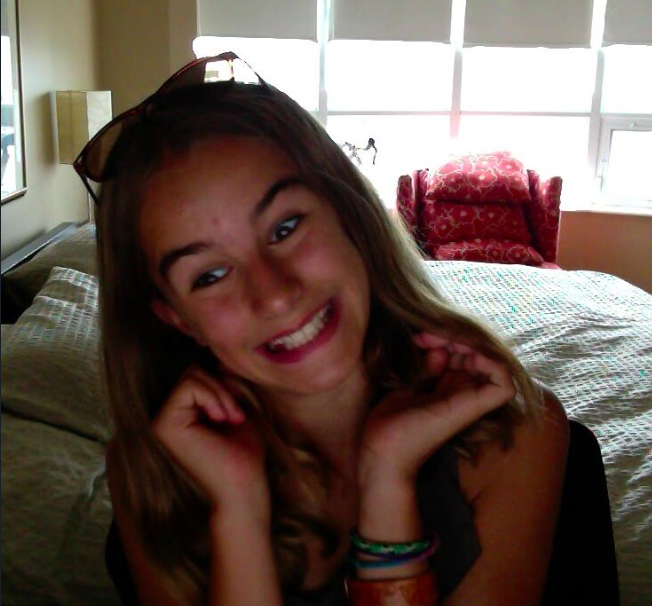
You’re a good parent. You’re present. You ask about their day. You drive them to practice. You sit across from them at dinner.
And still, you might be missing something.
Not because you’re doing anything wrong. Because your kid is doing everything right. They’re smiling. They’re succeeding. They’re telling you they’re fine.
That word “fine” should stop you in your tracks more than it does.
_____
What You’re Not Seeing Isn’t Your Fault. But It Is Your Responsibility.
Here’s what I’ve learned, some of it from the work I do now, and some of it from the life I lived before I started doing it.
Your child can laugh with friends and still feel dead inside.
Smiles aren’t always signs of happiness. Sometimes they’re just shields. Kids, especially the empathetic, high-performing, people-pleasing ones, get really good at looking okay. That doesn’t mean they are.
Straight-A students can be silently falling apart.
We treat academic success like proof of emotional well-being. It’s not. Sometimes the kid who’s excelling is the one most desperate to hold everything together, because if they stop performing, they think they’ll lose the only thing keeping people from asking hard questions.
They may tell you everything is “fine.”
Many kids who end their lives never say a word beforehand. It’s not because they didn’t want help. They didn’t want to be a burden. Especially the sensitive ones. The helpers. The kids who are always checking on everyone else.
You can be a great parent and still not see it coming.
Love isn’t the problem. Silence is. And silence doesn’t mean your kid doesn’t trust you. Sometimes it means they love you too much to let you carry what they’re carrying.
Mental health doesn’t care about how strong your family is.
It cuts through good homes, loving marriages, religious values, and open conversations at the dinner table. There is no family that is exempt.
-----
You Won’t Always Get a Second Chance to Ask the Hard Questions
Don’t wait until “the time is right.” It rarely is.
Sometimes, there are signs. But sometimes, there aren’t. My daughter Maddie had both. She had joy and sadness. Light and darkness. We saw what we wanted to see.
That’s not a failure of love. It’s a very human thing to do. You look at your kid and you see the version of them you need to believe in. The happy one. The resilient one. The one who’ll be fine.
And most of the time, that instinct serves you well.
But when it doesn’t, you don’t get a do-over.
-----
This Isn’t About Fear. It’s About Paying Attention
I’m not writing this to scare you. Fear doesn’t help parents show up better. Fear makes them freeze or overreact. Neither of those helps your kid.
What helps is awareness. Quiet, steady, consistent awareness.
It looks like asking better questions than “How was your day?” It looks like getting curious instead of critical. It looks like sitting with your own discomfort long enough to notice what your kid might be hiding behind theirs.
If something in this piece made you uncomfortable, sit with that for a minute. That discomfort isn’t a problem. It’s information.
-----
One Thing I Know for Sure
Don’t assume it can’t be your child.
That assumption cost me mine.
-----
You Don't Have to Figure This Out Alone
The MentorWell exists because I didn't have what I needed when it mattered most. And I don't want that for you.
Start with one simple thing.
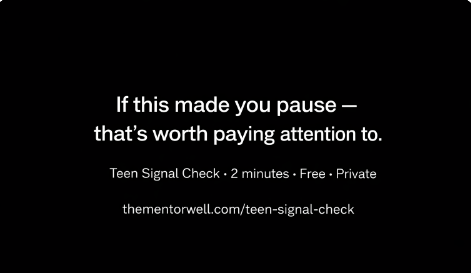
The Teen Signal Check is free, private, and takes two minutes. Twelve questions. It sorts what you're observing into a clear zone: Green, Yellow, or Red, and tells you exactly what to do next. No login. No one sees your answers but you.
If this made you pause, that's worth paying attention to.
If your results tell you something worth sitting with, or if you just don't want to navigate this alone, join our free parent community, When Something Feels Off. It's a private space for parents who are exactly where you are right now.
If this article made you think of someone, a friend, a co-worker, a parent in your circle, share it. Not because it's urgent. Because earlier is always better than too late.