The Day I Realized I Didn't Know My Own Child

It started with eye rolls.
I brushed them off. She's just being a teenager. Hormones. Independence. Mood swings. Normal stuff.
But then came the silence.
"I don't know" to every question. The closed door. The shrinking presence of someone I used to know like the back of my hand.
One afternoon I stood in the kitchen and realized I couldn't remember the last time we laughed together. Really laughed. The kind that makes soda come out your nose, from shared inside jokes and a little father-daughter verbal assault.
That's when it hit me.
I didn't know my child anymore. And worse, I wasn't sure she knew I wanted to.
______________________________
When your teen says "I don't know," it's rarely indifference. It's self-protection. They're trying to navigate emotional terrain without a map. They're not looking for interrogation. They're hoping for an invitation into conversation, into a safe space, into connection.
But how do you offer that when they've already started to pull away?
I didn't know how. So I did what most parents do. I told myself it was a phase. I waited for it to pass.
It didn't pass.
_______________________________
It was a Friday night. She said she was studying for exams. Instead, she'd slipped out to a party.
I found her there, curled up in a closet, crying. She wasn't in good shape. But she'd sleep it off. She'd be fine.
That's what I told myself.
Something was off. I could feel it. But I didn't want to name it because naming it made it real.
She asked if I was mad. I told her I loved her. I said we could talk in the morning. We drove the rest of the way home in silence.
I tucked her in and said the only thing I could think of: "Tomorrow's a new day."
But that night, Maddie tried to end her life.
I need you to sit with that for a second. Because I've had to sit with it every day since.
_______________________________
In the aftermath of that night, I faced a truth I wasn't ready for.
I'd done everything I thought a good parent does. I showed up. I provided. I loved her more than I knew how to say. And none of it was enough, because love alone couldn't reach where she'd gone.
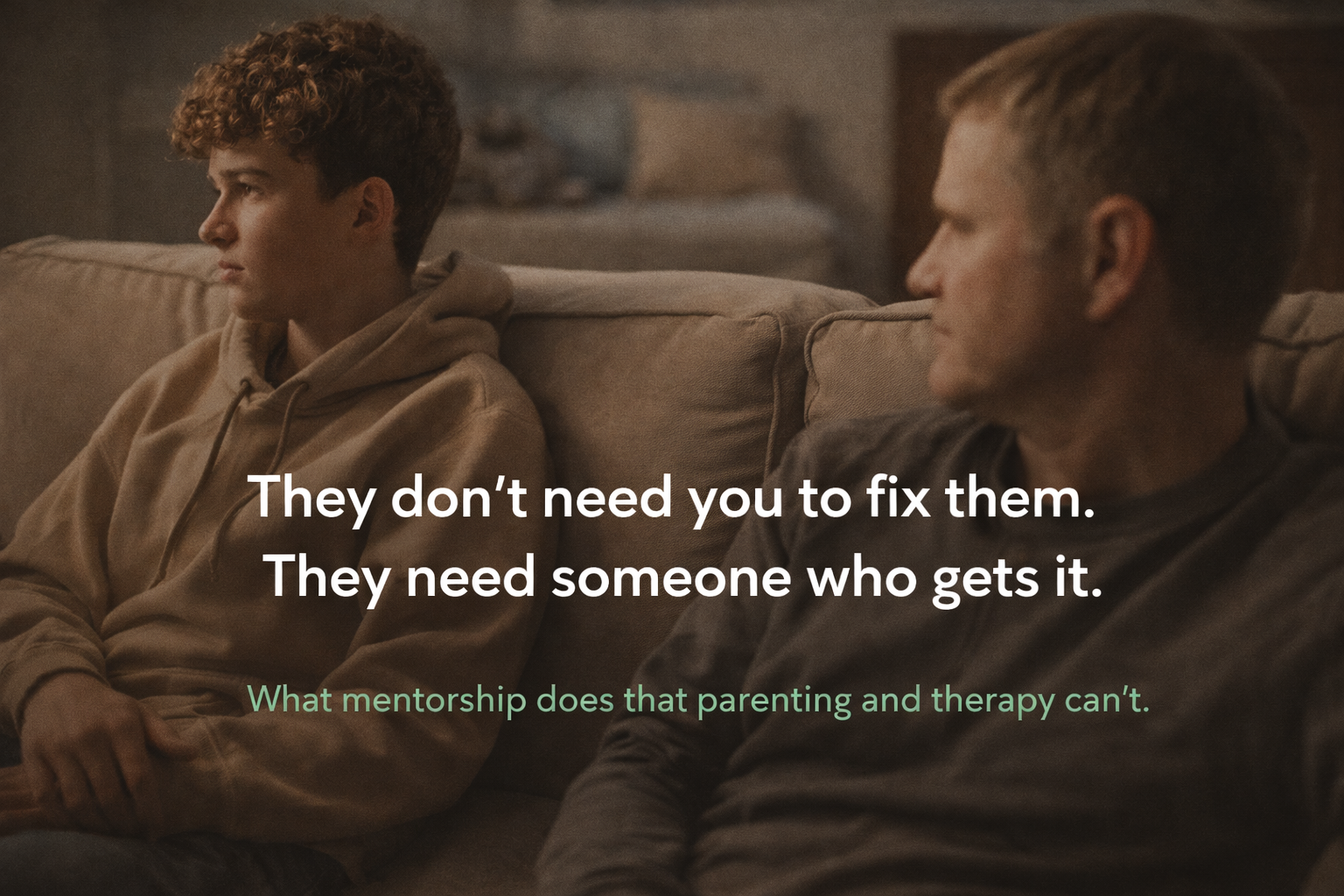
Maddie needed someone other than her dad. Someone without that weight in the room. Someone with no agenda except to walk beside her while she figured things out.
I didn't build that for her in time.
So I built it for the next kid.
_________________________________
That's what The MentorWell is.
It’s not therapy or a replacement for parenting. It’s a bridge. A steady, emotionally intelligent adult in a young person's corner. One who listens first, talking second, and showing up consistently.
Because here's what I've learned since that night:
Curiosity reaches further than control. "What was going on for you in that moment?" opens a door that "Why would you do that?" slams shut.
Silence is often a scream. When your teen retreats, it's a signal. Meet it with calm, not criticism.
And asking for help, whether that's a therapist, a mentor, or another adult your kid trusts, isn't a sign you've failed. It's a sign you're willing to widen the circle of support around your child. That takes more courage than most people realize.
_________________________________
Maybe your teen is pulling away right now. Maybe they're struggling and every attempt to connect feels like a swing and a miss.
Maybe, like me, you've realized how easy it is to live alongside someone you love and still miss the signs.
Let that realization be your starting point. Not your shame.
_________________________________
If you're a parent noticing something with your teen: Take the Teen Signal Check. It’s a free 2-minute tool that helps you sort what you're seeing into Green, Yellow, or Red with clear next steps.
→ Take the Teen Signal Check HERE
If you don't want to carry this alone: Join "When Something Feels Off", a free parent community built for families navigating this.
→ Join the Community HERE
If you want to explore mentorship for your teen: Learn how The MentorWell works, and whether it's the right fit for your family.
If you’re an employer who wants to help educate your staff about this early, our LifeLine Parent Workshops help your people protect a young person in their life whether as a parent, aunt or uncle, sibling, grandparent, coach or mentor
________________________________
The day you realize you don't know your child doesn't have to be the day you've run out of options.
It can be the day you start paying attention differently.
That's all this is. Paying attention on purpose.
FAQ
Is my teenager depressed or just moody?
Both look the same from across the kitchen. Moodiness passes and comes back. What's worth watching is the stuff that stays: the withdrawal that doesn't lift, the things they used to love going quiet, a shift that lasts a couple of weeks or more. You don't have to diagnose it. You just have to notice the pattern.
When should I actually worry about my teenager's behaviour?
Less about any single moment, more about direction. One rough week is a week. A slow drift over a month, where the door closes further and the answers get shorter, is worth paying attention to. The Teen Signal Check can help you sort what you're seeing.
My teenager won't talk to me. What can I do?
Trade the interrogation for curiosity. "Why would you do that" shuts a door. "What was going on for you in that moment" holds one open. And sometimes the answer isn't you. A teen will say things to a trusted adult who isn't their parent that they'll never say across the dinner table, and that's not a failure on your part.
What's the difference between normal teenage withdrawal and something more serious?
Some pulling away is healthy. They're becoming their own person. The difference is warmth. A teen carving out independence still lets you back in. A teen who's struggling tends to keep the door shut and the answers flat, week after week, with the things they enjoyed falling away.
How do I get help if my teen refuses therapy?
Therapy isn't the only door. Some teens who slam it shut on a therapist will open up to a mentor, a coach, or another adult they trust. Widening the circle of steady people around your kid isn't a step down from help. It's often the step that leads to it.
You May Also Like
I Thought I Would Know if My Child Was Hurting. I Was Wrong.
The sibling piece to this one. On confirmation bias in parenting and why "fine" was never proof of anything.
The Scariest Words a Parent Can Hear Are "I'm Fine"
Why teenagers use "fine" as armour, why we let them, and what one extra question can do when you stay a beat longer than feels comfortable.
Love Isn't Always Enough. That Truth Nearly Broke Me
The piece that picks up the article's hardest line, that love alone couldn't reach where she'd gone, and treats awareness as a skill you can learn.
Post revised July 27, 2026