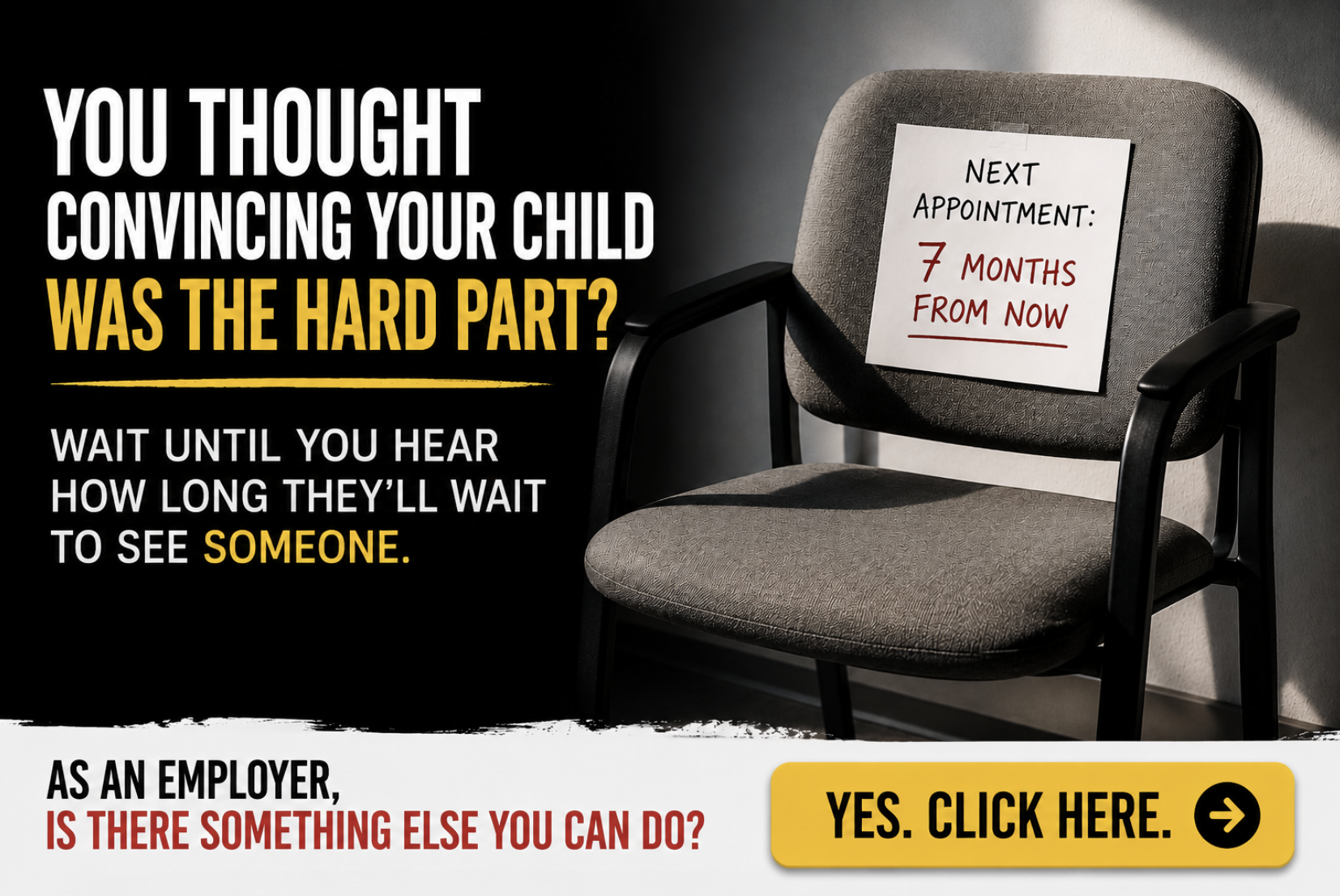
Seven Months

The hardest part is supposed to be admitting something is wrong.
That's how it's presented, anyway. Get past the denial. Have the conversation. Ask for help. Every campaign, every awareness week, every well-meaning post arrives at the same instruction and then stops, as though the phone call is the end of the story.
For a lot of Canadian families, the phone call is where the story starts going wrong.
Seven months is a number a parent said to me. I've had parents tell me theirs was over a year. Seven months sits somewhere in the middle of what I hear. It isn't a national statistic and I'm not going to pretend it is. But it's the kind of number families are given, and the reason it lands so hard is that nobody prepared them for it.
A number of variables influence that number. Location, condition, complexity, amongst other factors.
Two queues, and nobody explains the difference
Look up Canadian wait times and you'll find something reassuring. The most recent national figures put the median wait for community mental health counselling at around 24 days for kids aged 1 to 17, closer to 41 days if you live in a city. This is from the Children's Mental Health Ontario
Weeks. Manageable. That's the number that gets quoted.
It's also the wait for a first appointment. Getting into ongoing treatment is a separate queue with separate numbers, and those numbers are much worse. A survey of community child and youth mental health centres in Ontario found 28,000 kids under 18 waiting, some of them as long as two and a half years. (Children's Mental Health Ontario)
Nobody tells you which line you're standing in. You find out by living through it. And that line feels like an eternity, especially to a parent.
So when you hear a reassuring statistic and then get told seven months, you assume something has gone wrong with your file. Nothing has gone wrong with your file. You've been moved into the other queue.
Triage in this country is a function of capacity. It says nothing about how much your child matters.
The part nobody counts
There's also a wait that happens before the wait, and it doesn't appear in anybody's data.
Getting a fifteen-year-old to agree to see someone can take weeks on its own. Often longer. It usually has nothing to do with therapy and everything to do with control, so the useful move is giving them choices inside the decision. Who they see. When. In person or on a screen. Whether you're in the room for any of it.
That negotiation is real time. It just never shows up in the official number, so the gap between what you were told and what you experienced keeps widening before you've even joined the list.
For some families, the first appointment ends up happening in an emergency department. If that's you, I want to be clear about something. That isn't a failure of parenting. It's what happens when the earlier doors are shut.
What the wait actually costs
You did the hard part. You noticed, you didn't talk yourself out of it, and you had the conversation. Your kid said yes, or said nothing and didn't say no, which at that age is frequently the same thing.
Maybe something told you before you were ready to hear it. A teacher. A friend's parent. A three-minute check you took at midnight that came back worse than you expected. Teen Signal Check
Then you called, and somebody gave you a number of months.
Here's what happens in a house next, and it has almost nothing to do with clinical care.
You told your child help was coming. You now have to keep saying that. Week three, week seven, week twelve. And your child, who took a real risk in agreeing to any of this, is quietly working out whether you meant it or whether this is another thing adults say.
The wait isn't neutral time. What it costs is your credibility with the person you're trying to reach.
The thing nobody says out loud
Parents in that gap get told to hang in there and keep the lines of communication open.
That advice assumes the lines are open. If they were, you probably wouldn't have made the call.
What most families do in the gap is nothing, because nobody has told them there's anything to do. So the household holds its breath for what seems is an eternity, everyone gets quieter, and by the time the appointment arrives the situation has changed shape.
Sometimes for the better. Often not.
What a mentor can and can't do
I want to be direct about this, because there's a version of this argument I refuse to make.
A mentor is not a clinician. A mentor can't diagnose, can't treat, and should never be positioned as a substitute for someone who can. If a programme tells you otherwise, walk away from it.
If your child needs clinical care, stay on the list. Take the appointment. Push for it.
What a mentor can do is be another adult in your child's life who isn't you, isn't a teacher, and isn't assessing them. For a lot of teenagers that's a specific and useful thing. It isn't rare for a kid to say something to that person they wouldn't say at home.
You didn't fail. You're their parent, and there are things nobody says to their parent at fifteen.
On faster clinical access
We run an Expedited Clinical Referral Network for Canadian families. It's built to get a family into clinical care in days or weeks instead of months, and there's no waitlist attached to it.
I'll be straight with you about the catch. Most families reach it through their employer, as a benefit, though it's also available directly where a company offers it as a standalone. It's Canada only.
If your employer doesn't offer anything like it, that's worth raising with HR. Employer demand is how these things get bought, and the parent who asks is usually not the only one who needs it.
I know how it sounds to describe a solution that's partly out of reach. I'd rather tell you it exists and name the gate than leave you assuming there's nothing faster anywhere.
What to do with the months
If you're in the gap right now, three things worth knowing.
The wait is not a judgment about how serious your situation is. It's arithmetic about how many clinicians exist.
Something can happen in the meantime, and it doesn't have to be clinical to be worth doing. A trusted adult outside the family. A group of parents who are in it too. Structure at home that doesn't rise and fall with your child's mood that week.
And the thing your kid is watching most closely is not whether the appointment comes. It's whether you stay in it with them while you wait.
FAQ
How long is the wait for teen mental health services in Canada?
It depends which queue you're in, and nobody explains that there are two. Median waits for a first community counselling appointment run around three to six weeks. Waits for ongoing treatment are a separate queue and far longer, with Ontario surveys finding children waiting up to two and a half years. Parents tell me seven months, sometimes over a year. Ask intake which list your child is actually on and what the realistic range looks like. Most will tell you if you ask directly.
How do I get my teenager into therapy when they refuse?
Slowly, and usually not by asking again. Refusal is often about control rather than the therapy itself, so the useful move is giving them choices inside the decision. Who they see. When. In person or on a screen. Whether you're in the room. That negotiation can take weeks and it happens before the waitlist even starts, which is why the real wait is always longer than the official number.
What can we do while we wait?
Something consistent that doesn't depend on a clinician. A trusted adult outside the family in regular contact. A group of parents who are in it too, so you're not carrying it alone. Structure at home that doesn't rise and fall with your kid's mood that week. None of it replaces treatment. All of it beats going quiet for months.
Is mentorship a substitute for therapy?
No. A mentor can't diagnose or treat, and any programme suggesting otherwise should be walked away from. What a mentor offers is a consistent adult who isn't assessing your child. For some teenagers that opens a door the clinical appointment never gets to, and it opens it now rather than in the spring.
Can we get a faster clinical referral in Canada?
Sometimes. The MentorWell runs an Expedited Clinical Referral Network for Canadian families that moves in days or weeks rather than months, with no waitlist attached. Most families reach it through their employer's benefits, though it's also available directly where a company offers it as a standalone. If yours doesn't offer anything like it, raise it with HR. Employer demand is how these get bought, and the parent who asks is rarely the only one who needs it.
You May Also Like
Your Teenager Doesn't Need a Crisis to Need Support
What teen mental health coaching actually is, how it differs from therapy, and why the space before a crisis is where the most good gets done.
Don't Tell Them the Odds
Most teenagers come through it. That statistic means nothing to the parent checking their child is breathing before work. What the waiting feels like from the parent's side.
Seventeen Hours
While one child is in crisis, the other children are in the house for every hour of it. What the reversal does to siblings, and why nobody catches it.