
HR Can Build the Programme. HR Can't Make It Safe.
A mental health programme only works if people believe it's safe to use. Chris Coulter, founder of The MentorWell, shows how psychological safety at work gets set at the top: by a CEO who says something true about their own life, or who responds well when a leader discloses a struggle. Includes a real CEO story for leaders and HR teams, and what it costs when good people leave without saying why.
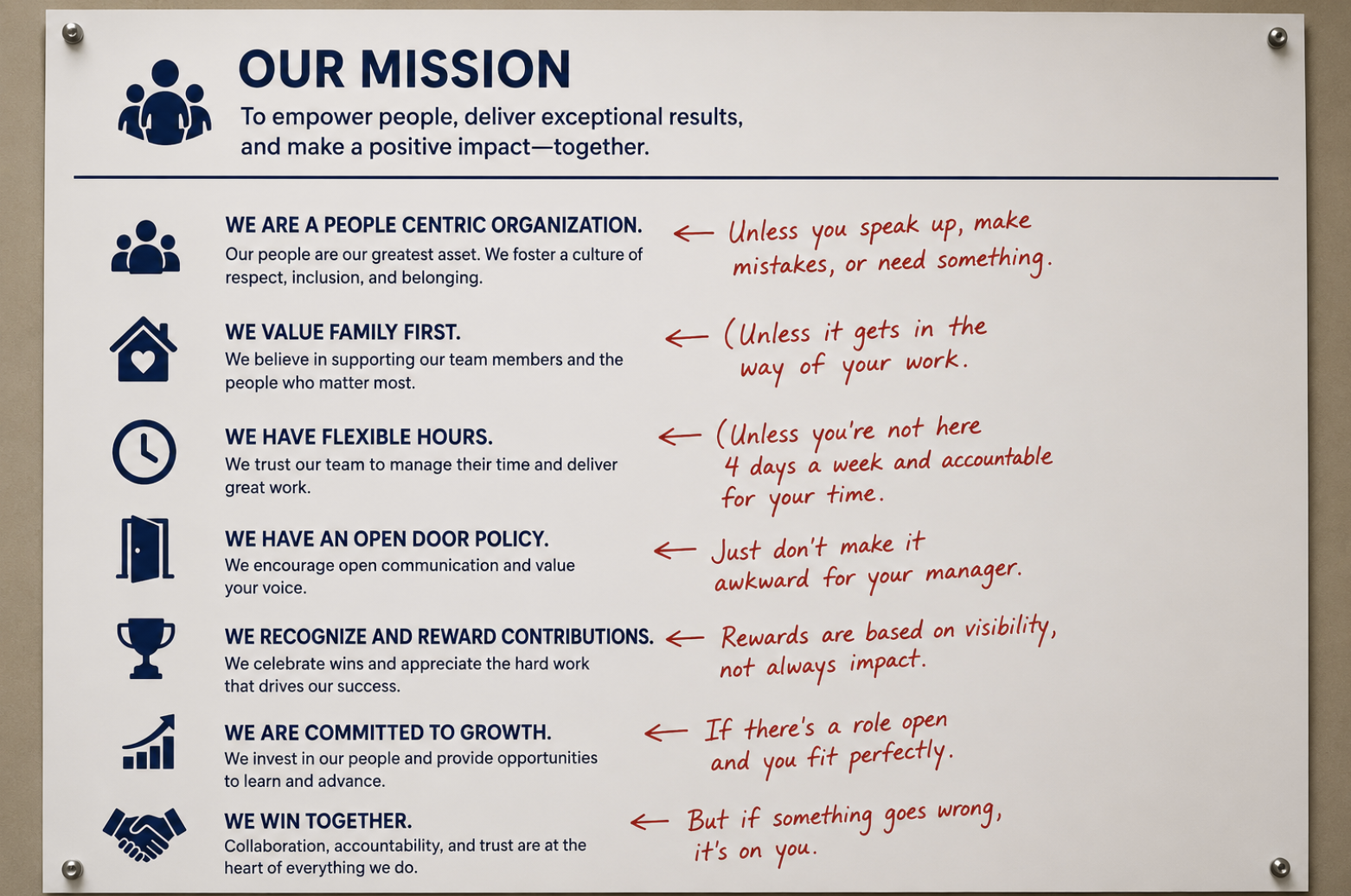
Every Company Value Has an “Unless”
Most companies say they support employees through personal difficulty. Employees learn quickly where that support ends. Chris Coulter on the gap between the values board and what actually happens when someone's performance drops for six months, why low EAP utilisation is not a communications problem, and the three questions worth putting to your own leadership team this week.

He Hadn't Spoken to His Son in 10 Years. He Couldn't Remember Why.
A stranger in a Toronto pub told me he hadn't spoken to his son in almost ten years, then admitted he couldn't remember what started it. Most managers are carrying a smaller version of the same thing: a person on the team they've quietly stopped talking to properly. Nobody would take it to HR. Nobody is going to raise it either, because the person with the power in the room is you.

Someone Just Broke Down in Your Office. You Have Four Seconds.
When an employee breaks down in your office, your instinct is to fix it, hand over a resource, or route them to HR. In the first moment, each one makes it worse. This is a manager's guide to what to actually say when someone shares a personal struggle at work: the first line that keeps them in the room, the small choices to offer, the follow-up three days later, and the two instincts to kill on the spot. No clinical skill required.

The Thirteenth Question
Gallup's 2026 State of the Global Workplace reports engagement at a record low, with managers declining fastest. Most wellbeing vendors respond with another engagement initiative. Chris Coulter argues the real driver sits outside the survey's reach: the struggling teen, the aging parent, the divorce, the debt, the unspoken grief your people carry to work and never mention. Here is what employers miss, why managers are breaking, and what asking actually looks like.
Your Employee Said They're Fine. Are You Willing to Bet Their Job on It?
Most managers wait for an employee to say something is wrong. Most parents do too. The assumption — "if something were really wrong, they would tell me" — is the most expensive belief in both relationships. This post names the parallel, explains what quietly quitting actually looks like from the inside, and introduces the Manager Signal Check for leaders who want to act earlier.
Mental Health Leave Is the Last Signal: What HR Misses Before Employees Break
By the time an employee requests mental health leave, the signal has been there for months. Most managers saw it. Nobody knew what to say. This post is for HR leaders and people managers who want to close the gap between noticing and acting — before they lose someone they could have helped.