What Teens Wish You Knew: The Hidden Cost of Divorce on Kids Who Say Nothing

Updated by The MentorWell Dec. 6, 2025
Divorce Does Not Stay at Home
Divorce shows up in focus.
In energy.
In emotional weight.
For Team Leaders, this matters more than most realize.
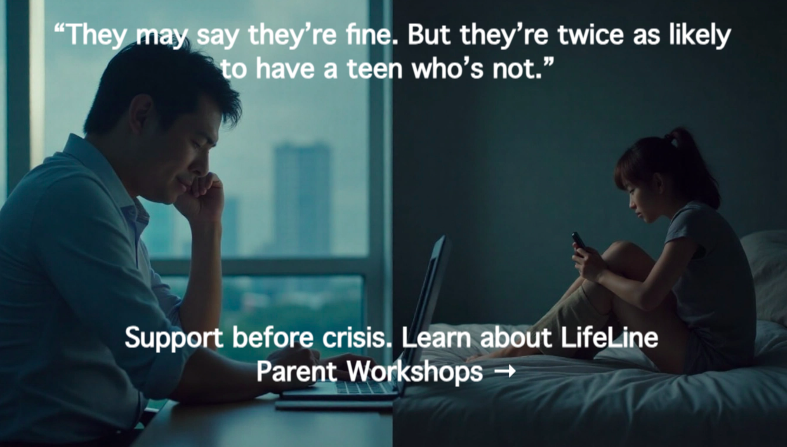
Research shows there is a 1.5-2 times greater probability that when an employee is navigating a divorce, one of their children may be struggling emotionally as well. When a child is struggling, the risk to the parent at work rises quietly with it.
I know this terrain personally.
I am not proud of how I handled my own divorce. It became personal. Emotional. Ugly. Our kids were pulled into it. Believing it would not affect them was naive. There is a relationship I once valued that no longer exists. To think that would not affect our children would be dishonest.
Although my boys did not respond the way Maddie did, they were impacted. Each child carries the weight differently. Some visibly. Others silently.
It is that silence that makes divorce especially risky for teens. And often invisible to the workplace.
Why Teens Often Say “I’m Fine” When They Are Not
When a teen says, “I’m hurting,” parents usually act fast. Therapy. Appointments. Resources. All of it makes sense.
But what about the teen who shrugs it off.
The one who says, “I’m fine.”
The one who buries themselves in school, sports, or their phone.
Silence can look like strength.
Sometimes it is.
Most often, it is fear, confusion, and overwhelm that do not yet have words.
Teens worry about choosing sides.
They carry guilt, anger, loyalty, and relief at the same time.
They do not know which feeling is allowed.
So they choose to be quiet.
If your teen is not acting out, that does not mean they are okay.
It may mean they are carrying it alone.
How Divorce Affects Teens Emotionally
Teens live in a season of identity change already.
Divorce disrupts the one structure they believed was steady.
You may see:
Anxiety about where they belong
Fear about the future
Self blame
Trust concerns
Withdrawal from friends
Drop in motivation
Anger that seems misplaced
Full emotional shutdown
Grades slipping is often not a school problem.
It is a life problem showing up at school.
And for many teens, December and summer make this worse.
Holidays. Transitions. Seeing other families together.
The contrast is loud.
Why Family Support Is Sometimes Not Enough
Parents matter.
But during divorce, parents are often grieving too.
Kids notice this.
They hold back.
They do not want to add more weight to a parent who already looks worn down.
This is why outside support matters.
Teens need:
A neutral adult
A steady presence
A place where honesty does not hurt anyone they love
Freedom to speak without managing their parents’ emotions
Being everything for your teen is rarely possible.
You’re only human.
What Mentorship Offers During Divorce
Mentorship gives teens somewhere to place their pain safely.
A mentor:
Listens without taking sides
Validates complex emotions
Helps teens rebuild trust
Strengthens emotional awareness
Models calm during chaos
At The MentorWell, we see teens change when they feel steady again inside, because they are no longer alone with their thoughts.
How LifeLine Parent Workshops Support Families and Teams
Divorce affects families.
It also affects teams.
This is why LifeLine Parent Workshops by MentorWell exists.
They offer:
Early guidance for parents
Practical tools for hard conversations
Perspective before crisis
Language that reduces panic
Support without judgment
For Team Leaders, this creates stability beyond the workplace.
When parents feel supported, their focus improves.
Trust strengthens.
Absence drops.
Burnout slows. Productivity returns.
Supporting parents in the thick of this is what strong leadership does.
How to Choose the Right Mentor for a Teen in Transition
The right mentor:
Listens more than they talk
Has high emotional awareness
Respects boundaries
Understands family transitions
Builds confidence without pressure
Has lived experiences
At The MentorWell, mentors meet teens where they are. No fixing. No forcing. Just presence.
Final Thoughts for Parents and Leaders
Divorce does not end when documents are signed.
It settles into routines.
Into bedrooms.
Into report cards.
Into the chest of a parent sitting at work trying to stay focused.
For parents, “quiet” often gets mistaken for “okay.”
For leaders, distraction often gets mistaken for disengagement.
Both miss what is really happening.
At The MentorWell, we see what shifts when quiet signals are met early with steady support. Not therapy. Not emergency response. Mentorship. And parental guidance through LifeLine Workshops before pressure becomes collapse.
For Team Leaders, the truth is simple.
When you support the parent, you protect the system.
For parents, trust the quiet shifts. Even when your teen says, “I’m fine.”
No one should have to navigate this alone.